SOC 2 —
5 Tips for Evaluating SOC 2 Security Monitoring Platforms
5 essential tips for evaluating SOC 2 security monitoring platforms. Learn how DSALTA's AI compliance platform simplifies SOC 2 compliance for security teams!!
Jon Ozdoruk
Business & Trust
Share this article


Introduction
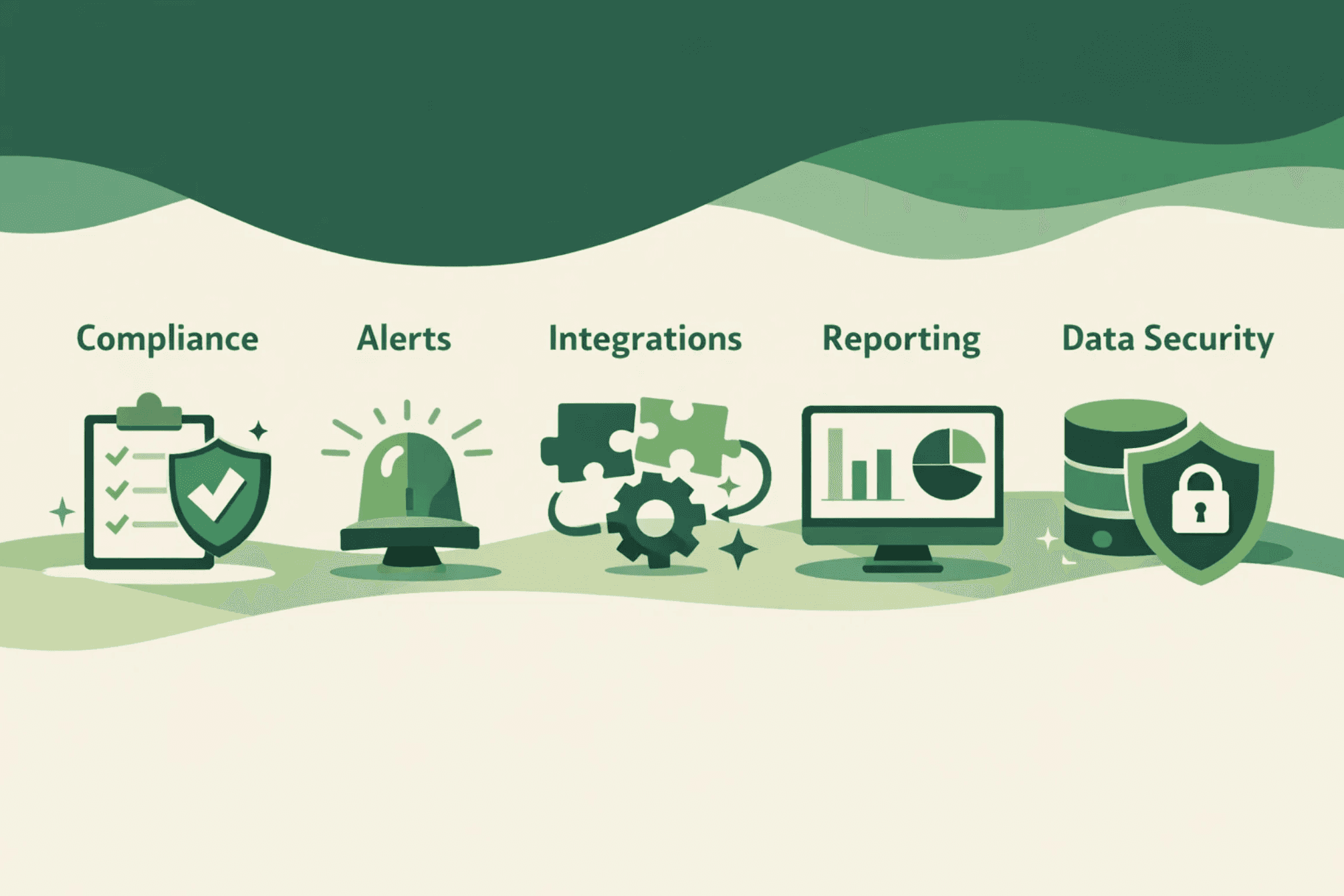
Achieving and maintaining SOC 2 compliance is no longer optional for B2B SaaS companies—it's a fundamental requirement for building customer trust and winning enterprise deals. But with dozens of SOC 2 security monitoring platforms on the market, how do you choose the right one for your organization?
Whether you're a founder preparing for your first SOC 2 audit or a security lead evaluating new compliance tools, this guide will help you navigate the decision with confidence. We'll cover five essential evaluation criteria and show you exactly what to look for in a modern compliance platform.
1. Automated Evidence Collection and Continuous Monitoring
The foundation of any effective SOC 2 monitoring platform is its ability to automatically collect and maintain evidence of your security controls. Manual evidence gathering is time-consuming, error-prone, and doesn't scale as your organization grows.
What to Look For
When evaluating automated evidence collection capabilities, prioritize platforms that offer:
• Real-time integrations with your existing tech stack. The platform should connect seamlessly with cloud infrastructure (AWS, Azure, GCP), identity providers (Okta, Google Workspace), version control (GitHub, GitLab), and communication tools (Slack, Microsoft Teams).
• Continuous control monitoring. Look for platforms that actively monitor your security controls 24/7, not just periodic snapshots. This means detecting configuration drift, unauthorized changes, and policy violations in real time.
• Automatic evidence timestamping and secure storage. Evidence must be stored immutably, with cryptographic timestamps, to prove it hasn't been tampered with. This is critical for auditor confidence.
• Support for both Type I and Type II SOC 2 reports. Type I evaluates controls at a point in time, while Type II examines operating effectiveness over 3-12 months. Your platform should accommodate both.
• Pre-built evidence templates. The best platforms know exactly what evidence auditors need for each control and automatically collect it—screenshots of access controls, logs of configuration changes, encryption verification, etc.
Why This Matters
Manual evidence collection can consume 40-60% of your compliance team's time. Engineers shouldn't be taking screenshots or exporting logs every month. Automated collection means your team focuses on actually improving security, not proving it exists. Plus, continuous monitoring catches issues before they become audit findings—preventing expensive remediation cycles.
2. Clear Control Framework Mapping
SOC 2 is built on the AICPA's Trust Services Criteria, which can be abstract and difficult to interpret. The best SOC 2 compliance platforms translate these criteria into clear, actionable controls that make sense for your business.
What to Look For
A strong control framework should provide:
• Pre-built control libraries aligned with SOC 2 criteria. The platform should come with comprehensive control sets for the five Trust Services Criteria: Security (Common Criteria), Availability, Processing Integrity, Confidentiality, and Privacy.
• Plain-language explanations. Each control should include clear descriptions of what it means, why it matters, and how to implement it. Avoid platforms that just regurgitate AICPA language without context.
• Direct mapping to technical implementations. The platform should show exactly how your infrastructure settings, code repositories, and access policies map to specific SOC 2 controls. No guesswork.
• Customization for your risk profile. While pre-built frameworks save time, you should be able to add company-specific controls or exclude irrelevant ones based on your business model.
• Scoping guidance. Not all controls apply to every organization. The platform should help you determine which controls are in-scope based on your services, infrastructure, and customer commitments.
Why This Matters
Most teams struggle with SOC 2, not because security is hard, but because the requirements are vague. A good control framework acts as a translator between AICPA standards and your actual work. It eliminates the "what does this even mean?" moments and gets you building instead of researching.
3. Readiness Assessment and Gap Analysis
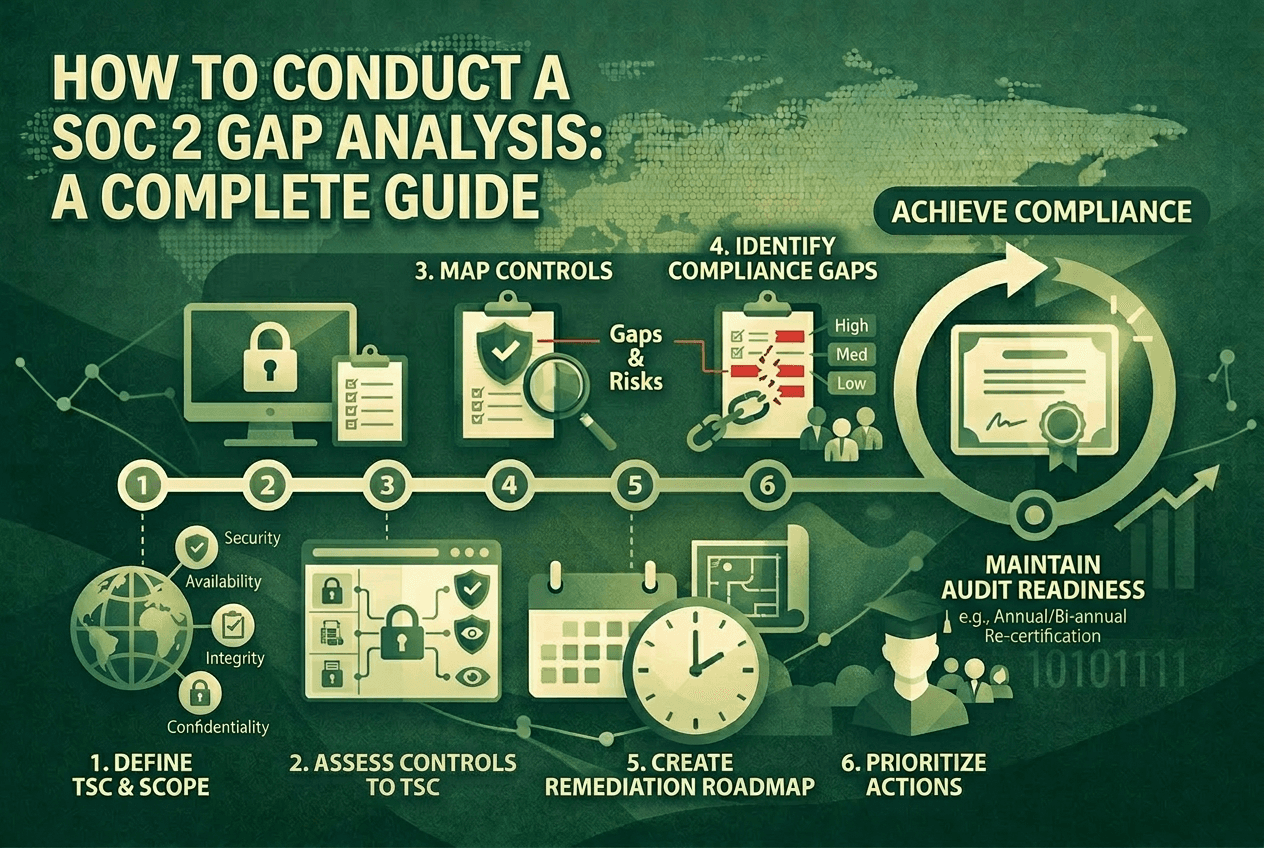
Before diving into your SOC 2 audit, you need an honest assessment of where you stand. A good platform should help you identify gaps early and prioritize remediation efforts based on risk and audit impact.
What to Look For
Effective readiness assessment includes:
• Automated infrastructure scanning. The platform should scan your cloud environments, repositories, and systems immediately upon connection to identify existing controls and gaps.
• Risk-based gap prioritization. Not all gaps are created equal. The platform should classify findings as critical (will fail audit), important (strong recommendation), or nice-to-have, helping you focus on what matters most.
• Realistic timeline estimates. Based on your current state and team capacity, the platform should project when you'll be audit-ready. This helps with planning customer commitments and budgets.
• Actionable remediation guidance. For each gap, you should get specific fix instructions: Terraform code snippets, AWS console screenshots, policy templates, or configuration examples. No generic advice.
• Progress tracking. Visual dashboards showing completion percentage, remediation velocity, and remaining work help keep stakeholders aligned.
Why This Matters
The worst SOC 2 experiences happen when teams start the audit process without knowing their readiness level. You commit to a timeline, engage an auditor, and then discover major gaps that delay everything by months. A thorough readiness assessment eliminates surprises and lets you plan realistically from day one.
4. Audit Preparation and Auditor Collaboration Features
When audit time arrives, your platform should make the process as smooth as possible—for both your team and your auditors. Look for features that streamline evidence sharing and reduce the back-and-forth that typically plagues SOC 2 compliance processes.
What to Look For
Strong audit collaboration features include:
• Dedicated auditor portal. Auditors should have secure, read-only access to all relevant evidence without needing to email requests or wait for your team to package files.
• Organized evidence library. Evidence should be automatically categorized by control objective, time period, and evidence type. Auditors need to find what they need quickly.
• Evidence request tracking. The platform should track all auditor requests, assign them to team members, set due dates, and notify when responses are submitted. No more lost emails.
• Audit-ready documentation generation. The platform should auto-generate control narratives, test procedures, evidence samples, and scope descriptions in the format auditors expect.
• Version control and audit trail. Every change to policies, controls, or evidence should be tracked with timestamps and user attribution. This provides auditors with evidence of integrity.
• Communication log. Keep all audit-related discussions in one place with comment threads, @mentions, and notification systems.
Why This Matters
The audit phase is where most companies experience the most friction. Auditors request evidence, teams scramble to find it, emails get lost, and timelines slip. A platform with strong collaboration features for auditors transforms this from a painful back-and-forth into a smooth, professional process. Happy auditors mean faster certification.
5. Ongoing Compliance Management and Scale
SOC 2 isn't a one-time achievement—it's an ongoing commitment. Your security monitoring platform should help you maintain compliance year-round and scale effortlessly as your organization grows.
What to Look For
Ongoing compliance management requires:
• Automated control testing on a regular cadence. The platform should automatically test your controls daily or weekly, not just during audit season. This prevents compliance drift.
• Smart alerting and remediation workflows. When controls fail, the platform should immediately notify the right people, create tickets in your existing tools (Jira, Linear, Asana), and provide instructions for the fix.
• Multi-framework support. As you grow, you'll likely need ISO 27001, GDPR, HIPAA, or other certifications. Choose a platform that lets you build on your SOC 2 foundation, rather than starting from scratch each time.
• Scalability for organizational growth. The platform should automatically discover new infrastructure, adjust controls as you add services, and maintain evidence continuity as your team expands.
• Annual recertification support. Most companies need to renew their SOC 2 report annually. The platform should make year-two audits dramatically faster by reusing previous evidence and focusing only on changes.
• Compliance analytics. Track trends over time: control failure rates, remediation velocity, audit prep time. Use data to improve your security program.
Why This Matters
Getting SOC 2 certified is hard. Staying certified while scaling your business is harder. Many teams pass their initial audit only to fail recertification because they couldn't maintain controls as they grew. A platform built for ongoing management ensures compliance becomes part of your operational rhythm, not an annual fire drill.
How DSALTA's AI Compliance Platform Addresses These Needs
Now that you understand what to look for in a SOC 2 security monitoring platform, let's explore how DSALTA specifically addresses each of these requirements with AI-powered automation built for founders and lean security teams.
1. Intelligent Evidence Collection That Runs on Autopilot
DSALTA's AI-powered evidence engine connects to 50+ tools across your security ecosystem, including AWS, Azure, GitHub, Okta, and Google Workspace. Unlike traditional platforms that require manual configuration, DSALTA uses machine learning to automatically detect which controls you need based on your tech stack.
The platform runs 24/7 continuous monitoring, automatically collecting evidence as your systems operate. When you enable MFA on a new application, DSALTA captures it. When you rotate encryption keys, it logs the event. When engineers push code changes, it verifies that they went through your required review process.
Key differentiators:
• Smart evidence suggestions: DSALTA's AI knows what auditors typically request and proactively collects it—no manual evidence lists needed.
• Instant compliance visibility: See your real-time compliance posture across all controls in a single dashboard.
• Proactive alerting: Get notified the moment a control drifts out of compliance—before it becomes an audit finding.
2. Control Library Built for Technical Teams
DSALTA provides a comprehensive, pre-configured control library covering all five Trust Services Criteria. But unlike generic frameworks full of compliance jargon, our controls are written for engineers and security practitioners who actually implement them.
Each control includes detailed implementation guidance with code examples, architectural diagrams, and configuration templates. Our AI assistant analyzes your specific tech stack and suggests the most efficient implementation path for your environment.
Key differentiators:
• Plain-language explanations: Every control explains "what", "why", and "how" in terms that developers understand.
• Direct technical mapping: See exactly how your IAM policies, network configs, and code review processes map to SOC 2 requirements.
• AI-powered scoping: DSALTA recommends which controls apply to your business model, eliminating unnecessary work.
3. Readiness Assessment in Minutes, Not Weeks
Connect DSALTA to your infrastructure and get an instant readiness assessment. Within minutes, you'll see a prioritized list of compliance gaps with clear severity ratings and remediation guidance.
Our AI engine analyzes your entire tech stack—cloud configurations, access controls, logging configurations, and backup policies—and compares it against SOC 2 requirements. The platform then generates a customized remediation roadmap with realistic timelines based on your team's capacity.
Key differentiators:
• Automated infrastructure scanning: DSALTA scans your AWS, Azure, and GCP environments automatically—no manual questionnaires.
• AI-generated fix instructions: Get Terraform snippets, AWS CLI commands, or policy templates for each gap—not generic advice.
• Dynamic timeline projections: DSALTA predicts your audit-ready date based on current progress and team velocity.
4. Auditor Workspace That Eliminates Email Ping-Pong
DSALTA includes a dedicated auditor portal that allows your auditor to access all evidence in a structured, searchable format. Evidence is automatically organized by control objective with clear timestamps, contextual metadata, and direct links to source systems.
When auditors need additional information, they can submit requests directly in the platform. These requests automatically route to the right team member, track response status, and maintain a complete audit trail.
Key differentiators:
• Auto-generated documentation packages: DSALTA creates audit-ready control narratives, test procedures, and evidence samples—saving weeks of manual prep.
• Evidence integrity verification: Cryptographic timestamps and version control give auditors confidence in evidence authenticity.
• Real-time collaboration: Comment threads, @mentions, and notifications keep everyone aligned throughout the audit.
5. Continuous Compliance That Scales With Your Growth
DSALTA automates continuous control testing so compliance doesn't require constant manual effort. The platform tests your controls daily, immediately alerting you when issues arise and automatically creating remediation tickets in your existing workflow tools.
As your organization scales—adding new services, infrastructure, or team members—DSALTA adapts automatically. The platform discovers new resources, adjusts controls, and maintains evidence continuity without manual reconfiguration.
Key differentiators:
• Multi-framework compliance mapping: DSALTA supports ISO 27001, GDPR, HIPAA, and more—leverage your SOC 2 foundation for faster additional certifications.
• Intelligent remediation workflows: Automatic ticket creation in Jira, Linear, or Asana with detailed fix instructions and severity ratings.
• Year-over-year efficiency gains: Annual recertification becomes dramatically faster as DSALTA reuses previous evidence and focuses only on changes.
Frequently Asked Questions About SOC 2 Monitoring Platforms
What is a SOC 2 security monitoring platform?
A SOC 2 security monitoring platform is a software solution that helps organizations achieve and maintain SOC 2 compliance by automating evidence collection, monitoring security controls, and streamlining the audit process. These platforms integrate with your existing technology stack to continuously verify that security controls are operating effectively in accordance with the AICPA Trust Services Criteria.
How long does it take to get SOC 2 compliant?
The timeline for SOC 2 compliance varies based on your starting point and current security maturity. With a modern AI-powered compliance platform like DSALTA, organizations can typically achieve audit-readiness in 3-6 weeks. The actual audit period for a Type II report requires demonstrating controls over a minimum observation period, usually 3-12 months, depending on your auditor and customer requirements.
Do I need a dedicated compliance team for SOC 2?
Not necessarily. While larger organizations often have dedicated compliance personnel, many startups and mid-size companies successfully achieve SOC 2 with their existing engineering and security teams. AI-powered platforms like DSALTA significantly reduce manual workload, enabling lean teams to achieve SOC 2 compliance without hiring specialized compliance staff.
What's the difference between SOC 2 Type I and Type II?
A SOC 2 Type I report evaluates the design and implementation of your security controls at a specific point in time. A Type II report examines both the design and operating effectiveness of controls over an extended period, typically 3-12 months. Most enterprise customers and partners require Type II reports as they provide stronger assurance that controls are consistently maintained.
How much does SOC 2 compliance cost?
Total SOC 2 costs typically include: compliance platform fees ($10k-50k annually, depending on company size), auditor fees ($15k-75k for initial certification), and internal time investment. Using an automated platform like DSALTA can reduce internal time by 60-80%, significantly lowering the total cost of compliance while maintaining high quality.
Making the Right Choice for Your Compliance Journey
Selecting a SOC 2 security monitoring platform is a strategic decision that will impact your compliance program for years to come. By prioritizing automated evidence collection, clear control frameworks, thorough readiness assessment, strong auditor collaboration, and scalable ongoing management, you'll find a platform that accelerates your path to certification without overwhelming your team.
DSALTA was purpose-built for founders and security leaders who need to achieve SOC 2 compliance without sacrificing engineering velocity or drowning in manual compliance work. Our AI-powered platform handles the heavy lifting—evidence collection, control testing, gap analysis—while giving you complete visibility and control.
The result? SOC 2 certification in months instead of years, with dramatically less manual effort and higher confidence in your security posture.
Ready to Experience DSALTA?
Schedule a personalized demo to see how DSALTA can streamline your SOC 2 journey. Our team will walk you through a complimentary assessment of your current compliance state and show you exactly how our AI platform can help you achieve certification faster.

Explore more SOC 2 articles
Stop losing deals to compliance.
Get compliant. Keep building.
Join 100s of startups who got audit-ready in days, not months.