Audit Process —
SOC 2 Type I vs Type II: Key Differences Explained
SOC 2
Share this article


SOC 2 Type I vs Type II: Key Differences, Cost, and Timeline
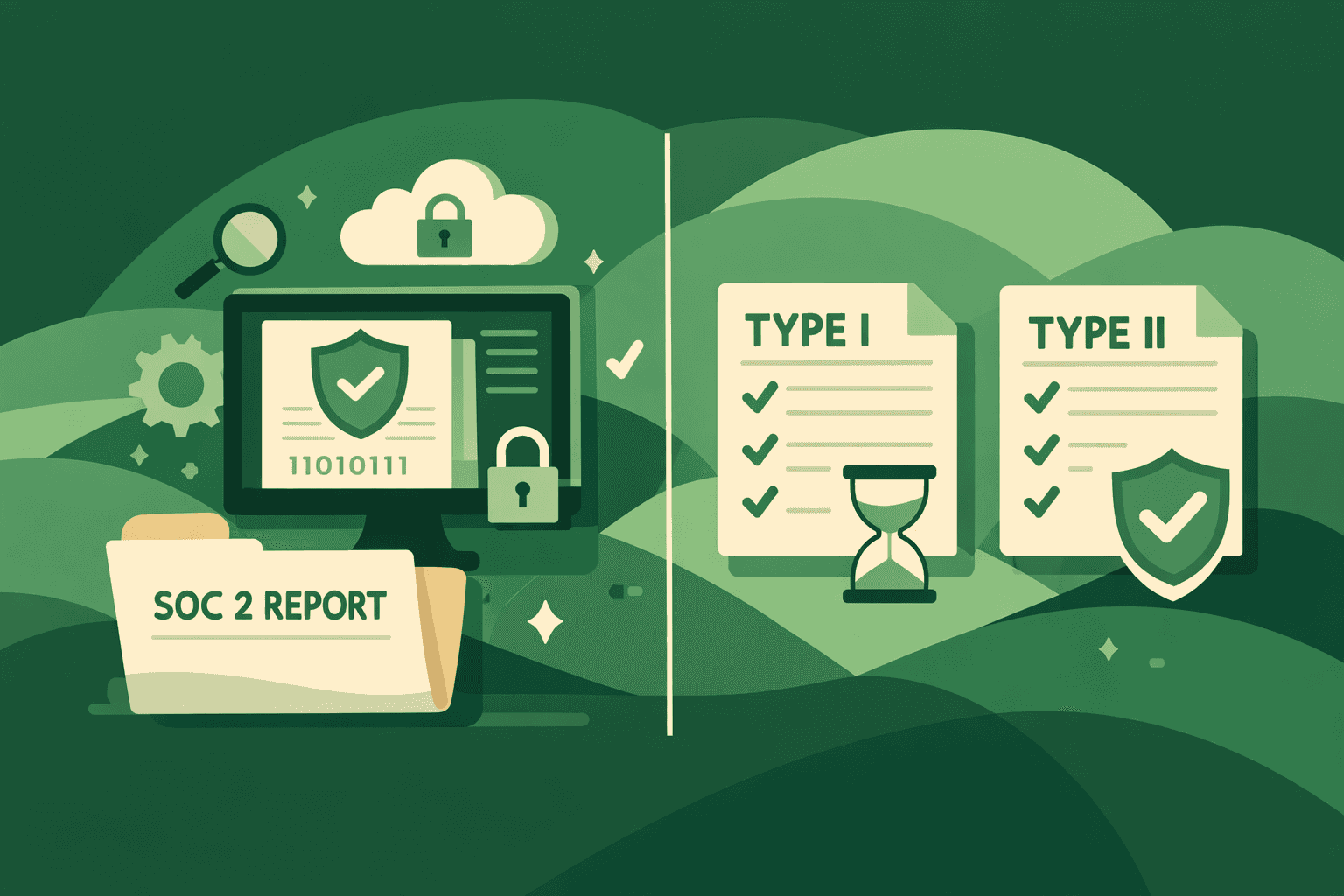
Type I evaluates whether your controls are designed correctly at a single point in time. Type II evaluates whether those same controls operated effectively over a sustained period, typically 3-12 months. The right choice mostly comes down to how mature your control environment already is and what your customers actually require — not just cost, though that's a real factor too.
If you're new to SOC 2 entirely, start with what SOC 2 is and what it evaluates before diving into which report type fits your situation.
The Core Distinction
Type I evaluates whether controls are designed and implemented appropriately at a single point in time
Type II evaluates whether those controls operate effectively over a sustained period, usually 3-12 months
SOC 2 Type I Explained
A Type I report answers: do the right controls exist today, and are they designed effectively to meet the Trust Services Criteria?
Snapshot evaluation at a single moment
Focused on control design, not long-term operation
Validates that policies, procedures, and safeguards are actually in place
For the specific control areas auditors evaluate, see our SOC 2 control mapping guide.
SOC 2 Type II Explained
A Type II report goes further, asking: have these controls actually functioned effectively over time?
Covers a review period of 3-12 months
Requires evidence of continuous operation, not just a design snapshot
Provides stronger assurance for enterprise customers, since it demonstrates the control held up under real operating conditions, not just on paper
Organizations typically rely on Type II to demonstrate genuine operational maturity, not just a passed checklist.
Detailed Comparison: Type I vs. Type II
Audit duration and timeline
Type I: roughly 4-8 weeks, primarily documentation review, interviews, and control design testing
Type II: roughly 12-16 weeks, including operational testing, monitoring logs, exception reports, and remediation evidence
Evidence requirements
Type I requires policies, procedures, and proof that controls are implemented
Type II additionally requires continuous monitoring logs, incident response documentation, and proof of sustained operating effectiveness
Cost considerations
Type I: roughly $15,000-$50,000
Type II: roughly $30,000-$100,000+
See our full SOC 2 cost and timeline breakdown for a more detailed cost analysis by company size and scope.
When to Choose Type I
Best suited for organizations that:
Are new to SOC 2 entirely
Need initial customer assurance quickly
Have limited control history — less than 3 months of operation
Are working under budget constraints
Benefits: faster completion, lower cost, and a natural stepping stone toward a future Type II. See our guide to preparing for a SOC 2 audit for practical next steps.
When to Choose Type II
Best suited for organizations that:
Serve enterprise customers requiring higher assurance
Already have mature compliance programs in place
Want competitive differentiation in sales
Need to demonstrate continuous, proven control effectiveness
Benefits: stronger customer trust, premium positioning in enterprise sales cycles, and validated risk management practices that hold up under closer scrutiny.
The Natural Progression Path
Most organizations treat SOC 2 as a phased journey rather than choosing one type and stopping there:
Phase 1 — Foundation (Type I): establish controls, document policies, complete an initial assessment
Phase 2 — Maturation: operate those controls for 6-12 months, refining processes and building an evidence trail
Phase 3 — Advanced assurance (Type II): demonstrate sustained effectiveness and unlock the stronger customer trust Type II provides
Making the Right Choice for Your Organization
Choose Type I if you're starting your compliance journey, need credentials quickly, or are working within tighter budget constraints
Choose Type II if you need maximum customer assurance, serve regulated industries, or want to stand out clearly against competitors still on Type I
FAQ
Can I skip Type I and go straight to Type II? Yes — there's no requirement to complete a Type I first. Some organizations with already-mature controls go directly to Type II, though many choose Type I first since it's faster and cheaper, and it builds the operating history a Type II report relies on.
Which one do enterprise customers actually require? It varies, but larger enterprise buyers and regulated industries frequently require or strongly prefer Type II, since it demonstrates sustained operation rather than a point-in-time snapshot. Smaller or earlier-stage customers may accept Type I, especially from an early-stage vendor.
How much does a SOC 2 Type II audit cost compared to Type I? Type I typically runs $15,000-$50,000, while Type II typically runs $30,000-$100,000+, reflecting the additional testing and evidence review required over the longer assessment period.
Do I need a new Type II report every year? Yes — SOC 2 reports are generally considered valid for 12 months, so most organizations on the Type II cycle undergo a new audit annually to maintain continuous coverage.
How much does DSALTA cost to get audit-ready? DSALTA plans for getting audit-ready typically run around $7,000-$12,000 depending on your company's size and scope, separate from your independent auditor's own fees for issuing the actual Type I or Type II report. This covers the platform work — automated evidence collection, control monitoring, and readiness tracking — that gets you prepared for whichever report type you're pursuing.


In the Spotlight

Start your SOC 2 compliance journey with DSALTA's complete checklist.
Many teams view SOC 2 as overwhelming—expensive, slow, and packed with manual work. The reality is different: with smart preparation and modern automation, the process becomes far more achievable.
That’s where DSALTA® comes in. With AI-powered audit readiness, real-time monitoring, and automated evidence collection, DSALTA® helps you get compliant faster and with less effort. This checklist walks you through every stage so you know exactly what’s ahead.
Read more about SOC 2 compliance with DSALTA.
Stop losing deals to compliance.
Get compliant. Keep building.
Join 100s of startups who got audit-ready in days, not months.