Audit Process —
How Often Should You Undergo a SOC 2 Audit?
Audits are typically conducted annually to ensure ongoing control effectiveness and meet customer trust expectations.
Share this article


How Often Do You Need a SOC 2 Audit?
Most organizations undergo a SOC 2 audit annually, since a SOC 2 report is generally considered valid for 12 months from the date it's issued. After that window, customers relying on your report for their own vendor risk assessments will expect a current one — not a report from 18 months ago.
Why Annual Is the Standard
The annual cadence isn't an arbitrary industry convention — it exists to maintain real trust with customers, not just a paper trail. Security and procurement teams doing vendor due diligence typically require a report dated within the last 12 months; a report older than that gets treated the same as not having one, regardless of how strong your controls actually were at the time it was issued.
This cadence also ensures that your controls remain effective on an ongoing basis, not just at a single point in time you can point back to indefinitely. It lines up with how other frameworks like HIPAA and GDPR treat compliance too — both expect continuous risk management and regular re-validation, not a one-time pass.
Does the Frequency Differ Between Type I and Type II?
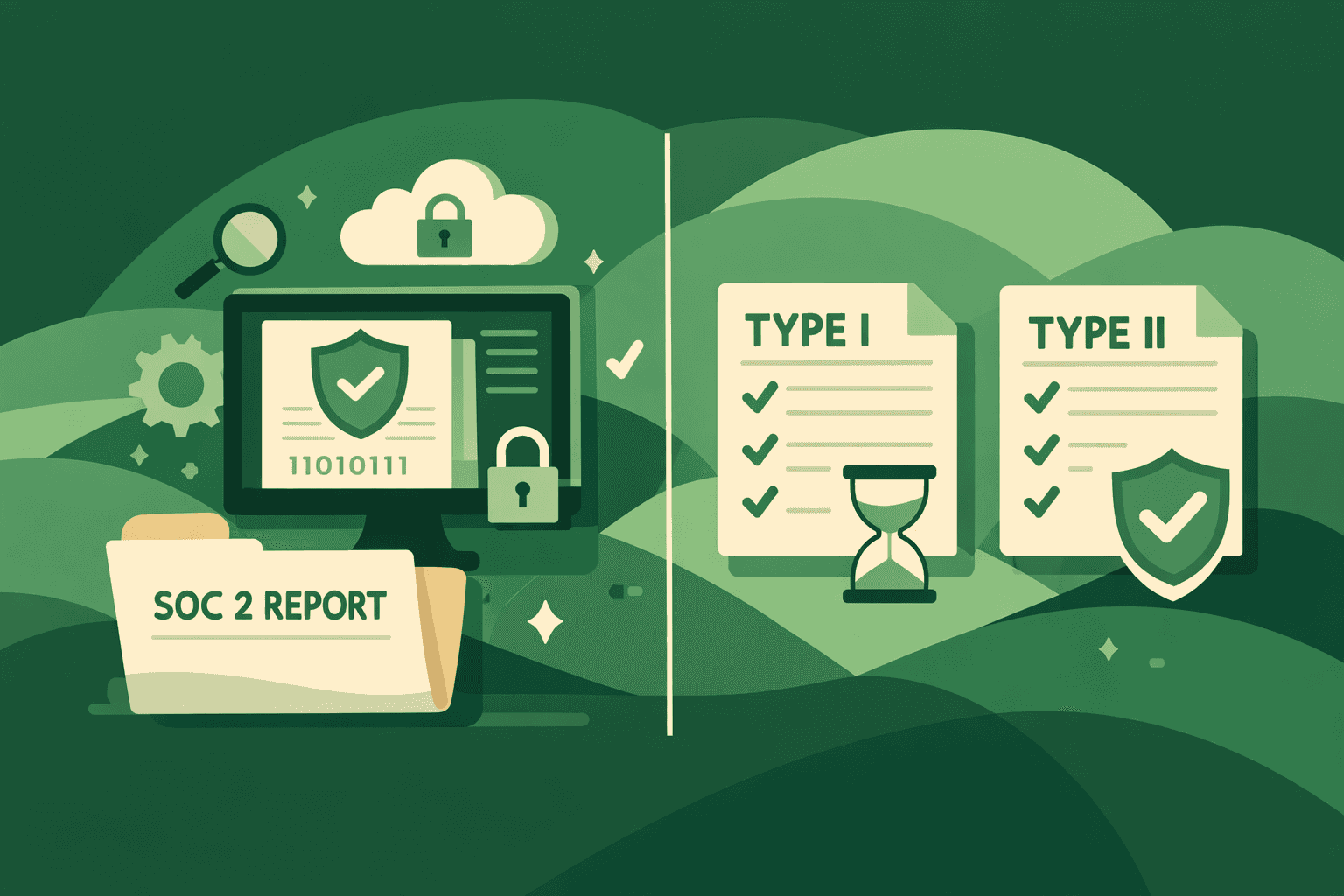
The 12-month expectation applies to both, but they get there differently. A Type I report assesses whether your controls are designed appropriately at a single point in time — it's often the first report a company completes, and many organizations follow it with a Type II report roughly 6-12 months later once they've built up an operating history. A Type II report assesses whether your controls operated effectively over a period, typically 3-12 months — once you're on the Type II cycle, each subsequent audit period generally picks up where the last one left off, so there's no gap in coverage between reports if you time the next audit correctly.
What Happens If You're Between Audits and a Customer Needs Assurance?
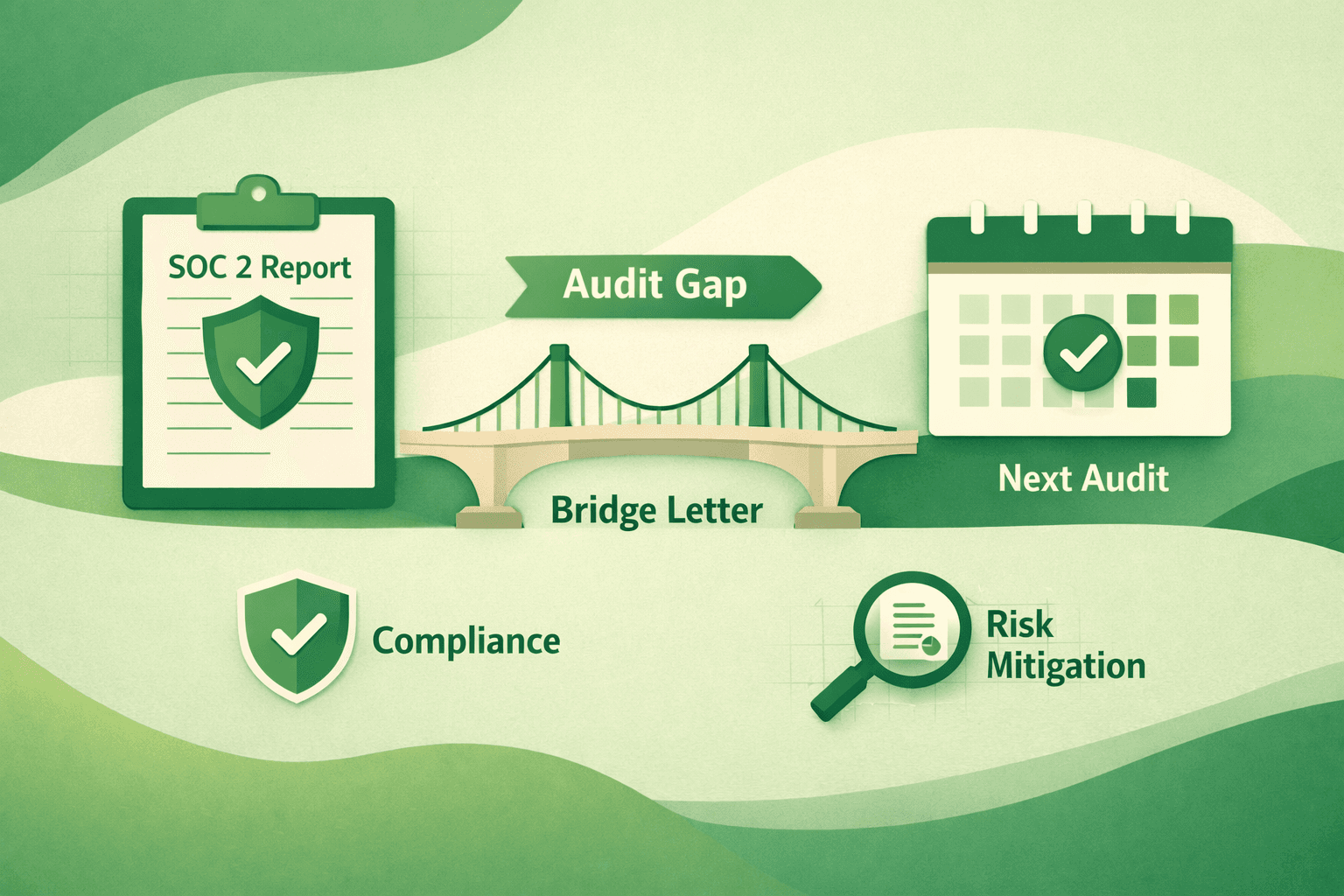
This is the scenario that actually catches most companies off guard: a prospect or existing customer needs proof of compliance during the gap between your last report's coverage period and your next audit. This is exactly what a SOC 2 bridge letter is for — a short letter from your auditor confirming there have been no material changes to your control environment since your last report, covering the gap until the next audit is complete. It's not a substitute for the audit itself, but it's the standard way to satisfy a customer's assurance needs without rushing your next full audit ahead of schedule.
How Far Ahead to Plan Your Next Audit
Don't wait until your current report is about to expire to start the next one. Given that engaging your auditor 2-3 months ahead of your target window is standard practice, and fieldwork plus report finalization typically adds another 4-8 weeks on top of that, most companies should begin readiness work for their next audit roughly 3-4 months before their current report expires. Waiting until the last month typically means either a coverage gap (requiring a bridge letter) or a rushed audit that increases the risk of exceptions.
Treating SOC 2 as a continuous program rather than an annual scramble — staying audit-ready year-round rather than compressing all the prep into the weeks before renewal — is what keeps this cadence from feeling like a fire drill every 12 months.
FAQ
How long is a SOC 2 report valid for? Generally 12 months from the report date. Most enterprise customers require a report dated within the last 12 months as part of their own vendor due diligence.
What happens if my SOC 2 report expires before my next audit is complete? You can typically request a bridge letter from your auditor, which confirms no material changes to your control environment since the last report and covers the gap until the next audit is finished. It's a stopgap, not a replacement for staying on cadence.
Do first-time companies follow the same annual cycle? Usually, yes, though many companies start with a Type I report before moving to Type II roughly 6-12 months later, rather than jumping straight into a full 12-month Type II cycle on day one.
Can I audit more or less frequently than annually? Annual is the standard enterprise buyers expect, but there's no rule against auditing more frequently if your customer base demands it. Auditing less frequently than annually isn't advisable — most vendor risk assessments simply won't accept a report older than 12 months.


In the Spotlight

Start your SOC 2 compliance journey with DSALTA's complete checklist.
Many teams view SOC 2 as overwhelming—expensive, slow, and packed with manual work. The reality is different: with smart preparation and modern automation, the process becomes far more achievable.
That’s where DSALTA® comes in. With AI-powered audit readiness, real-time monitoring, and automated evidence collection, DSALTA® helps you get compliant faster and with less effort. This checklist walks you through every stage so you know exactly what’s ahead.
Read more about SOC 2 compliance with DSALTA.
Stop losing deals to compliance.
Get compliant. Keep building.
Join 100s of startups who got audit-ready in days, not months.