SOC 2 —
SOC 2 Automation in 2026: How AI Cuts Compliance Work by 50%
Discover how AI-powered SOC 2 automation reduces compliance workload by 50%. Learn implementation strategies, cost savings, and best practices for 2026.
Jon Ozdoruk
Audit Preparation & Evidence
Share this article


SOC 2 Automation
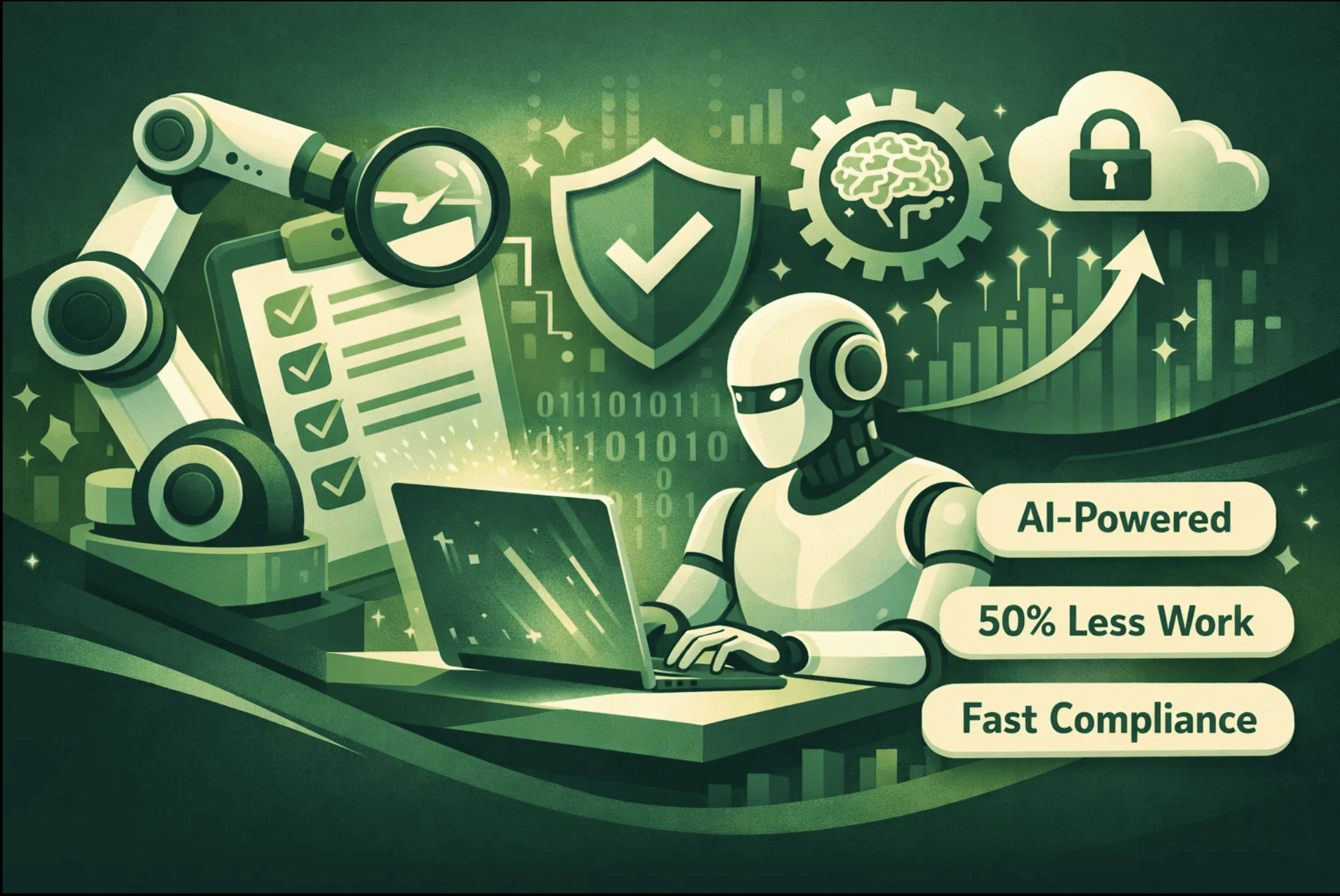
SOC 2 compliance has traditionally been a resource-intensive process that drains engineering and security teams. But in 2026, AI-powered SOC 2 automation is transforming how companies achieve and maintain compliance—reducing manual work by up to 50%.
If you're a founder or security lead preparing for your first SOC 2 audit or streamlining an existing program, this guide explains how AI automation works and why it's become essential for efficient compliance.
What Is SOC 2 Automation?
SOC 2 automation uses artificial intelligence and machine learning to handle repetitive compliance tasks that traditionally required manual effort. Instead of spending weeks gathering evidence, tracking controls, and preparing documentation, automated SOC 2 platforms continuously monitor your systems and generate audit-ready reports.
The technology works by:
Continuously collecting evidence from your tech stack
Mapping controls to SOC 2 Trust Service Criteria
Identifying gaps in real-time
Generating documentation automatically
Monitoring for policy violations 24/7
How AI Reduces SOC 2 Compliance Work by 50%
Automated Evidence Collection
Traditional SOC 2 preparation requires security teams to manually gather screenshots, logs, and documentation for hundreds of control points. AI-powered SOC 2 tools integrate directly with your existing systems, GitHub, AWS, Okta, Google Workspace, and more to automatically collect and organize evidence.
Time saved: What once took 40+ hours per quarter now happens automatically in the background.
Intelligent Control Mapping
AI algorithms analyze your infrastructure and automatically map controls to the five Trust Service Criteria: Security, Availability, Processing Integrity, Confidentiality, and Privacy. The system identifies which controls apply to your specific environment, eliminating guesswork.
Continuous Monitoring and Gap Detection
Instead of discovering compliance gaps during your audit, AI compliance monitoring alerts you to issues in real time. Machine learning models detect anomalies, policy violations, and configuration drift before they become audit findings.
Automated Policy Management
AI tools automatically track policy updates, employee acknowledgments, and training completion. When regulations change or your infrastructure evolves, the system recommends policy updates based on industry best practices.
The ROI of SOC 2 Automation for Startups
For early-stage companies, the economics are compelling:
Manual SOC 2 compliance typically costs:
$50,000–$150,000 in consultant fees
200–400 hours of internal team time
3–6 months from start to audit completion
AI-automated SOC 2 compliance reduces:
Internal time commitment by 50% (100–200 hours)
Consultant dependency and associated costs
Time to audit-ready status (often 4–8 weeks)
Beyond cost savings, automation lets your security team focus on strategic initiatives rather than evidence gathering and spreadsheet management.
Key Features to Look for in SOC 2 Automation Platforms
Broad Integration Capabilities
The best SOC 2 automation software connects with 50+ common SaaS tools and cloud providers. Look for native integrations with your existing security stack, development tools, and HR systems.
AI-Powered Risk Assessment
Advanced platforms use machine learning to prioritize remediation efforts based on risk severity, audit likelihood, and business impact. This intelligent prioritization ensures you address the most critical gaps first.
Audit Trail Generation
Automated audit trails document every configuration change, access modification, and policy update. These comprehensive records satisfy auditor requirements without manual documentation.
Compliance Dashboard and Reporting
Real-time dashboards show your SOC 2 readiness score, outstanding tasks, and compliance trends. Automated SOC 2 reporting generates executive summaries and detailed technical reports on demand.
Implementing AI-Powered SOC 2 Automation: A Step-by-Step Guide
Step 1: Assess Your Current State
Before implementing automation, document your existing controls, infrastructure, and compliance processes. This baseline helps you measure improvement and identify automation opportunities.
Step 2: Choose the Right Platform
Evaluate SOC 2 compliance automation tools based on:
Integration with your tech stack
AI capabilities and intelligence
Auditor acceptance and reputation
Pricing and scalability
Customer support and resources
Step 3: Configure Integrations
Connect your automation platform to critical systems. Prioritize integrations that address your highest-volume evidence-collection needs—typically cloud infrastructure, identity management, and code repositories.
Step 4: Map Controls and Policies
Work with the platform to map your existing controls to SOC 2 requirements. AI will suggest mappings, but review and customize based on your specific implementation.
Step 5: Enable Continuous Monitoring
Activate automated monitoring and set up alert thresholds. Configure notifications so your team receives timely warnings about potential compliance issues.
Step 6: Train Your Team
Ensure security and engineering teams understand how to use the automation platform, respond to alerts, and leverage AI insights for compliance decision-making.
Common Challenges (and How AI Solves Them)
Evidence Gathering Takes Forever
AI Solution: Automated evidence collection runs continuously, capturing screenshots, logs, and configurations without manual intervention.
Don't Know What Controls Apply
AI Solution: Intelligent mapping analyzes your infrastructure and recommends appropriate controls based on your specific technology stack and business model.
Compliance Drift Between Audits
AI Solution: Real-time monitoring detects configuration changes and policy violations immediately, preventing compliance gaps from developing.
Overwhelmed by Documentation Requirements
AI Solution: Auto-generated documentation includes policy templates, procedure guides, and audit responses tailored to your environment.
Is Your Organization Ready for SOC 2 Automation?
AI-powered automation makes the most sense when you:
Have 20+ employees and growing
Use modern cloud infrastructure and SaaS tools
Need to achieve SOC 2 within 2–3 months
Want to maintain compliance without dedicated full-time resources
Value engineering time and want to minimize compliance overhead
Even pre-revenue startups preparing for enterprise sales benefit from automated SOC 2 compliance, as it demonstrates security maturity without requiring extensive security team buildout.
Frequently Asked Questions About SOC 2 Automation
How much does SOC 2 automation cost?
Most platforms range from $1,000–$3,000 per month for early-stage companies, with pricing scaling based on employee count and integrations. This represents significant savings compared to traditional consultant-heavy approaches.
Will auditors accept AI-generated evidence?
Yes, reputable automation platforms are designed with auditor requirements in mind. Many platforms maintain relationships with Big Four and boutique audit firms to ensure evidence meets professional standards.
Can we automate the entire SOC 2 process?
While automation handles 50%+ of the work, you'll still need human involvement for policy decisions, risk assessments, and communication with auditors. Think of AI as your compliance co-pilot, not a complete autopilot.
How long does implementation take?
Most companies complete platform setup in 1–2 weeks. Achieving audit-ready status typically takes 4–8 weeks with automation versus 3–6 months with manual processes.
The Future of AI in SOC 2 Compliance
Looking ahead, AI compliance automation will become even more sophisticated:
Predictive analytics that forecast audit findings before they occur
Natural language processing for instant policy generation
Automated remediation that fixes configuration issues without human intervention
Cross-framework compliance supporting SOC 2, ISO 27001, and GDPR simultaneously
Companies that adopt AI automation now position themselves to handle expanding compliance requirements efficiently as they scale.
Take the Next Step Toward Automated Compliance
SOC 2 automation isn't just about reducing work—it's about building scalable, maintainable compliance that grows with your business. By leveraging AI to handle repetitive tasks, your team can focus on strategic security improvements that actually protect your customers.
Ready to cut your SOC 2 compliance work in half? Start by evaluating your current process, identifying the highest-burden tasks, and exploring how AI automation can eliminate those bottlenecks.
The future of compliance is automated, intelligent, and efficient. The question isn't whether to adopt AI-powered SOC 2 tools—it's how quickly you can implement them to gain a competitive advantage.

Explore more SOC 2 articles
Stop losing deals to compliance.
Get compliant. Keep building.
Join 100s of startups who got audit-ready in days, not months.