SOC 2 Trust Principles Explained : The Complete Guide
Written by
Dogan Akbulut
Published on
What Are SOC 2 Trust Principles?
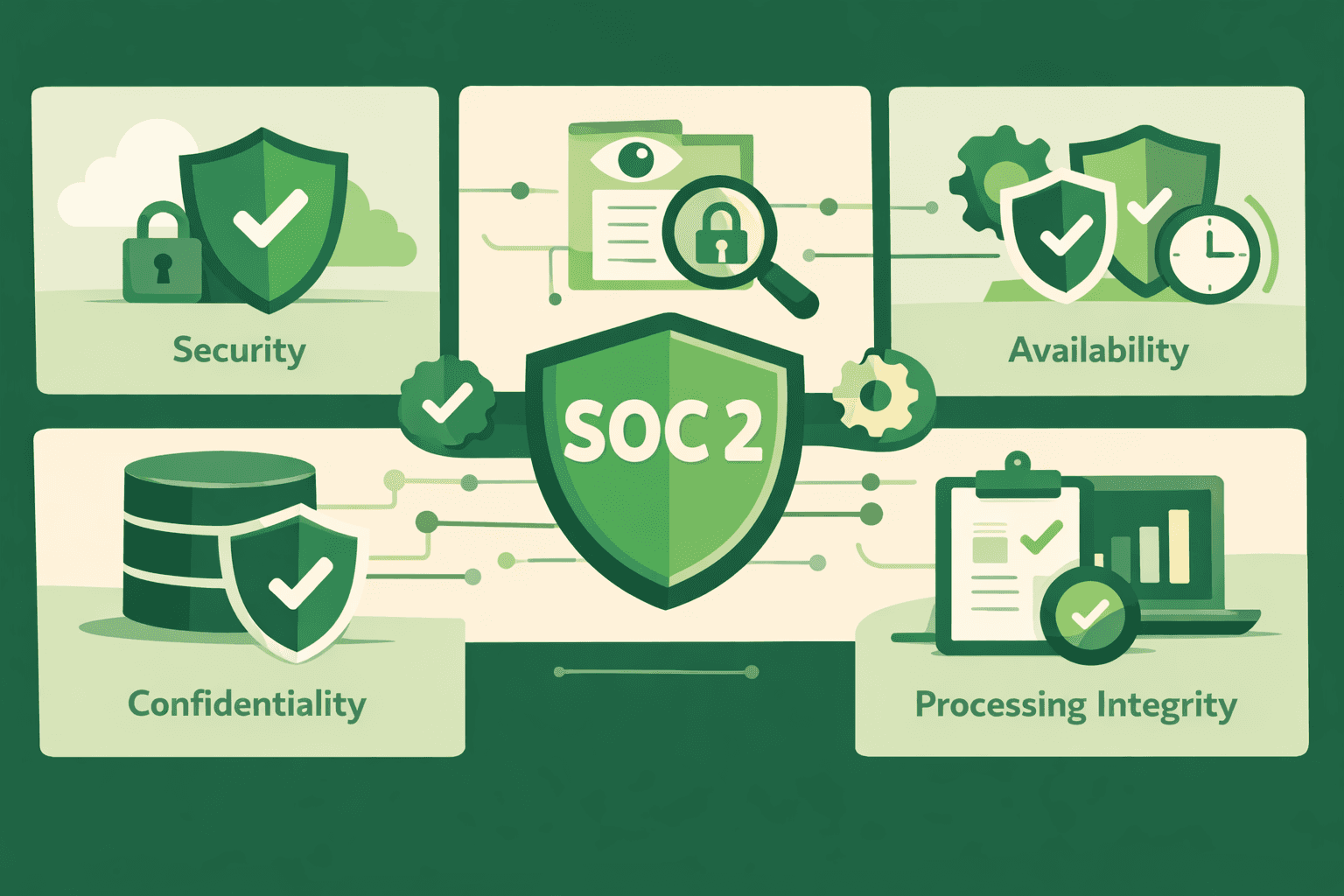
SOC 2 Trust Principles — officially called Trust Services Criteria (TSC) — are the five foundational pillars used to evaluate whether a service organization properly manages customer data. Defined by the American Institute of Certified Public Accountants (AICPA), these principles are: Security, Availability, Processing Integrity, Confidentiality, and Privacy. Every SOC 2 audit is built around one or more of these criteria, and Security is the only mandatory principle. For AI-powered organizations handling sensitive data, achieving SOC 2 compliance against these principles is no longer optional — it's a competitive requirement.
Why SOC 2 Trust Principles Matter More Than Ever in 2025
Before diving into each principle, it's worth understanding why SOC 2 compliance has become a baseline expectation, especially for technology and AI companies.
Enterprise buyers, healthcare organizations, and financial institutions now routinely require a SOC 2 Type II report as a condition of doing business. According to recent market data, over 85% of enterprise procurement teams include SOC 2 status in their vendor due diligence checklist. For AI companies processing personal or sensitive data at scale, the stakes are even higher: regulators, investors, and customers expect verifiable, audited evidence of data security controls—not just a privacy policy.
DSALTA's AI compliance platform is purpose-built to help organizations map, implement, and maintain all five SOC 2 Trust Service Criteria efficiently — reducing audit preparation time by up to 60% compared to manual approaches.
The 5 SOC 2 Trust Principles: A Deep Dive
1. Security (Common Criteria): The Mandatory Principle
Security is the only Trust Principle required for every SOC 2 audit. It forms the foundation of the entire framework and is sometimes referred to as the "Common Criteria." The Security principle evaluates whether your systems are protected against unauthorized access, both physical and logical.
What auditors look for:
To pass the Security criteria, your organization must demonstrate robust controls across several domains. Auditors examine your access control policies to ensure that only authorized personnel can access sensitive systems and data. They review your multi-factor authentication (MFA) implementation, network firewall configurations, intrusion detection systems, and security monitoring protocols. Penetration testing results, vulnerability management programs, and incident response plans are also closely scrutinized.
Key security controls under this principle include:
Logical and physical access restrictions
User authentication and password policies
Network monitoring and anomaly detection
Encryption of data in transit and at rest
Change management procedures
For AI organizations, the Security principle extends to protecting machine learning models, training data pipelines, and API endpoints from unauthorized access or manipulation. DSALTA's compliance platform maps these AI-specific controls directly to the AICPA's Common Criteria, so nothing falls through the cracks.
Why it matters: A single data breach costs an average of $4.88 million (IBM, 2024). Strong SOC 2 Security controls are your first and most important line of defense.
2. Availability: Keeping Your Systems Up and Running
The Availability principle focuses on whether your systems and services are accessible as agreed in your service level agreements (SLAs). This is particularly relevant for SaaS providers, cloud platforms, and any AI service where downtime directly impacts customer operations.
What auditors look for:
Auditors assess your uptime metrics against committed SLAs, your disaster recovery (DR) and business continuity planning (BCP) capabilities, and your backup procedures. They want to see documented evidence that your infrastructure can withstand failures and recover quickly during outages.
Key availability controls include:
SLA documentation and performance monitoring dashboards
Redundant infrastructure and failover systems
Disaster recovery testing and documented RTO/RPO targets
Incident communication procedures for customers
Capacity planning and performance benchmarking
Scheduled maintenance procedures with advanced customer notification
For AI-driven platforms, availability also encompasses model inference uptime, API response reliability, and data pipeline resilience. Customers relying on your AI outputs for business decisions need assurance that your platform will be there when they need it.
Pro Tip: Most SaaS companies targeting enterprise customers should include Availability as a required Trust Principle, even though it's technically optional.
3. Processing Integrity: Ensuring Your Data Processing Is Accurate and Complete
Processing Integrity addresses whether your system processes data correctly, completely, in a timely manner, and in an authorized manner. This principle is especially critical for AI companies whose core value proposition is data processing and analysis.
What auditors look for:
Auditors investigate whether your data inputs are validated, whether processing errors are detected and corrected, and whether outputs are accurate and delivered on time. They examine your quality assurance (QA) procedures, error-handling protocols, and exception management workflows.
Key processing integrity controls include:
Input validation and data quality checks
Automated error detection and alerting
Audit trails and processing logs
Output reconciliation procedures
System performance monitoring
Data transformation documentation
For AI organizations, Processing Integrity goes hand in hand with AI model governance. If your model produces biased, inaccurate, or incomplete outputs, you're potentially violating this principle. DSALTA helps AI companies build the control frameworks needed to monitor model performance and maintain processing integrity at scale — aligning SOC 2 requirements with responsible AI standards like the NIST AI RMF.
4. Confidentiality: Protecting Sensitive Business Information
The Confidentiality principle governs how your organization identifies, handles, and protects information that is designated as confidential — typically business data subject to non-disclosure agreements (NDAs), proprietary information, and trade secrets.
What auditors look for:
Auditors want evidence that confidential information is clearly identified at the time of collection, protected throughout its lifecycle with appropriate technical and organizational controls, and properly disposed of when no longer needed.
Key confidentiality controls include:
Data classification policies and labeling procedures
Role-based access controls (RBAC) for confidential data
Encryption standards for confidential data at rest and in transit
Contractor and vendor NDAs
Secure data destruction and disposal procedures
DLP (Data Loss Prevention) tools and policies
Confidentiality vs. Privacy: These two principles are often confused. Confidentiality applies to business information (e.g., trade secrets, financial data), while Privacy applies to personal information (e.g., names, email addresses, health records). Both may be required in the same audit, but they address fundamentally different data types and obligations.
For AI companies that handle client datasets for model training, the Confidentiality principle is critical. Customers need assurance that their proprietary data will not be exposed to other clients or used outside the agreed scope.
5. Privacy: Safeguarding Personal Information Responsibly
The Privacy principle is the most complex of the five Trust Services Criteria. It aligns closely with international privacy regulations, including GDPR, CCPA/CPRA, HIPAA, and PIPEDA, and is evaluated against the AICPA's Generally Accepted Privacy Principles (GAPP).
What auditors look for:
Privacy audits examine your entire personal data lifecycle: how data is collected, used, retained, shared, and disposed of. Auditors look for a comprehensive privacy policy, data subject rights procedures (access, deletion, correction), mechanisms for consent management, third-party data-sharing controls, and breach notification procedures.
Key privacy controls include:
Privacy notice and consent management
Data subject rights management (DSAR workflows)
Cross-border data transfer safeguards
Third-party vendor privacy assessments
Data retention schedules and deletion procedures
Breach detection and notification procedures
The AI Privacy Challenge: AI companies face unique privacy challenges under this principle. Training machine learning models on personal data, using data for purposes beyond what users consented to, and generating outputs that could re-identify individuals are all areas where AI companies frequently fall short. DSALTA's platform specifically addresses these AI privacy risks, mapping them to SOC 2 Privacy criteria and broader regulatory requirements.
SOC 2 Type I vs. SOC 2 Type II: Which Do You Need?
One of the most common questions organizations face when starting their SOC 2 journey is whether to pursue a Type I or Type II report.
SOC 2 Type I is a point-in-time assessment. It evaluates whether your controls are designed appropriately as of a specific date. Type I is faster and less expensive to obtain, making it a good starting point for early-stage companies or those new to SOC 2.
SOC 2 Type II is an evaluation of your controls over a defined period — typically 6 to 12 months. It assesses not just whether controls are designed correctly, but whether they operate effectively throughout the audit period. Enterprise buyers almost universally require a SOC 2 Type II report.
Feature | SOC 2 Type I | SOC 2 Type II |
|---|---|---|
Evaluation Period | Point in time | 6–12 months |
What's Assessed | Design of controls | Design + operating effectiveness |
Time to Complete | 4–8 weeks | 6–12 months |
Cost | Lower | Higher |
Enterprise Value | Limited | High |
Recommended For | Early-stage startups | Growth-stage and enterprise companies |
DSALTA recommends that most organizations aim for SOC 2 Type II certification, using Type I as an interim milestone to demonstrate commitment and readiness to prospects during the audit period.
How to Choose Which SOC 2 Trust Principles to Include
While Security is mandatory, selecting which additional principles to include should be based on your customers' expectations, your industry, and the nature of the data you process.
Include Availability if: You provide SaaS, cloud infrastructure, or any service where downtime directly impacts your customers' operations. Almost all B2B SaaS companies should include this.
Include Processing Integrity if: Your platform processes, transforms, or analyzes data on behalf of customers — especially if they rely on your outputs for financial, operational, or compliance decisions. This is essential for AI analytics platforms.
Include Confidentiality if: You handle proprietary business information, trade secrets, or any data governed by NDAs or confidentiality agreements.
Include Privacy if: You collect, store, or process personal information (PII), particularly if you serve customers in the EU (GDPR), California (CCPA), or regulated industries like healthcare or finance.
DSALTA's Recommendation: Most AI companies should pursue Security, Availability, Processing Integrity, and Confidentiality as a minimum. Those handling personal data should add the Privacy tag. This full-scope approach demonstrates the highest level of trust to enterprise buyers and regulators.
The SOC 2 Compliance Journey: What to Expect
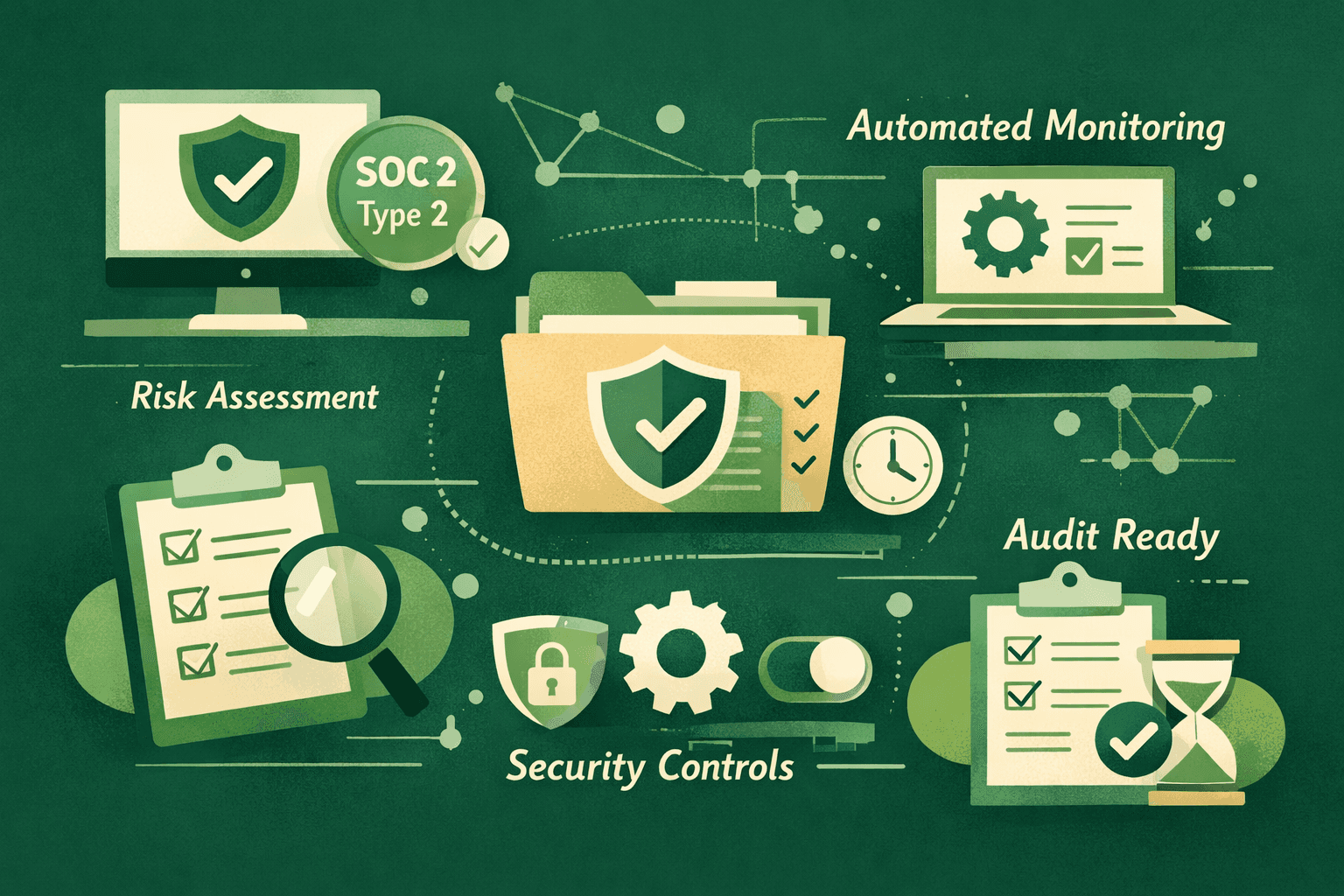
Achieving SOC 2 compliance is a structured process that typically unfolds in four stages:
Stage 1: Readiness Assessment (Weeks 1–4)
Before engaging an auditor, conduct a thorough gap analysis to identify where your current controls fall short of the Trust Services Criteria. This involves documenting your existing policies, procedures, and technical controls, then mapping them to SOC 2 requirements. DSALTA's AI-powered readiness assessment automates this process, identifying control gaps and generating a prioritized remediation roadmap in hours rather than weeks.
Stage 2: Remediation (Weeks 4–16)
Based on your readiness assessment, implement the controls needed to meet your selected Trust Principles. This may involve deploying new security tools, updating policies, implementing new workflows, and training employees. This stage is where most organizations spend the majority of their time and resources.
Stage 3: Evidence Collection (Ongoing)
For Type II audits, you must continuously collect evidence that your controls are operating effectively throughout the audit period. This includes access logs, security monitoring alerts, change management records, vendor assessments, and training completion records. DSALTA automates evidence collection across your tech stack, integrating with AWS, Azure, GCP, GitHub, Okta, and dozens of other platforms to automatically pull evidence.
Stage 4: Audit and Report (Weeks 1–8 with Auditor)
Work with an AICPA-accredited CPA firm to conduct the formal audit. Your auditor will review your controls, test evidence, and issue a SOC 2 report. A clean report with no exceptions is the goal, and thorough preparation is the key to achieving it.
Common SOC 2 Compliance Mistakes to Avoid
Many organizations stumble on their path to SOC 2 certification due to avoidable mistakes. Understanding these pitfalls in advance can save months of rework and high cost.
Underestimating scope creep. Many companies start with Security only, then discover their customers require Availability and Confidentiality as well. Define your scope carefully from the start to avoid costly mid-audit additions.
Treating SOC 2 as a one-time project. SOC 2 Type II is an ongoing commitment. Controls must operate continuously, evidence must be collected regularly, and policies must be reviewed and updated. Organizations that treat it as a checkbox exercise often face exceptions in subsequent audits.
Neglecting vendor risk management. Your SOC 2 report covers your organization, but your subservice providers (cloud providers, payroll processors, etc.) create shared risk. A robust vendor management program is required and closely scrutinized by auditors.
Poor documentation hygiene. SOC 2 auditors require evidence, and "we do this verbally" is not acceptable. Every policy, procedure, and control must be documented, version-controlled, and accessible.
Ignoring human factors. Security awareness training, access reviews, and background checks are controls — not nice-to-haves. Many exceptions in SOC 2 audits stem from human process failures rather than technical gaps.
SOC 2 Trust Principles and AI Compliance: The DSALTA Advantage
Traditional SOC 2 compliance tools were built for conventional software companies — not for the unique challenges of AI-driven organizations. DSALTA bridges that gap by combining deep SOC 2 expertise with specialized AI governance capabilities.
Here's what makes DSALTA different:
AI-Aware Control Mapping: DSALTA maps SOC 2 Trust Service Criteria to AI-specific risks, including model drift, training data integrity, algorithmic bias, and API security — ensuring your compliance program covers both your infrastructure and your AI systems.
Automated Evidence Collection: DSALTA integrates with over 100 tools and platforms to automatically collect SOC 2 evidence — eliminating manual spreadsheet work that consumes compliance teams' time and introduces errors.
Continuous Monitoring: Rather than a point-in-time snapshot, DSALTA monitors your controls continuously and alerts your team when a control gap or exception is detected — long before your auditor does.
Policy Generation and Management: DSALTA's AI-powered policy engine generates SOC 2-aligned policies tailored to your organization, tracks versions, and ensures policy reviews are conducted on schedule.
Audit-Ready Reporting: When it's time for your audit, DSALTA generates a comprehensive, auditor-ready package that maps your controls to Trust Service Criteria, links to supporting evidence, and documents your risk treatment decisions.
Frequently Asked Questions About SOC 2 Trust Principles
How long does SOC 2 certification take?
SOC 2 Type I typically takes 4 to 8 weeks after readiness assessment and remediation. SOC 2 Type II requires a minimum 6-month audit observation period, so the total time from start to report is typically 9 to 14 months.
How much does SOC 2 compliance cost?
Costs vary widely based on scope and organizational size. Auditor fees typically range from $15,000 to $50,000 for small to mid-size organizations. Add internal labor, tooling, and remediation costs, and the total first-year investment often falls between $50,000 and $150,000. DSALTA reduces this significantly through automation.
Is SOC 2 required by law?
SOC 2 is not legally mandated, but it is widely required by enterprise customers as a contractual condition. Industries like healthcare and finance may have overlapping regulatory requirements (HIPAA, SOX) that make SOC 2 alignment effectively necessary.
What's the difference between SOC 1 and SOC 2?
SOC 1 (formerly SAS 70) focuses on controls relevant to financial reporting—typically applicable to payroll processors, claims processors, and similar organizations. SOC 2 focuses on security, availability, and data protection — applicable to any technology company handling customer data.
How often must a SOC 2 audit be repeated?
SOC 2 Type II reports cover a defined period and must be renewed — typically annually. Most enterprise buyers require a current (within 12 months) SOC 2 Type II report.
Conclusion: Building Trust Through SOC 2 Compliance
The five SOC 2 Trust Principles — Security, Availability, Processing Integrity, Confidentiality, and Privacy — represent the gold standard for demonstrating that your organization handles data responsibly, reliably, and securely. For AI-driven companies, they are not just a compliance checkbox; they are the foundation of customer trust, enterprise sales success, and long-term resilience.
Achieving SOC 2 compliance is a journey, not a destination. It requires sustained commitment, robust controls, and a compliance program that evolves alongside your technology and your threat landscape. DSALTA is built to make that journey faster, more efficient, and more comprehensive — so your team can focus on building great products while we handle the compliance complexity.
Ready to start your SOC 2 journey? Contact DSALTA today for a free AI compliance readiness assessment and discover how quickly you can achieve your first SOC 2 milestones.
Explore more SOC 2 articles
Getting Started with SOC 2
Audit Preparation & Evidence
Controls & Technical Implementation
Multi-Framework Strategy
Business & Trust
Stop losing deals to compliance.
Get compliant. Keep building.
Join 100s of startups who got audit-ready in days, not months.