How AI Is Transforming Vendor Risk Management
Written by
John Ozdemir
Published on
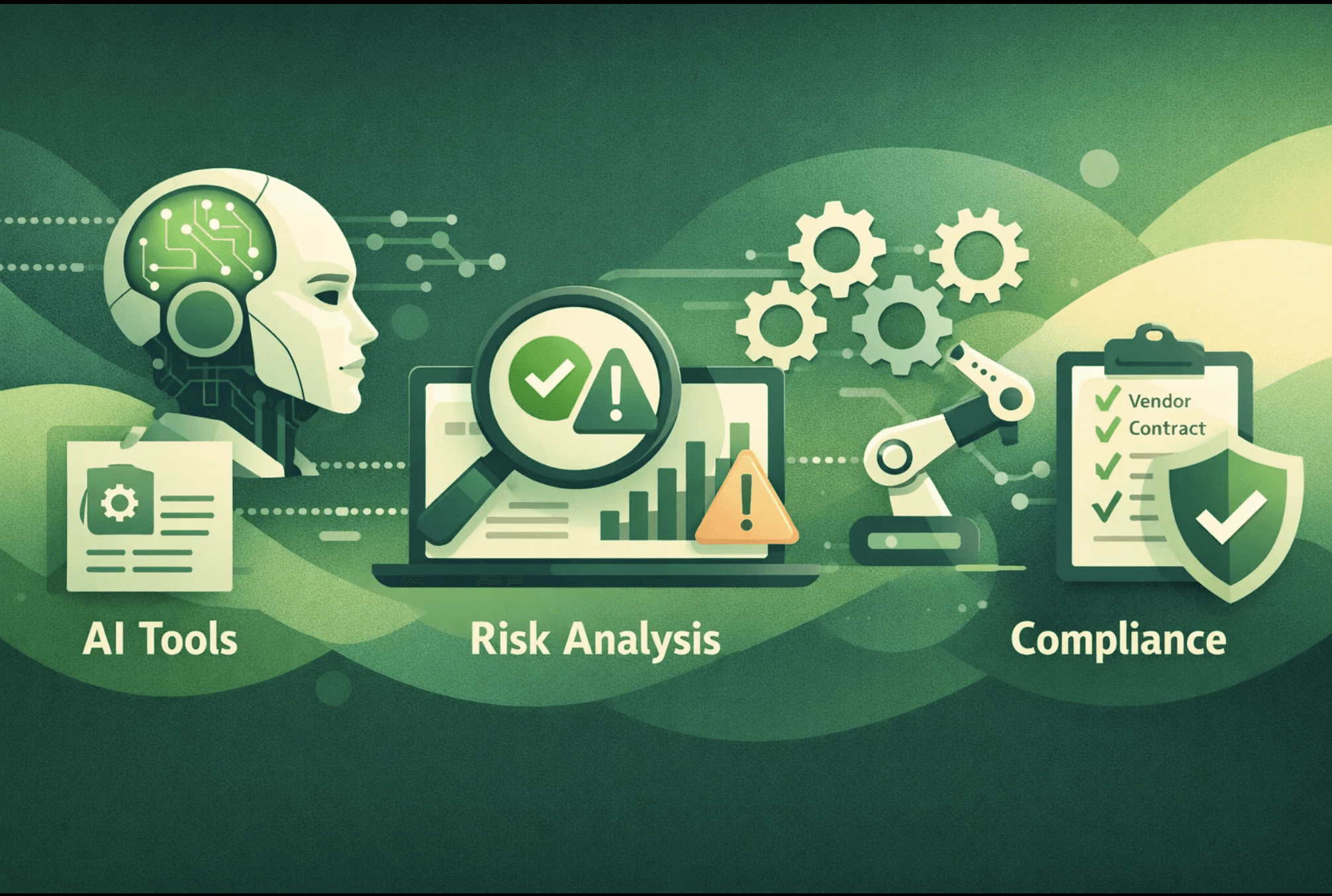
Introduction: The Evolution of Vendor Risk Assessment
Vendor risk management has fundamentally changed. What used to be an annual checkbox exercise has become a continuous, intelligence-driven process that organizations must get right to protect their data, maintain compliance, and compete effectively.
The traditional approach—sending lengthy questionnaires once a year, collecting SOC 2 reports, filing PDFs in folders, and manually assigning risk ratings—no longer works in 2025. Vendors change too quickly. Security incidents happen too frequently. Compliance expectations have risen too high.
Artificial intelligence is transforming how organizations assess and manage vendor risk management software and processes. This isn't about replacing human judgment with automation. It's about augmenting risk decisions with continuous intelligence that scales across hundreds of vendor relationships while maintaining the rigor auditors expect.
This guide explains how AI is reshaping vendor risk management, what it means for compliance teams, and how to implement AI-driven approaches responsibly while satisfying SOC 2, ISO 27001, and other compliance requirements.
The Problem With Traditional Vendor Risk Assessment
Why Manual Processes No Longer Scale
Traditional vendor risk management followed a predictable pattern. Organizations would onboard a new vendor by sending a security questionnaire, collecting certifications like SOC 2 reports, reviewing policies, and assigning a risk rating of low, medium, or high based on subjective judgment.
Once approved, vendors would be reassessed annually through the same process. Between assessments, organizations had limited visibility into changes in vendor security posture, new vulnerabilities, or emerging risks.
This model made a critical assumption: vendor risk is static. In 2025, that assumption is dangerously wrong.
How Vendor Risk Has Accelerated
AI adoption across vendor ecosystems introduces new complexity. Vendors now embed AI into customer support tools, analytics platforms, decision engines, and data processing pipelines. Each AI integration creates new data-exposure paths, introduces model-governance questions, and raises concerns about training-data provenance and bias.
Continuous compliance expectations have evolved significantly. SOC 2 Type 2, ISO 27001 surveillance audits, and regulatory examinations increasingly expect evidence of ongoing vendor oversight—not just annual point-in-time reviews. Auditors want to see that you continuously monitor vendor risk and respond promptly to changes.
Scale and speed requirements have intensified. Growing companies onboard dozens of vendors monthly. Manual review processes create bottlenecks that slow business operations while increasing security exposure through shortcuts and incomplete assessments.
The combination of these factors makes traditional vendor risk management approaches inadequate for modern business environments.
What AI-Powered Vendor Risk Management Actually Means
Beyond Automation: Augmented Intelligence
AI in vendor risk management is not about replacing security teams or removing human accountability. It's about augmenting human judgment with continuous intelligence that scales effectively.
AI systems analyze vendor data continuously rather than annually, detect patterns humans would miss in massive datasets, flag changes in vendor risk posture in near real-time, and reduce review fatigue by handling routine analysis.
The fundamental question shifts from "Is this vendor risky?" to "How has this vendor's risk changed over time, and why?"
The Components of AI-Driven Vendor Risk
Continuous data ingestion replaces periodic reviews. AI systems monitor changes in security posture, policy updates, public breach disclosures, regulatory actions, infrastructure modifications, and compliance status across all vendors simultaneously.
Pattern recognition identifies anomalies and trends that manual reviews miss. AI detects when vendor behavior deviates from historical patterns, when security incidents correlate across multiple vendors, when remediation timelines exceed industry norms, and when vendor responses contain inconsistencies.
Context-aware scoring moves beyond simplistic rules. Instead of treating all vendors identically, AI considers vendor criticality to your operations, the sensitivity of the data they access, the scope of system access granted, historical security performance, and industry-specific risk factors.
How AI Transforms Key Vendor Risk Activities
Continuous Monitoring Instead of Annual Reviews
Traditional vendor risk assessment operates on fixed intervals. You review vendors annually or quarterly, assign a risk rating, and move on until the following scheduled review. Between assessments, you have limited visibility into changes.
AI enables continuous monitoring to track vendor risk in real time. Systems ingest signals including security breach notifications, vulnerability disclosures, compliance certification changes, infrastructure modifications, policy updates, and regulatory enforcement actions.
Risk scores become dynamic rather than static. When a vendor experiences a security incident, your risk assessment updates automatically. When they achieve SOC 2 certification, their risk profile improves immediately. When they fall behind on remediation commitments, alerts are triggered before the next scheduled review.
This matters profoundly for compliance programs. SOC 2 audits increasingly scrutinize whether you maintain ongoing awareness of vendor risk. ISO 27001 requires evidence of continuous supplier monitoring. HIPAA expects a timely response to business associate security issues.
Intelligent Questionnaire Analysis
Security questionnaires remain valuable for understanding vendor controls, but AI transforms how organizations use them.
Manual questionnaire review suffers from predictable problems. Reviewers experience fatigue after evaluating dozens of similar responses. Inconsistencies between vendor answers and actual practices go unnoticed. Vague responses that sound reassuring but lack substance get approved. Red flags buried in lengthy narratives get missed.
AI systems address these limitations systematically. They detect inconsistent or contradictory responses across different questionnaire sections, compare current answers against previous submissions to identify unexplained changes, flag vague responses that avoid specific control descriptions, and highlight answers that don't align with the vendor's claimed security maturity level.
Human reviewers receive pre-analyzed questionnaires with potential issues already flagged. Instead of reading every response word-for-word, they focus attention where it matters most—investigating flagged inconsistencies, evaluating control gaps for your specific use case, and making informed risk acceptance decisions.
This approach reduces reviewer fatigue, catches more red flags, and improves the quality of risk decisions without requiring more staff time.
Context-Aware Risk Scoring
Legacy vendor risk scoring used simplistic rules. The SOC 2 report presents a low risk. Encryption absent equals high risk. ISO 27001 certified equals an approved vendor.
These binary rules ignore critical context. A missing control might be acceptable for a low-impact vendor with limited data access, but unacceptable for a vendor processing customer payment information. The same security gap represents different levels of actual risk depending on how you use the vendor.
AI-driven risk scoring incorporates context systematically. It weighs vendor criticality to your operations, the sensitivity of the data the vendor accesses, the scope of system access granted, the vendor's historical security performance, industry benchmarks for similar vendors, and the compensating controls you've implemented.
The result is risk prioritization that reflects reality. Critical vendors with access to sensitive data receive appropriate scrutiny. Low-impact vendors with minimal access get streamlined approval. Your team focuses its effort where risk actually exists rather than treating all vendors identically.
The Impact on Compliance and Audit Programs
What Changes for Compliance Teams
AI doesn't remove accountability for the compliance team—it shifts where teams spend their time and energy.
Before AI implementation, compliance teams spent most of their time chasing vendors for updated documentation, manually reviewing repetitive security questionnaires, reacting to issues discovered during audits, and maintaining spreadsheets tracking vendor review schedules.
After AI implementation, teams focus on high-impact vendor relationships requiring human judgment, remediation planning for identified control gaps, maintaining continuous audit-readiness, and making strategic risk decisions aligned with business objectives.
This shift is significant for organizations pursuing SOC 2 compliance, maintaining ISO 27001 certification, or managing HIPAA business associate relationships. All three frameworks expect evidence of ongoing vendor oversight proportional to risk.
Meeting Auditor Expectations in 2025
Auditors in 2025 are no longer surprised by AI use in compliance processes. They now expect governance around AI-driven decisions.
When reviewing AI-enabled vendor risk programs, auditors typically examine clear documentation of how AI systems influence decisions, evidence of human oversight and approval for critical choices, consistent application of risk criteria across all vendors, audit trails showing how vendor risk scores changed over time, and proof that AI-generated insights were actually reviewed and acted upon.
AI doesn't reduce audit scrutiny—it can raise the bar. Organizations implementing AI transparently and responsibly tend to move through audits more quickly, face fewer follow-up questions, and demonstrate stronger operational maturity.
The key is to treat AI as a decision-support tool rather than a compliance shortcut. Human accountability remains central to defensible vendor risk management.
Implementing AI in Vendor Risk Management Responsibly
Starting With Clear Objectives
Successful AI implementation begins with defining specific problems you're solving. Organizations achieve better results when they target concrete challenges rather than pursuing AI for its own sake.
Common objectives include reducing time spent on routine vendor reviews, improving detection of vendor security changes between assessments, scaling vendor risk programs without proportional staff increases, and maintaining audit-ready vendor documentation continuously.
Start with one high-value use case. Prove the approach works. Then expand to additional applications. This incremental strategy reduces risk and builds organizational confidence in AI-driven processes.
Maintaining Human Oversight
The most effective AI implementations maintain clear human accountability for decisions. AI recommends risk levels, suggests remediation paths, highlights exceptions requiring attention, and provides supporting evidence for decisions.
Humans approve high-risk vendor onboarding decisions, make risk-acceptance choices for control gaps, decide on contract exceptions, and maintain accountability for vendor relationships.
This hybrid approach aligns with compliance framework expectations. SOC 2 requires evidence of appropriate oversight. ISO 27001 expects management involvement in significant decisions. Regulators want clear accountability for third-party risk management.
Document where AI influences decisions and where humans make final determinations. This clarity satisfies auditors and provides clear accountability when questions arise.
Managing AI's Own Risks
Implementing AI in vendor risk management introduces new risks that mature programs actively manage.
Model bias can over-penalize certain vendor types, geographies, or business models based on patterns in the training data rather than actual risk. Regularly review AI outputs for unexplained patterns that might indicate bias.
Data quality issues create misleading risk assessments when input data is incomplete, outdated, or inaccurate. Implement data validation processes to ensure AI systems work with reliable information.
Explainability gaps make it difficult to justify AI-driven decisions to auditors, leadership, or vendors themselves. Choose AI approaches that provide clear reasoning for their recommendations rather than black-box outputs.
Over-automation risks blind trust in AI recommendations without appropriate skepticism. Maintain critical evaluation of AI outputs, especially for high-stakes decisions.
Strong vendor risk programs document AI decision logic, retain human checkpoints for critical actions, regularly review model outputs for anomalies, and treat AI as decision support rather than a replacement for judgment.
The Business Benefits Beyond Compliance
Faster Vendor Onboarding
AI-driven vendor risk assessment accelerates onboarding for low-risk vendors while maintaining a thorough review for high-risk relationships. Routine approvals that previously took weeks can happen in days without sacrificing security.
This speed advantage matters competitively. Organizations that can evaluate and approve vendors quickly respond faster to business opportunities, support product development velocity, and avoid delays that frustrate internal stakeholders.
Better Risk Visibility
Continuous monitoring provides leadership with current visibility into third-party risk rather than point-in-time snapshots from the last annual review. Executives see how vendor risk trends over time, which vendors pose the most significant exposure, where risk mitigation efforts should focus, and whether overall vendor risk is increasing or decreasing.
This visibility enables better strategic decisions about vendor relationships, contract renewals, and resource allocation for risk mitigation efforts.
Reduced Incident Impact
When vendor security incidents occur, organizations with AI-driven monitoring detect issues faster, understand their vendor relationship exposure immediately, and can respond decisively rather than scrambling to assess impact after the fact.
Faster incident response reduces business disruption, limits data exposure, and demonstrates effective risk management to customers and regulators.
The Future of Vendor Risk Management
Predictive Risk Capabilities
The next evolution in AI-driven vendor risk management is predictive analytics that identify vendors likely to become high-risk before incidents occur.
AI systems analyze historical vendor incident patterns, identify correlations between vendor characteristics and security failures, flag vendors exhibiting warning signs based on pattern recognition, and surface vendors that require closer monitoring before problems emerge.
For example, vendors with consistently delayed remediation cycles, combined with poor change management history, receive earlier scrutiny. Vendors expanding rapidly without proportional investments in compliance maturity trigger alerts. Vendors handling sensitive data without appropriate security controls surface automatically for review.
This moves vendor risk management from reactive to preventive—addressing risks before they materialize into incidents.
Integration With Broader Risk Platforms
Vendor risk management is increasingly integrated with broader enterprise risk management, security operations, and compliance platforms. AI enables connections among vendor risk data, security monitoring, compliance evidence, incident response, and business continuity planning.
Organizations gain unified visibility across all risk domains rather than managing vendor risk in isolation. This integration improves decision-making and resource allocation across security and compliance functions.
Conclusion: Embracing Augmented Vendor Risk Management
AI is transforming vendor risk management from a static, checkbox-driven process into a dynamic, intelligence-driven capability that scales effectively while maintaining the rigor compliance frameworks require.
The strongest vendor risk programs in 2025 combine AI for scale, speed, and continuous monitoring with human judgment for accountability, context, and strategic decisions. Organizations embracing this augmented approach gain better visibility into third-party risk, make faster and more defensible decisions, and maintain more substantial alignment with compliance requirements.
Those who continue to rely exclusively on manual vendor risk processes face increasing challenges. Not because AI is mandatory, but because modern vendor ecosystems change too quickly for periodic manual reviews to provide adequate visibility into risk.
The question for 2026 is not whether to use AI in vendor risk management. It's about using AI responsibly, transparently, and in ways auditors trust, while genuinely improving your organization's ability to manage third-party risk effectively.
Organizations answering that question well will set the standard for the next generation of vendor risk management and compliance.
Ready to Experience AI-Driven Vendor Risk Management?
Stop chasing spreadsheets and start automating your third-party security. Book a free DSALTA demo today to see how our AI-powered platform automates vendor assessments, identifies hidden risks, and keeps your organization audit-ready 365 days a year.
Explore more AI Compliance articles
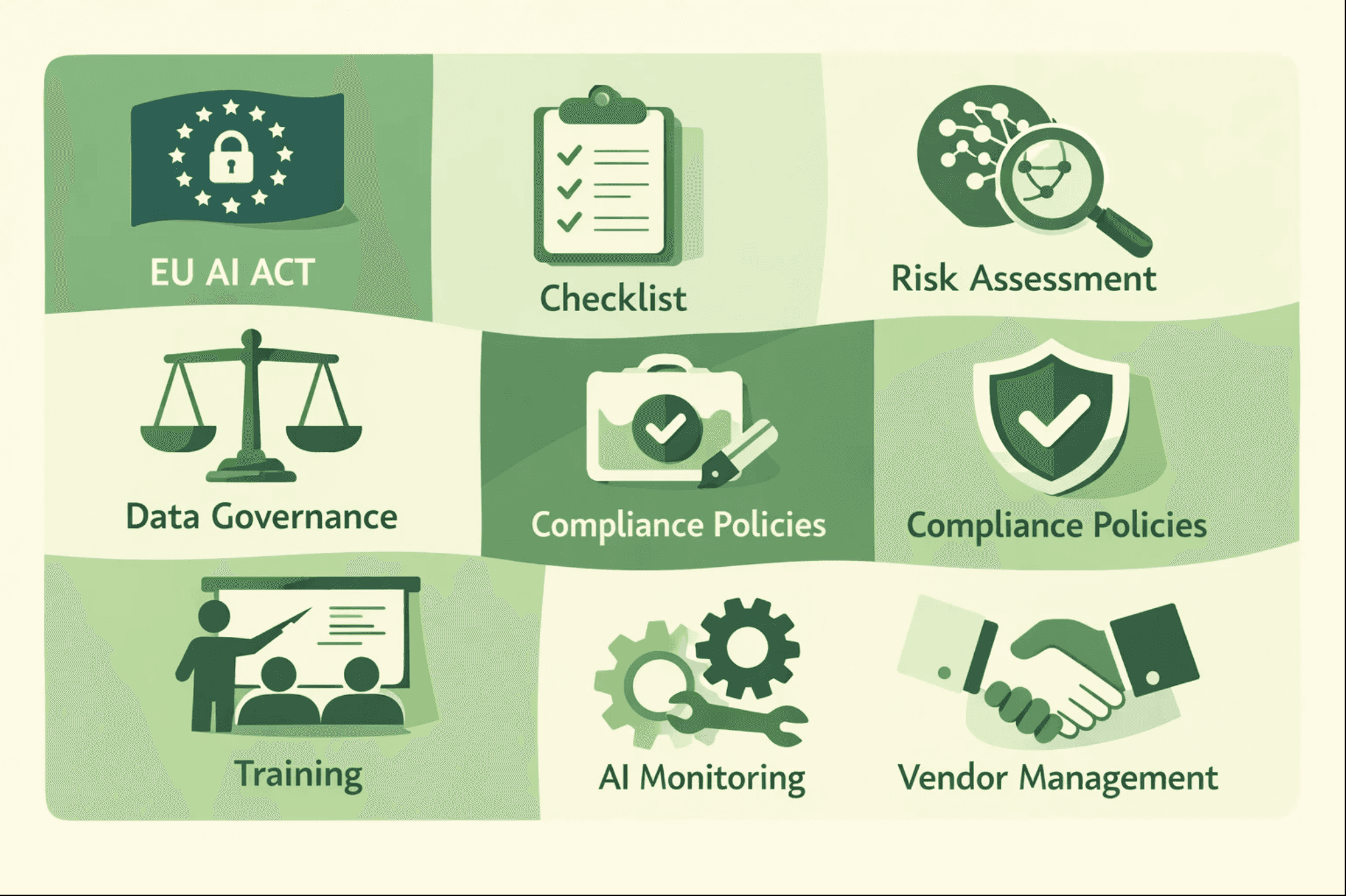
AI Regulatory Compliance
AI-Powered Compliance Automation
HIPAA & Healthcare AI
GDPR & ISO 27001 with AI
AI in Vendor Risk Management
Stop losing deals to compliance.
Get compliant. Keep building.
Join 100s of startups who got audit-ready in days, not months.