AI Compliance —
AI Compliance Automation: What Works & Why It Matters
Learn how AI compliance automation saves time on evidence collection, questionnaires, and audits. Real results from startups and scale-ups in 2026.
John Ozdemir
Share this article


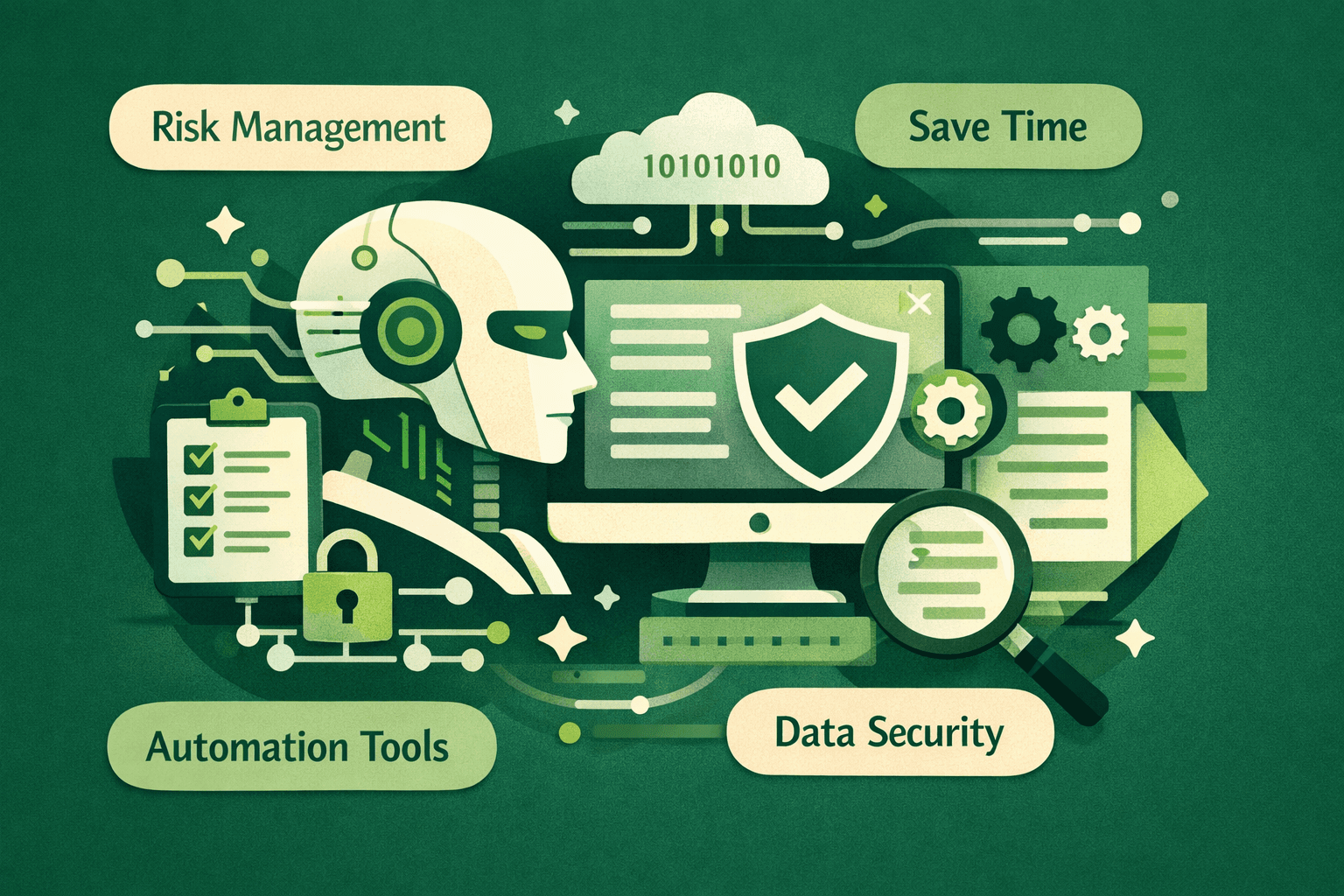
AI-Powered Compliance Automation: What Really Works in 2026
The increasing number of growing startups creates an escalating challenge for their compliance managers who need to protect security standards and prepare for audits and customer inquiries while preventing data breaches and building customer trust. The market offers various AI compliance automation solutions, but not all platforms deliver equal value to their users.
The article investigates AI compliance automation technology from 2025 to determine its actual time-saving potential and identify situations where human expertise remains essential. Security leaders need to understand machine learning compliance and LLM compliance automation and continuous monitoring to properly assess compliance automation platforms for their organizations.
AI Compliance Technology Basics: Three Essential Systems
The marketing materials about compliance automation platforms fail to distinguish between three separate technologies that power their systems.
The system performs pre-defined operations through established conditions in rule-based automation. The system takes a screenshot whenever the AWS security group experiences any modifications. The system operates through automated processes instead of artificial intelligence, although many compliance workflow tools present it as AI-based compliance automation.
Machine learning compliance technology uses data pattern analysis to generate risk scores and detect potential problems and unusual patterns. This constitutes genuine AI. The system analyzes numerous vendor risk assessments to determine which risk elements matter most for particular business sectors, resulting in better risk assessment accuracy.
The system uses LLM compliance automation to process large language models, which extract meaning from text and produce new content. Security questionnaires receive automated processing through LLMs while AI generates security policies. The system uses LLMs to analyze existing documentation, enabling the creation of new policies and responses through compliance framework templates.
The distinction between these systems matters for compliance programs because rule-based systems execute programmed instructions, but machine learning and LLMs operate beyond their programmed instructions.
AI Compliance Software Achieves Significant Time Savings Through Three Key Applications
AI compliance software produces quantifiable results through three specific compliance program applications.
Real-Time Monitoring Enables Automated Evidence Collection for Compliance Programs
AI compliance tools achieve their highest value through evidence collection automation. The API-based connection between compliance automation platforms and infrastructure systems enables them to monitor cloud environments and identity providers and security tools continuously. The system automatically saves evidence whenever system configurations change thus minimizing human mistakes during evidence collection.
The DSALTA system tracks AWS security groups and Google Workspace settings and access controls through its continuous monitoring system. The AI security compliance system immediately captures evidence when system changes occur and links it to relevant controls for SOC 2 automation, ISO 27001 automation, and HIPAA compliance automation.
The evidence collection process now takes 2-3 hours for review instead of 15-20 hours monthly which results in an 85% reduction of manual work.
Security Questionnaire Automation for Enterprise Sales
Security questionnaires from enterprise customers need detailed responses about data protection and access controls and compliance status verification. The traditional method of answering security questions involves either duplicating previous responses or conducting document searches.
The system uses natural language processing to interpret each question before it searches security documentation, policies, and compliance reports for suitable responses. The system uses actual security posture to generate pre-filled answers that compliance managers can review before final submission.
The review process for questionnaires now takes 45 minutes instead of the previous 4-6 hours. The time savings enable organizations to handle 3-4 questionnaires per month with 15 hours of additional time for business operations instead of manual work.
AI Policy Generation and Control Documentation
Security policy development needs both compliance expertise and extensive time consumption. The system generates security policies through framework-specific templates that adapt to technical infrastructure, industrial sectors, and compliance frameworks.
The process starts by choosing target frameworks from DSALTA's compliance checklist resources before the platform AI creates policy drafts that address access control, data encryption, incident response, and other requirements. The compliance team reviews and modifies policies to match the operational procedures of the organization.
The process of manual policy creation for 20-25 policies takes two to three weeks to complete. The automated workflow with AI assistance produces draft policies that need review within 2-3 hours, while the system handles standard content and framework requirements, so compliance teams can verify the policies against operational facts.
Where Human Expertise Remains Essential
AI compliance automation performs well with repetitive work but human judgment continues to play a vital role in three essential areas.
Business Context and Risk Appetite Decisions
AI compliance software detects control failures and vendor risk scores that fall below established thresholds. The process of determining acceptable risk levels against critical thresholds needs business-related information. The continuous monitoring system detects disabled MFA on developer test accounts but compliance managers need to decide if this poses a critical risk for production systems or if it is acceptable for testing purposes.
Technical Implementation and Configuration
The system uses automated compliance to detect security configuration non-compliance, but lacks the ability to perform actual implementation. The DevOps team, along with security experts, needs to establish IAM roles, create network segments, enable encryption, and construct secure CI/CD pipelines. The AI compliance tool functions as a compliance workflow guide, which shows what needs implementation and checks the accuracy of system configurations.
Relationship Management and Strategic Communication
Compliance programs require organizations to show evidence of proper due diligence practices. AI for audit readiness generates evidence and documentation, but human staff members handle all communication with auditors, executive presentations, customer security discussions, and employee training programs. The tasks that require human interaction for building relationships need both emotional understanding, business acumen, and situational awareness, which AI systems lack.
Evaluating Readiness for Compliance Automation Platforms
Organizations achieve the best results from AI compliance when they fulfill these conditions:
Spending 10+ hours weekly on compliance workflows
Managing multiple frameworks (SOC 2, ISO 27001, HIPAA)
Receiving regular security questionnaires from enterprise prospects
Preparing for initial compliance audits with limited resources
Scaling teams rapidly while maintaining security standards
Organizations should delay their AI compliance automation platform adoption when they have unclear compliance standards or fewer than 10 employees before revenue or depend heavily on outdated systems with restricted API connectivity.
Expected ROI: Real-Time Monitoring and Cost Reduction
The implementation of compliance automation platforms produces quantifiable results that organizations can measure.
Framework-specific time savings:
AI for SOC 2: 4-6 months reduced to 2-4 weeks
ISO 27001 automation: 6-9 months reduced to 2-3 months
Automated evidence collection: 85% reduction in manual effort
Security questionnaires: 70-80% faster completion
Financial impact:
Automation platforms: $1,000-$5,000 monthly for startups
Avoided consultant fees: $15,000-$50,000 per audit
ROI timeline: 3-6 months for most organizations leveraging AI
Strategic advantages:
Reduced stress during audit preparation through continuous improvement
Faster sales cycles via automated trust centers
Enhanced visibility into security posture beyond checkbox compliance
Proactive approach to customer data protection and building trust
Essential Vendor Evaluation Questions
Organizations need to assess their compliance automation platform vendors through these essential evaluation points:
AI capabilities: Request live demonstrations of both LLMs and machine learning features together with rule-based automation systems. Organizations need to verify accuracy rates for AI-generated content and how the system handles uncommon scenarios.
Integration: Verify compatibility with cloud providers (AWS, Azure, Google Cloud) and identity management platforms. Understand implementation timelines and data portability when switching vendors.
Support: Confirm whether vendors provide compliance expertise or basic technical assistance and access to experienced auditors.
Implementing AI Compliance Automation
Modern compliance automation platforms deliver measurable results for organizations with clear security requirements. DSALTA helps startups achieve continuous compliance through real-time monitoring and automated evidence collection and AI policy generation which reduces audit preparation from months to weeks.
Successful implementation requires understanding where AI excels at repetitive tasks and pattern recognition while humans remain essential for risk decisions and auditor relationships. Organizations spending 10+ hours weekly on compliance workflows should evaluate automation platforms by starting with pilot programs focused on evidence collection or questionnaire automation.
Explore AI compliance automation: Schedule a demo to see automated evidence collection and continuous monitoring for your compliance requirements, or review our framework resources to understand applicable standards.


Explore more AI Compliance articles
Stop losing deals to compliance.
Get compliant. Keep building.
Join 100s of startups who got audit-ready in days, not months.