SOC 2
How to Master Third-Party Risk Management: A Complete Guide to Vendor Compliance
Written by
DSALTA Team
|
Published on
Feb 3, 2026
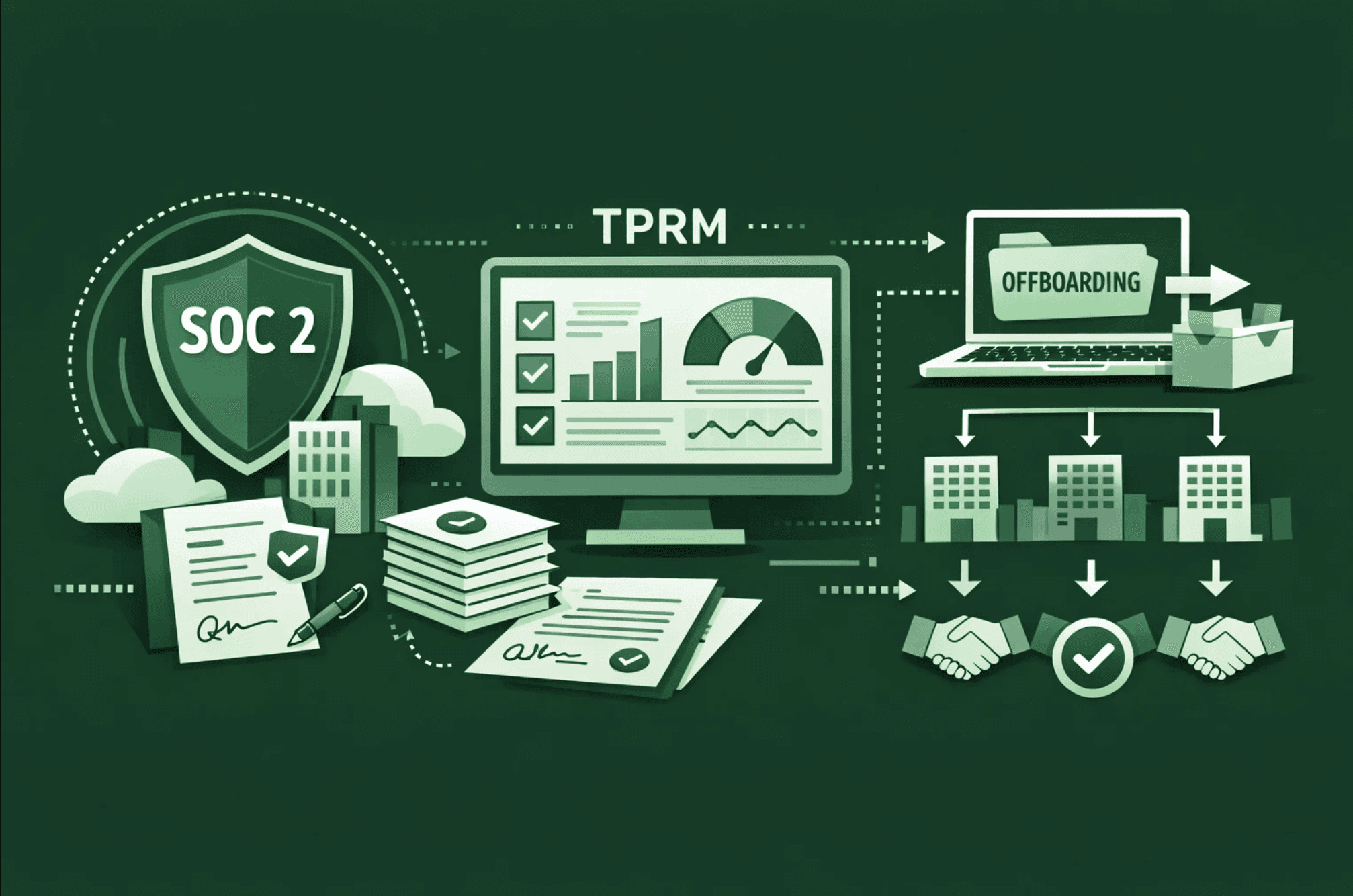
Third-party risk management (TPRM) has become a critical business priority. Companies working with Fortune 500 clients face strict vendor compliance requirements, yet many struggle with manual processes, scattered documentation, and time-consuming security reviews.
In this guide, you'll learn how to streamline your third-party risk management program, automate SOC 2 report collection, and build effective TPRM dashboards that accelerate enterprise contracts.
What Is Third-Party Risk Management?
Third-party risk management is the process of identifying, assessing, and mitigating risks associated with external vendors and service providers. These risks include:
• Cybersecurity vulnerabilities from vendor systems
• Data breach exposure through third-party access
• Compliance failures that impact your regulatory standing
• Operational disruptions when vendors fail to deliver
Effective TPRM protects your organization while building trust with enterprise clients who demand rigorous vendor vetting.
Why Fortune 500 Companies Require Robust TPRM
Enterprise clients require comprehensive third-party risk assessments before signing contracts. They need proof that your vendors meet security standards like SOC 2, ISO 27001, and GDPR compliance.
Common Fortune 500 vendor requirements include:
• Current SOC 2 Type II reports from all subprocessors
• Regular security questionnaire completion (SIG, CAIQ, VSA)
• Proof of cyber insurance coverage
• Incident response and business continuity plans
• Vendor offboarding documentation showing data deletion
Without efficient TPRM processes, sales cycles drag on for months while your team scrambles to gather vendor documentation.
How to Streamline SOC 2 Report Collection
The Traditional Challenge
Most companies chase SOC 2 reports through endless email threads. Vendors forget to respond, reports expire, and sales teams lack visibility into compliance status.
Best Practices for SOC 2 Collection
Create a centralized vendor repository where all security documentation lives in one place with expiration tracking and automatic renewal reminders.
Automate vendor outreach by sending standardized requests that clearly explain what documentation you need and why it matters.
Implement version control to ensure you always have the most current SOC 2 reports, not outdated versions from last year.
Build vendor self-service portals that let suppliers upload their own compliance documentation, reducing your administrative burden.
Building Effective TPRM Dashboards
What Makes a Good TPRM Dashboard?
An effective third-party risk management dashboard provides real-time visibility into your vendor security posture. Key elements include:
Risk scoring by vendor using factors like data access level, compliance certifications, and security assessment results.
Compliance status tracking showing which vendors have current SOC 2 reports, completed questionnaires, and up-to-date contracts.
Expiration alerts that notify your team when critical certifications or reports are about to expire.
Executive reporting views that summarize overall vendor risk for leadership and board presentations.
Dashboard Metrics That Matter
• Number of active vendors by risk tier
• Percentage of vendors with current compliance documentation
• Average time to complete vendor security reviews
• Open security findings requiring vendor remediation
• Vendor concentration risk by service category
The Critical Importance of Vendor Offboarding
Why Offboarding Documentation Matters
When you terminate a vendor relationship, enterprise clients want proof that the vendor properly deleted your data and revoked all access credentials.
Proper vendor offboarding includes:
• Documented data deletion certificates from the vendor
• Proof of access revocation and credential removal
• Final security assessments or exit interviews
• Contract termination confirmations
• Archive of all vendor-related security documentation
Many companies overlook offboarding until a Fortune 500 prospect specifically asks for these records during due diligence.
Creating an Offboarding Checklist
Develop a standard vendor offboarding process that captures all necessary proof points. This checklist should trigger automatically when a vendor contract ends, ensuring nothing falls through the cracks.
How TPRM Accelerates Enterprise Sales
The Sales Cycle Impact
Strong third-party risk management directly impacts your ability to close Fortune 500 contracts. Here's how:
Security questionnaires get answered faster when you have organized vendor documentation readily available instead of hunting through email.
Sales teams can proactively share compliance proof rather than scrambling reactively when prospects ask about vendor security.
Legal reviews move more quickly when you can immediately provide current SOC 2 reports and vendor agreements.
Contract negotiations focus on business terms instead of getting stuck on security concerns about your supply chain.
Competitive Advantage Through TPRM
Companies with mature TPRM programs close enterprise deals 40% faster than competitors still using spreadsheets and email for vendor management. This speed advantage compounds over multiple sales cycles, dramatically increasing win rates with Fortune 500 clients. Learn more about vendor risk management software to accelerate your process.
Common TPRM Mistakes to Avoid
• Treating TPRM as a one-time project instead of an ongoing program with regular vendor reassessments
• Storing vendor documentation in shared drives where files get lost, and nobody knows what's current versus outdated
• Ignoring low-risk vendors completely until they become critical, and then realizing you have no documentation on them
• Failing to involve legal and security teams early in the vendor selection process can lead to compliance issues being discovered too late
• Not automating vendor workflows creates manual bottlenecks that slow down both procurement and sales
Implementing Your TPRM Program
Getting Started
Begin by inventorying all current vendors and categorizing them by risk level based on data access, criticality to operations, and compliance requirements. Similar to conducting a risk assessment, this foundational step is critical.
Prioritize high-risk vendors first by collecting their SOC 2 reports, security questionnaires, and contracts into a centralized system.
Create standardized templates for vendor security assessments so every vendor goes through consistent evaluation criteria.
Establish governance policies that define who approves new vendors, how often reassessments occur, and what compliance documentation is mandatory.
Scaling Your Program
As your vendor ecosystem grows, automation becomes essential. Look for TPRM platforms that integrate with your existing security tools and automate common tasks such as vendor onboarding, document collection, and compliance monitoring.
Measuring TPRM Success
Track these key performance indicators to demonstrate the value of your third-party risk management program:
• Mean time to collect vendor compliance documentation (target: under 7 days)
• Percentage of vendors with current SOC 2 reports (target: 100% of high-risk vendors)
• Sales cycle length for enterprise deals (should decrease as TPRM matures)
• Number of security incidents caused by vendors (should approach zero)
• Audit findings related to vendor management (should decline over time)
Conclusion
Mastering third-party risk management transforms vendor compliance from a sales blocker into a competitive advantage. By streamlining SOC 2 collection, implementing robust TPRM dashboards, and maintaining thorough offboarding documentation, you'll accelerate Fortune 500 contract negotiations while reducing organizational risk.
The investment in proper TPRM processes pays dividends through faster enterprise sales cycles, stronger security posture, and increased confidence from both customers and stakeholders.
Ready to transform your approach to vendor risk management? Start by centralizing your vendor documentation and automating your compliance workflows today.
Frequently Asked Questions
What is the difference between SOC 2 Type I and Type II reports?
SOC 2 Type I reports evaluate the design of security controls at a specific point in time, while Type II reports test the operating effectiveness of those controls over a period (typically 6-12 months). Fortune 500 companies generally require Type II reports.
How often should we reassess vendor risk?
High-risk vendors with access to sensitive data should be reassessed at a minimum of once per year. Medium-risk vendors can be reviewed every 18-24 months. Reassessments should also be triggered when vendors experience security incidents or major service changes.
What should we do if a critical vendor doesn't have a SOC 2 report?
Consider requesting alternative compliance certifications, such as ISO 27001, completing a detailed security questionnaire, or conducting an on-site security assessment. For truly critical vendors, you may need to require they obtain SOC 2 certification as a contract condition.
How do we handle vendor security incidents?
Your vendor contracts should require immediate notification of incidents. When incidents occur, assess the impact on your data, document the vendor's response, and determine if additional security measures or contract terms are needed going forward.
Continue Reading

SOC 2 in 3 Months: Proven Hacks and Mock Audit Templates to Fast-Track Compliance
Compliance
HR Audit Prep: DEI, Harassment & Compliance Playbook Guide
Compliance
Cyber Compliance for SaaS: Ransomware Defense, Continuous Monitoring & DORA/ISO 27001 Evidence Gathering
How to Master Third-Party Risk Management: A Complete Guide to Vendor Compliance