AI Compliance —
GRC Trends 2026: AI-First Platforms Are Reshaping Compliance
Discover 2026 GRC trends: AI automation, ESG integration, and supply chain oversight. Learn why AI-first platforms dominate SOC 2, ISO 27001, and HIPAA audits.
Dogan Akbulut
AI-Driven GRC & Risk Management
Share this article


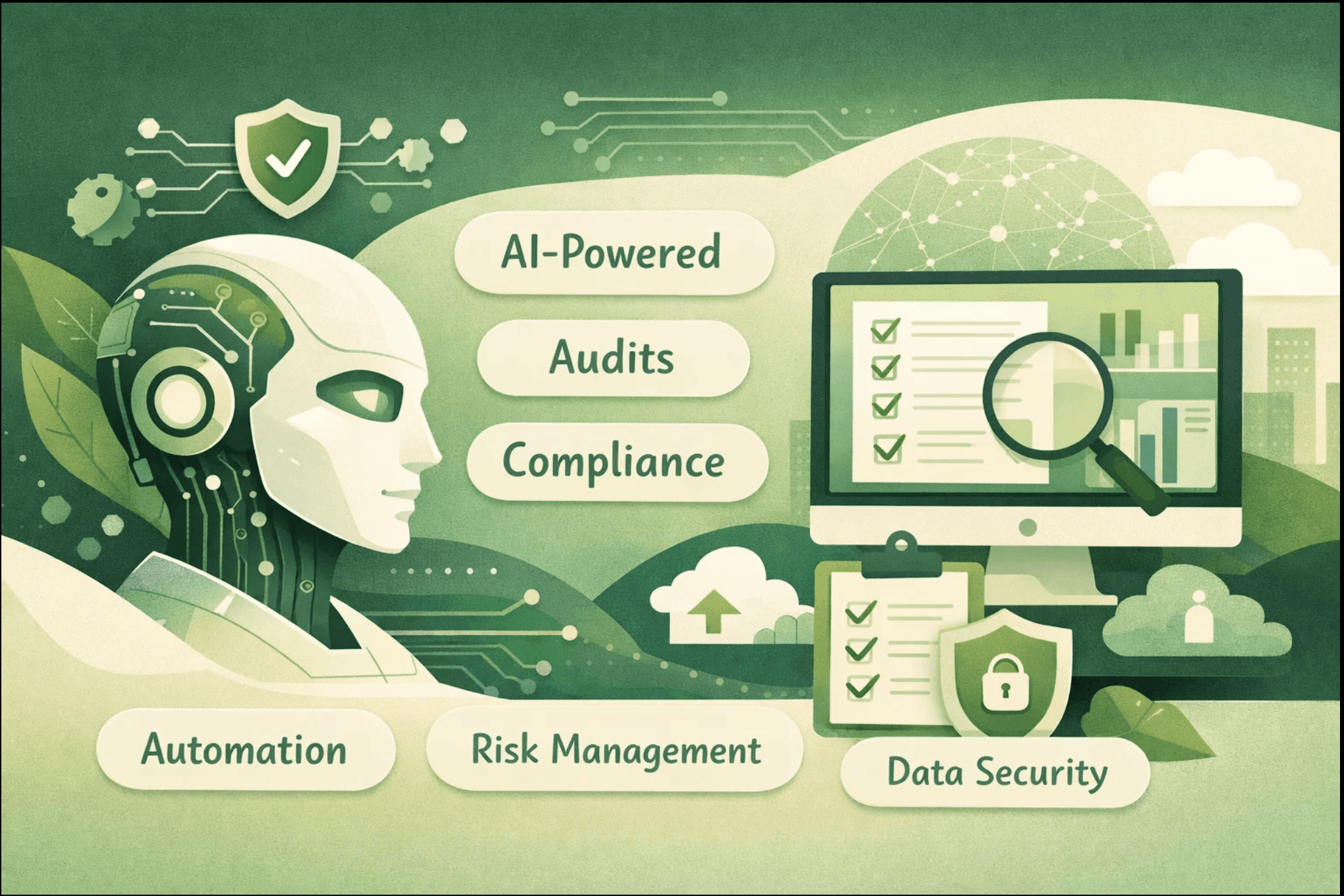
GRC Trends & AI-First Platforms
Governance, Risk, and Compliance (GRC) is changing fast. If you're a founder, security leader, or compliance officer, 2026 will bring new challenges—and new opportunities. The companies that pass audits efficiently will be those using AI-first compliance platforms that automate evidence collection, continuously monitor risks, and prepare for SOC 2, ISO 27001, HIPAA, and GDPR requirements.
This guide breaks down the top GRC trends for 2026 and shows you exactly what to look for in modern compliance software.
What Is GRC and Why Does It Matter?
GRC stands for Governance, Risk, and Compliance. It's how your company:
Governs its operations with policies and controls
Manages risks like data breaches or vendor failures
Complies with regulations such as SOC 2 compliance requirements, ISO 27001 requirements, and HIPAA compliance checklist standards
Getting GRC right builds customer trust, wins enterprise deals, and protects your business from fines and breaches. Getting it wrong costs time, money, and reputation.
Top GRC Trends for 2026
1. AI Automation Takes Over Manual Compliance Work
The biggest shift in 2026 is AI-powered compliance automation. Traditional compliance meant spreadsheets, screenshot hunting, and months of manual work before a compliance audit. AI-first platforms change that.
What AI does for compliance:
Auto-captures evidence from your tech stack (AWS, GitHub, Okta, etc.) for SOC 2 best practices and ISO 27001 requirements
Maps controls automatically across frameworks like SOC 2 certifications, HIPAA training for employees, and data security compliance standards
Monitors continuously so you're always audit-ready instead of scrambling before deadlines
Generates reports instantly for auditors and customers
Why this matters: Companies using AI compliance tools cut audit prep time by 60-80% and reduce consultant fees by thousands of dollars.
2. ESG Reporting Integration with GRC
Environmental, Social, and Governance (ESG) reporting is no longer optional. Investors, customers, and regulators want proof of your sustainability practices, ethical operations, and governance structures.
2026 GRC platforms will:
Combine traditional compliance (SOC 2, ISO 27001) with ESG metrics in one dashboard
Track carbon footprint, diversity data, and supply chain ethics alongside security controls
Generate unified reports for auditors, investors, and enterprise buyers
Why this matters: ESG is becoming a dealbreaker for B2B sales. Companies that can't prove ESG compliance will lose contracts to competitors who can.
3. Supply Chain and Vendor Risk Management Goes Deep
Your security is only as strong as your weakest vendor. In 2026, vendor risk management software becomes mission-critical as:
Regulators increase focus on third-party risk (especially after major supply chain breaches)
Enterprise buyers demand proof that your vendors are compliant, too
AI tools automate vendor assessments, monitor security posture changes, and flag risks in real-time
What modern vendor risk management includes:
Automated questionnaire distribution and follow-up
Continuous monitoring of vendor security ratings
Contract management tied to compliance requirements
Risk scoring that updates as vendor security changes
Why this matters: A single insecure vendor can trigger a breach that costs millions and destroys customer trust. Automated vendor oversight prevents this.
Why AI-First Compliance Platforms Dominate Audits
Traditional compliance tools are just fancy spreadsheets. AI-first platforms are intelligent systems that work for you, not just store data.
Unified Hub for Multiple Frameworks
Stop juggling separate tools for SOC 2 compliance, ISO 27001, HIPAA compliance checklist, and GDPR. AI platforms provide:
Single dashboard showing compliance status across all frameworks
Shared control mapping (one security control satisfies requirements across multiple standards)
Unified evidence library that auditors and customers can access
Example: Your access control policy satisfies requirements for SOC 2 best practices, ISO 27001, HIPAA, and GDPR simultaneously—no duplicate work.
Automated Evidence Capture
Manual evidence collection is the biggest time sink in compliance audits. AI platforms integrate with your tech stack to:
Pull logs automatically from cloud providers, HR systems, and security tools
Screenshot configurations that prove compliance
Track policy changes and employee training completion
Archive everything with timestamps for auditor review
Result: What used to take 200+ hours now takes minutes.
AI-Powered Risk Intelligence
Modern risk management frameworks use AI to:
Analyze threats in real-time based on your specific tech stack and industry
Predict risks before they become incidents (e.g., detecting unusual vendor behavior)
Recommend controls based on your risk profile and compliance goals
Prioritize remediation so you fix the most critical issues first
Example: If your platform detects that a critical vendor hasn't updated their SOC 2 certification in 18 months, it automatically flags this in your risk dashboard and suggests alternative vendors.
Real-Time Trust Centers and Auditor Portals
Your customers and auditors need proof of compliance. AI platforms create:
Public trust centers showing your SOC 2 certifications, ISO 27001 status, and security posture
Secure auditor portals where auditors access evidence without endless email chains
Customer security questionnaire automation that answers RFPs instantly using your compliance data
Why this matters: Enterprise buyers check your trust center before even scheduling a sales call. No trust center = no deal.
What Good Looks Like: AI Compliance Software Checklist
When evaluating compliance platforms for SOC 2, ISO 27001, HIPAA, or GDPR, use this checklist:
✅ 1. Intelligent Control Mapping
Does it automatically map your controls across multiple frameworks?
Can you see which controls satisfy SOC 2 compliance requirements and ISO 27001 requirements simultaneously?
Does it suggest controls based on your tech stack and risk profile?
✅ 2. Deep Integrations with Your Tech Stack
Does it connect to AWS, Azure, GCP, Google Workspace, Okta, GitHub, Jira, and your HRIS?
Can it pull evidence automatically without manual uploads?
Does it monitor changes in real time (e.g., detecting when MFA is disabled)?
✅ 3. Continuous Compliance Monitoring
Does it check compliance status daily, not just before audits?
Will it alert you immediately when controls fail?
Can you see your compliance health at any moment?
✅ 4. AI Agents for Automated Tasks
Does it auto-generate policies based on your business?
Can it answer security questionnaires without human input?
Does it automatically prepare audit evidence packages?
✅ 5. Vendor Risk Management Software Built-In
Can you track vendor security posture in the same platform?
Does it automate vendor assessments and questionnaires?
Will it alert you when vendor certifications expire?
✅ 6. Auditor Collaboration Features
Can auditors log in directly to review evidence?
Does it track auditor requests and responses?
Can you generate compliance reports with one click?
✅ 7. Customer Trust Portal
Can prospects view your SOC 2 certifications and ISO 27001 status?
Does it auto-answer common security questions from your compliance checklist?
Is it branded with your company's look and feel?
✅ 8. Compliance Audit Trail
Does it maintain complete audit logs of all changes?
Can you prove who accessed what and when?
Is everything timestamped for auditor verification?
How to Prepare Your Business for 2026 GRC
Start with the Right Framework
Choose your compliance framework based on your industry and customers:
SaaS companies: SOC 2 Type 2 (plus ISO 27001 for global customers)
Healthcare tech: HIPAA compliance checklist and SOC 2
Financial services: SOC 2 + ISO 27001 + industry-specific regulations
EU customers: GDPR + SOC 2 or ISO 27001
Pro tip: Many AI compliance platforms help you achieve multiple certifications simultaneously using shared controls.
Build Your Compliance Checklist
Your compliance checklist should include:
Asset inventory: Document all systems, data stores, and vendors
Policy documentation: Information security policy, access control policy, incident response plan
Risk assessment: Complete a risk management framework analysis
Control implementation: Deploy technical controls (MFA, encryption, logging)
Employee training: Run HIPAA training for employees or security awareness programs
Vendor management: Assess all third parties using vendor risk management software
Evidence collection: Set up automated capture via your compliance platform
Mock audit: Run an internal compliance audit before the real one
Leverage AI for Continuous Compliance
Don't treat compliance as a once-per-year event. Use AI platforms to:
Monitor controls 24/7
Update evidence automatically
Adapt to new regulations
Prepare for surprise audits
The goal: Be audit-ready every day, not just during audit season.
Real-World Impact: AI Compliance in Action
Before AI compliance platforms:
6-12 months to prepare for first SOC 2 audit
$50,000-$150,000 in consultant fees
200+ hours of manual evidence collection
High risk of failed controls due to missed evidence
With AI-first platforms:
2-4 months to audit-ready state
60-80% reduction in consultant hours
Automated evidence capture (saves 150+ hours)
Continuous monitoring prevents control failures
Bottom line: AI compliance software doesn't just save time—it improves your security posture and reduces audit risk.
Why This Matters for Your Business
For Founders and CEOs
Compliance unlocks revenue. Enterprise customers won't sign contracts without proof of:
SOC 2 certifications
ISO 27001 requirements met
Data security compliance demonstrated
Vendor risk management is in place
AI platforms help you achieve compliance faster and cheaper, accelerating your sales cycle.
For Security Leaders
Your job is to protect the business while enabling growth. AI compliance platforms:
Reduce your team's manual workload by 60%+
Provide real-time visibility into security posture
Scale compliance as you add products and customers
Give you data to justify security investments
For Compliance Officers
You need to satisfy auditors, executives, and customers. AI platforms:
Generate audit evidence automatically
Maintain complete compliance audit trails
Answer questionnaires instantly
Keep you ready for surprise audits
Common Mistakes to Avoid
❌ Waiting Until You Need Compliance
The mistake: "We'll get SOC 2 certified when customers ask for it."
The reality: Compliance takes at least 3-6 months. You'll lose deals while competitors who prepared in advance close them.
The solution: Start building compliance early using an AI platform that scales with you.
❌ Relying on Spreadsheets
The mistake: "We can manage compliance in Google Sheets."
The reality: Spreadsheets don't capture evidence automatically, don't integrate with your tech stack, and don't satisfy auditor requirements.
The solution: Invest in compliance automation that pays for itself in time savings.
❌ Ignoring Vendor Risk
The mistake: "Our vendors say they're secure, so we're fine."
The reality: 60% of breaches involve third parties. Your vendor's security failure becomes your failure.
The solution: Use vendor risk management software to continuously monitor third-party security.
❌ Treating Compliance as One-Time
The mistake: "We passed our audit, so we're done."
The reality: Compliance is continuous. Controls drift, employees leave, systems change. You must maintain compliance year-round.
The solution: Choose platforms with continuous monitoring that keep you audit-ready at all times.
Frequently Asked Questions
Q: How long does SOC 2 certification take?
A: With AI compliance platforms, 2-4 months from start to audit-ready. Traditional methods take 6-12 months.
Q: Can one platform handle SOC 2, ISO 27001, and HIPAA?
A: Yes. AI-first platforms map controls across frameworks, so one implementation satisfies multiple standards.
Q: How much does AI compliance software cost?
A: Plans typically range from $1,500-$5,000/month, depending on company size and frameworks. This is 5-10x cheaper than consultant-led compliance.
Q: Do auditors accept AI-collected evidence?
A: Absolutely. Modern auditors prefer automated evidence with timestamps and audit trails over screenshots and spreadsheets.
Q: What's the ROI of AI compliance platforms?
A: Most companies save $30,000-$100,000 in Year 1 through reduced consultant fees and faster time-to-compliance. Plus, you unlock enterprise revenue that pays for the platform 10x over.
Take Action: Prepare for 2026 GRC Now
The compliance landscape is changing fast. Companies using AI-first compliance platforms will:
✅ Pass audits faster and cheaper
✅ Win enterprise deals competitors can't
✅ Scale compliance as they grow
✅ Reduce security risk through continuous monitoring
✅ Satisfy ESG and vendor risk requirements
Your next steps:
Assess your current compliance maturity using the checklist above
Choose your target framework (SOC 2, ISO 27001, HIPAA, etc.)
Evaluate AI compliance platforms based on integrations, automation, and auditor features
Start building compliance now—don't wait for customer requests
The future of GRC is automated, intelligent, and continuous. Companies that adapt to this reality will dominate their markets. Those who don't will struggle to compete.
Ready to modernize your compliance program? Look for platforms that combine automated evidence capture, AI-powered risk intelligence, vendor risk management, and real-time trust centers. Your auditors—and your customers—will thank you.
Explore more AI Compliance articles
Stop losing deals to compliance.
Get compliant. Keep building.
Join 100s of startups who got audit-ready in days, not months.