SOC 2
One AI Engine for SOC 2, ISO 27001, HIPAA & GDPR Compliance | DSALTA
Written by
DSALTA Team
|
Published on
Jan 27, 2026
Introduction: The Compliance Complexity Problem
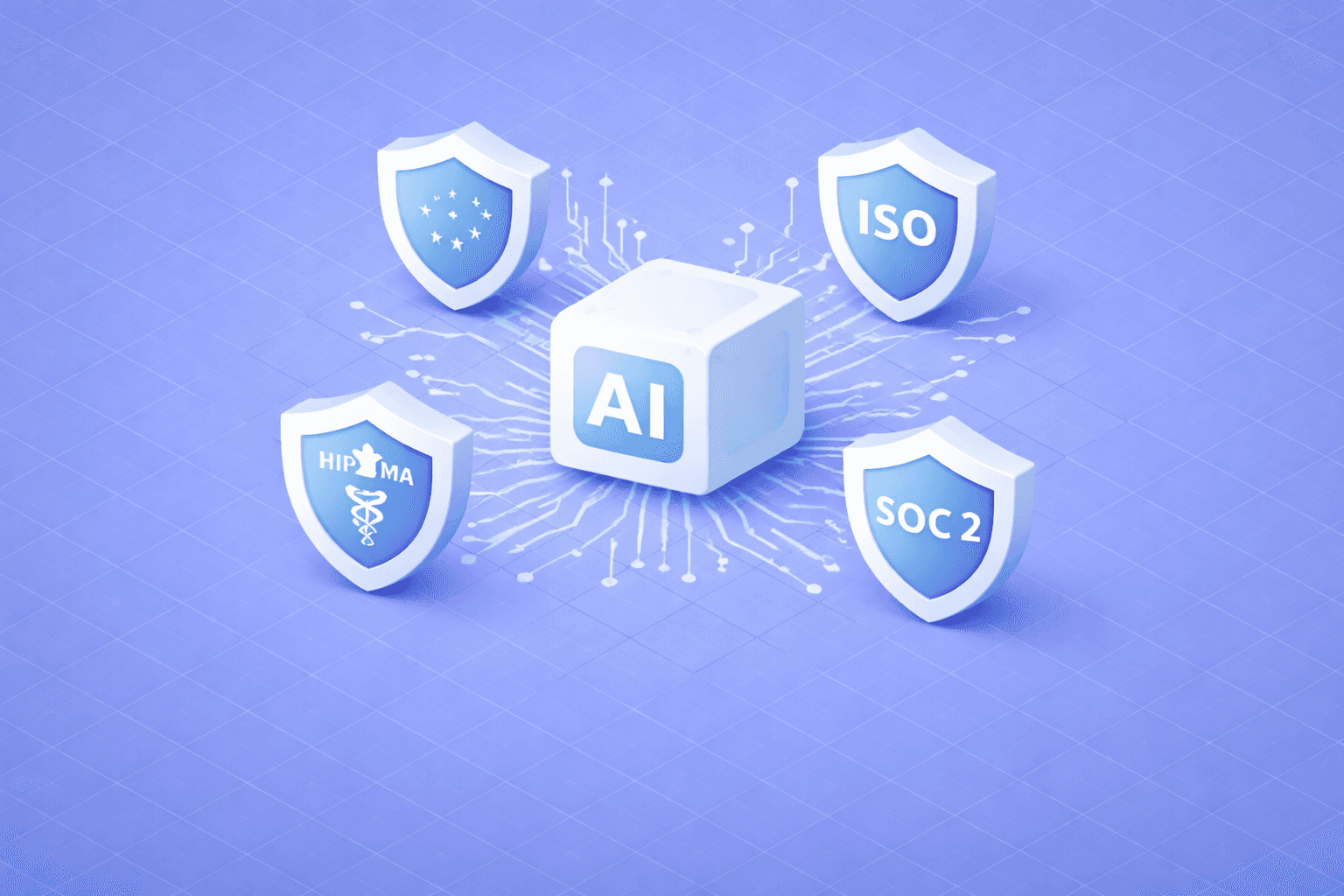
Organizations pursuing security and privacy certifications face a frustrating reality: managing multiple compliance frameworks feels like doing the same work four times over. Your team creates separate documentation for SOC 2 compliance requirements, ISO 27001 requirements, HIPAA compliance checklist items, and GDPR obligations—even though 70-80% of the underlying controls overlap.
This redundant effort wastes time, increases audit preparation costs, and creates inconsistencies that auditors flag during compliance audits. What if you could satisfy SOC 2 best practices, ISO 27001 requirements, and HIPAA employee training requirements with a single, unified approach?
Enter AI-powered multi-framework control mapping—a compliance automation breakthrough that's transforming how organizations achieve and maintain vendor risk management software standards across multiple certifications simultaneously.
What Is Multi-Framework Control Mapping?
Multi-framework control mapping is an intelligent system that normalizes security and privacy controls across different compliance standards. Instead of treating SOC 2 certifications, ISO 27001, HIPAA, and GDPR as separate silos, modern AI compliance platforms identify where these frameworks share common requirements.
The Traditional Approach vs. AI-Powered Mapping
Traditional Compliance Management:
Separate compliance checklists for each framework
Duplicate documentation across standards
Manual tracking of which policies apply where
Redundant evidence collection for similar controls
Inconsistent implementation across frameworks
AI-Powered Multi-Framework Approach:
Single source of truth for all compliance activities
Automatic mapping of controls to multiple standards
Unified evidence repository
Real-time gap analysis across frameworks
Consistent risk management framework implementation
How AI Normalizes Controls Across Compliance Frameworks
The Intelligence Behind Control Mapping
Modern AI compliance hubs analyze the semantic meaning behind compliance requirements—not just keywords. When you implement an access management policy, the AI engine automatically recognizes how this control satisfies:
SOC 2 compliance requirements (CC6.1 - Logical and Physical Access Controls)
ISO 27001 requirements (A.9 - Access Control)
HIPAA compliance checklist (§164.308(a)(4) - Information Access Management)
GDPR obligations (Article 32 - Security of Processing)
This intelligent normalization means your team implements the control once while satisfying four separate frameworks.
Real-World Example: Access Management
Let's examine how multi-framework control mapping works in practice with a common security control:
Your Implementation: You establish a policy requiring multi-factor authentication (MFA) for all systems containing sensitive data, with quarterly access reviews.
What the AI Engine Maps:
Framework | Mapped Requirement | Status |
|---|---|---|
SOC 2 | CC6.1 - Logical access controls restrict access | ✓ Satisfied |
ISO 27001 | A.9.4.2 - Secure log-on procedures | ✓ Satisfied |
HIPAA | §164.312(a)(2)(i) - Unique user identification | ✓ Satisfied |
GDPR | Article 32(1)(b) - Pseudonymization and encryption | ✓ Satisfied |
Gap Identified by AI: Your HIPAA compliance requires automatic log-off after 15 minutes of inactivity (§164.312(a)(2)(iii)), which isn't explicitly addressed in your current policy. The AI flags this gap and suggests a policy enhancement that strengthens all four frameworks simultaneously.
Key Benefits: How AI Control Mapping Accelerates Compliance
1. Eliminate Duplicate Work Across Frameworks
The Problem: Organizations waste hundreds of hours creating separate documentation for each compliance audit. Teams rewrite the same incident response procedures four different ways to match each framework's language.
The AI Solution: Write your incident response plan once. The AI engine automatically generates framework-specific views for auditors, translating your single source documentation into the terminology and structure each standard expects.
Time Savings: Organizations report 40-60% reduction in documentation time when using AI-powered multi-framework control mapping compared to managing frameworks separately.
2. Identify Gaps Where Requirements Are Over- or Under-Addressed
The AI engine performs continuous gap analysis, revealing:
Under-Addressed Controls: Requirements you've missed or implemented incompletely across one or more frameworks. For example, you might have strong SOC 2 best practices for encryption but discover your HIPAA training for employees doesn't adequately cover encryption key management.
Over-Addressed Controls: Areas where you're investing compliance effort beyond what any framework requires, allowing you to reallocate resources strategically.
Conflicting Requirements: Rare cases where frameworks have contradictory requirements, so you can make informed decisions about your implementation approach.
3. Speed Up Multi-Certification Timelines
Traditional Sequential Approach:
SOC 2 certification: 6-9 months
ISO 27001 certification: 6-12 months
HIPAA compliance validation: 3-6 months
GDPR compliance program: 4-8 months
Total: 19-35 months if done sequentially
AI Multi-Framework Approach:
Parallel framework implementation: 6-12 months
Unified compliance checklist
Single evidence collection process
Coordinated compliance audits
Total: 6-12 months for all four frameworks
Organizations using AI-powered multi-framework control mapping report achieving multiple certifications in the time it previously took to complete just one.
The Unified Compliance Model in Action
How AI Creates Your Single Source of Truth
Step 1: Control Inventory and Normalization
The AI engine analyzes your existing security controls, policies, and procedures. It identifies:
Technical controls (firewalls, encryption, access controls)
Administrative controls (policies, training programs, vendor risk management software processes)
Physical controls (data center security, device management)
Each control is mapped to its corresponding requirements across all target frameworks.
Step 2: Gap Analysis and Prioritization
The system generates a unified compliance checklist that shows:
Controls satisfying multiple frameworks (your foundation)
Framework-specific requirements needing attention
Prioritization based on audit readiness and risk
Example Output:
Step 3: Unified Evidence Collection
As you implement controls, the AI system:
Collects evidence once for all applicable frameworks
Tags evidence to the relevant requirements automatically
Maintains an audit-ready evidence repository
Tracks evidence freshness and flags when updates are needed
Real Results: Case Study Snapshot
A healthcare technology company used AI multi-framework control mapping to pursue SOC 2 Type II, ISO 27001, and HIPAA compliance simultaneously:
Reduced documentation time: From 800 hours to 320 hours (60% reduction)
Accelerated certification timeline: Achieved all three certifications in 9 months vs. projected 24 months
Improved audit outcomes: Zero major findings across all three audits
Ongoing maintenance: Quarterly compliance updates take 75% less time than their previous single-framework approach
Why This Matters for Your Risk Management Framework
Building a Scalable Compliance Foundation
Multi-framework control mapping isn't just about efficiency—it's about building a risk management framework that scales as your compliance obligations grow.
When you add a new framework (perhaps PCI DSS for payment processing or FedRAMP for government contracts), the AI engine:
Maps your existing controls to the new framework
Identifies the incremental work required (often just 10-20% additional effort)
Integrates the new requirements into your unified compliance checklist
This scalability prevents the "compliance debt" that accumulates when organizations manage frameworks in isolation.
Strengthening Vendor Risk Management
For organizations using vendor risk management software, multi-framework control mapping provides clarity when assessing third-party risk:
Quickly evaluate which frameworks your vendors support
Understand gap coverage when vendors have some but not all required certifications
Make informed decisions about compensating controls
Streamline vendor security questionnaires by focusing on framework-agnostic control effectiveness
Implementing AI-Powered Compliance: Getting Started
What to Look for in a Multi-Framework AI Compliance Platform
When evaluating vendor risk management software and compliance automation platforms, prioritize these capabilities:
1. Comprehensive Framework Coverage
Native support for SOC 2 compliance requirements, ISO 27001 requirements, HIPAA compliance checklist, GDPR, and other relevant standards
Regular updates as frameworks evolve
Ability to add custom frameworks or internal policies
2. Intelligent Control Mapping
AI-powered semantic analysis, not just keyword matching
Visibility into why controls are mapped to specific requirements
Override capabilities for your unique implementation choices
3. Unified Evidence Management
Centralized repository for all compliance evidence
Automatic tagging to relevant frameworks and controls
Version control and evidence freshness tracking
4. Audit Readiness Features
Generate framework-specific reports from your unified data
Audit trail showing control implementation timeline
Collaboration tools for working with auditors
5. Continuous Monitoring and Gap Analysis
Real-time compliance posture dashboards
Automated reminders for control reviews and evidence updates
Risk scoring across all frameworks
Implementation Timeline
Organizations typically implement AI-powered multi-framework compliance in phases:
Phase 1 (Weeks 1-4): Foundation
Control inventory and mapping
Policy documentation upload
Initial gap analysis
Phase 2 (Weeks 5-12): Implementation
Address high-priority gaps
Build evidence repository
Establish ongoing processes
Phase 3 (Weeks 13-24): Certification
Pre-audit readiness reviews
Auditor coordination
Certification achievement
Phase 4 (Ongoing): Maintenance
Continuous monitoring
Quarterly compliance reviews
Framework updates and additions
SOC 2 Best Practices for Multi-Framework Success
Leveraging Shared Controls for Maximum Efficiency
Organizations pursuing multiple certifications should prioritize controls that satisfy the most frameworks first. Here are SOC 2 best practices that simultaneously address ISO 27001, HIPAA, and GDPR:
1. Access Control and Authentication
Implement role-based access control (RBAC)
Require multi-factor authentication
Conduct regular access reviews
Frameworks satisfied: All four
2. Data Encryption
Encrypt data at rest and in transit
Implement key management procedures
Document encryption standards
Frameworks satisfied: All four
3. Incident Response
Establish incident response procedures
Define breach notification processes
Maintain incident logs
Frameworks satisfied: All four (with HIPAA and GDPR having specific timeline requirements)
4. Vendor Management
Assess third-party security
Maintain vendor inventory
Review vendor SOC 2 certifications and other attestations
Frameworks satisfied: All four
5. Security Awareness Training
Annual training for all employees
Role-specific training (especially HIPAA training for employees handling health data)
Track completion and effectiveness
Frameworks satisfied: All four
The Future of Compliance: Continuous, Automated, Unified
Multi-framework control mapping represents a fundamental shift in how organizations approach compliance. Instead of viewing SOC 2 certifications, ISO 27001 certification, HIPAA validation, and GDPR compliance as separate mountains to climb, forward-thinking organizations see them as facets of a single, unified security and privacy program.
AI-powered platforms make this unified approach practical by:
Eliminating redundant work
Providing real-time visibility into compliance posture
Identifying gaps before they become audit findings
Continuously adapting as frameworks evolve
For organizations managing complex compliance obligations, the question isn't whether to adopt multi-framework control mapping—it's how quickly you can implement it to start realizing time and cost savings.
Conclusion: From Compliance Burden to Strategic Advantage
The compliance landscape will only grow more complex. Organizations will face pressure to demonstrate adherence to additional frameworks, emerging regulations, and industry-specific standards. Managing each framework in isolation becomes increasingly untenable.
AI-powered multi-framework control mapping transforms compliance from a burden into a strategic advantage by:
Accelerating time-to-market: Achieve certifications faster and pursue new business opportunities
Reducing compliance costs: Eliminate duplicate effort and optimize resource allocation
Improving security posture: Unified visibility identifies and addresses gaps more effectively
Building stakeholder confidence: Multiple certifications demonstrate comprehensive commitment to security and privacy
Whether you're pursuing your first compliance audit or managing an established compliance program across multiple frameworks, AI-powered control mapping provides the foundation for sustainable, scalable compliance success.
Ready to experience the power of unified, AI-driven compliance? Discover how our platform maps controls across SOC 2, ISO 27001, HIPAA, and GDPR to accelerate your certifications and reduce compliance burden by up to 60%.
Frequently Asked Questions
Q: Can I really achieve multiple certifications simultaneously, or will auditors require separate processes?
A: You can absolutely pursue multiple certifications in parallel. Auditors care about control effectiveness, not whether you manage frameworks separately. In fact, auditors often prefer unified approaches because they demonstrate mature, systematic compliance programs. You'll still have separate audits for each certification, but your preparation and evidence collection can be unified.
Q: How does AI-powered control mapping handle framework-specific requirements that don't overlap?
A: The AI identifies these unique requirements (typically 20-30% of any framework) and flags them in your compliance checklist. You'll still need to address framework-specific requirements, but the unified system ensures you don't miss them and helps you understand the incremental work required for each certification.
Q: What if our organization has unique compliance requirements beyond standard frameworks?
A: Quality AI compliance platforms allow you to add custom frameworks, internal policies, and client-specific requirements. These are mapped alongside standard frameworks, giving you complete visibility into all compliance obligations in one place.
Q: How does this approach impact compliance audit costs?
A: Organizations typically see audit costs decrease by 20-40% when pursuing multiple frameworks simultaneously versus separately. Auditors spend less time reviewing your program because the evidence is well-organized, consistent, and comprehensive. The reduced preparation time also means fewer consulting hours if you work with external compliance advisors.