SOC 2
AI for GRC: Solving Capacity and Complexity in Risk Programs
Written by
DSALTA Team
|
Published on
Jan 28, 2026
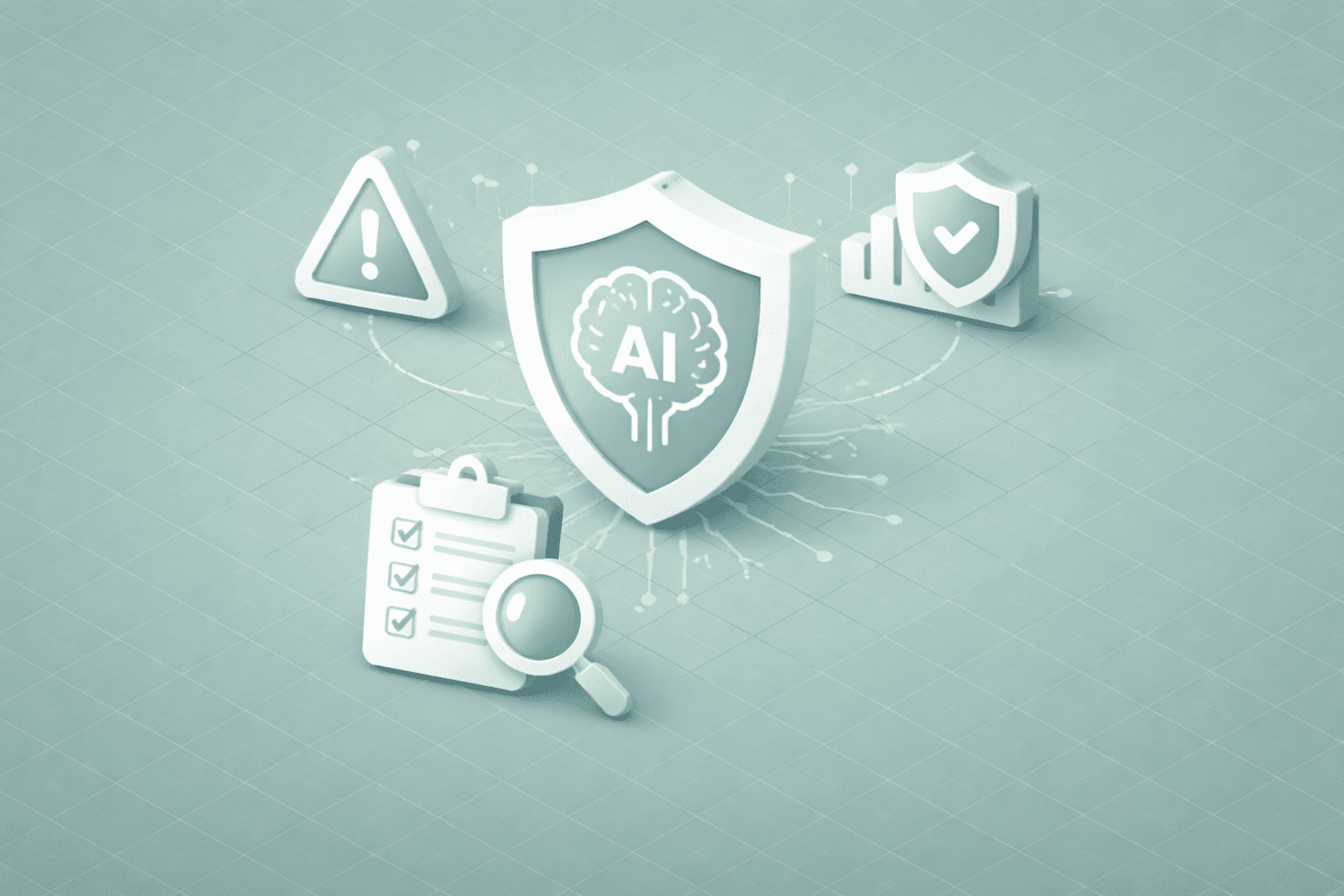
As we move through 2026, governance, risk, and compliance (GRC) teams are facing an unprecedented challenge: the explosive growth of compliance frameworks, vendor relationships, and regulatory requirements has outpaced human capacity to manage them effectively. Traditional manual approaches to SOC 2 compliance requirements, ISO 27001 certifications, and vendor risk management are no longer sustainable.
This is where artificial intelligence is revolutionizing GRC—transforming it from a reactive checkbox exercise into a proactive strategic function that actually protects your organization while accelerating business operations.
The Capacity Crisis in Modern GRC Programs
GRC teams today are stretched impossibly thin. Consider the typical compliance landscape:
Expanding Framework Requirements Organizations must now juggle multiple overlapping frameworks—SOC 2 compliance requirements, ISO 27001 requirements, HIPAA compliance checklists, and industry-specific regulations. Each framework contains hundreds of controls that need continuous monitoring and evidence collection.
Exploding Vendor Ecosystems The average enterprise now works with 400+ third-party vendors. Each requires thorough security assessments, ongoing monitoring, and periodic reviews. Manual vendor risk management software processes simply cannot keep pace with this volume.
Growing Attack Surfaces With cloud adoption, remote work, and digital transformation, the attack surface has expanded dramatically. Risk management frameworks must account for countless new threat vectors, making traditional compliance audits increasingly complex.
The result? GRC teams spend 70-80% of their time on manual, repetitive tasks—data gathering, spreadsheet management, questionnaire completion—leaving little capacity for strategic risk analysis or proactive security improvements.
How AI Transforms GRC from Burden to Business Enabler
Artificial intelligence isn't just making GRC faster—it's fundamentally changing what's possible in compliance and risk management.
1. Intelligent Risk Clustering and Pattern Recognition
AI-powered GRC platforms analyze your entire risk landscape and automatically cluster similar risks across different frameworks and business units.
What this means in practice:
Instead of treating each SOC 2 control, ISO 27001 requirement, and HIPAA compliance checklist item as separate tasks, AI identifies overlapping requirements and consolidates compliance work
Machine learning algorithms detect patterns in risk assessments, identifying which vendor types consistently pose similar security concerns
Your team addresses 5 consolidated risk clusters instead of reviewing 50 individual risks separately
This clustering capability alone can reduce manual assessment time by 60-70%, freeing your team to focus on high-value risk mitigation strategies rather than administrative busywork.
2. Automated Priority Intelligence
Not all compliance gaps carry equal risk. AI excels at data security compliance prioritization by analyzing multiple variables simultaneously—threat intelligence, business impact, regulatory penalties, and historical incident data.
AI-driven prioritization delivers:
Risk scoring that adapts in real-time: As new vulnerabilities emerge or business priorities shift, AI automatically recalibrates your compliance checklist priorities
Contextualized recommendations: Instead of generic alerts, AI considers your specific industry, tech stack, and risk appetite when flagging critical gaps in your SOC 2 best practices
Predictive risk modeling: Machine learning identifies which compliance gaps are most likely to result in actual security incidents or audit failures
For example, an AI-enabled vendor risk management software might flag that three of your high-risk vendors all use the same cloud infrastructure provider with recent security vulnerabilities—a connection human analysts might miss when reviewing vendors individually.
3. Auto-Generated Policies and Control Suggestions
One of the most time-consuming aspects of achieving SOC 2 certifications or ISO 27001 requirements is creating and maintaining documentation that aligns with the framework specifications.
AI dramatically accelerates this process by:
Generating framework-aligned policies: Input your business requirements, and AI drafts policy language that meets SOC 2 compliance requirements, ISO 27001 standards, or HIPAA training for employees mandates
Suggesting specific controls: Based on your risk profile and chosen frameworks, AI recommends the most effective security controls and maps them to relevant compliance requirements
Maintaining documentation currency: As frameworks update or your business changes, AI identifies outdated policies and suggests revisions to maintain continuous compliance
This doesn't mean AI replaces human judgment—your compliance team still reviews and approves all documentation. But instead of starting from blank pages, your team refines AI-generated drafts, reducing documentation time from weeks to days.
4. Accelerating Vendor Reviews and Security Questionnaires
Security questionnaires are perhaps the most universally dreaded aspect of GRC work. Organizations receive dozens or hundreds annually, each containing 100+ questions about their data security compliance practices.
AI transforms this painful process:
Auto-population from knowledge bases: AI maintains a centralized repository of your security practices, automatically populating questionnaire responses with accurate, current information
Consistency across responses: Machine learning ensures your answers remain consistent across different customer questionnaires, reducing audit risk
Gap identification: When questionnaires reveal practices you haven't documented, AI flags these for your risk management framework and suggests remediation steps
Rapid vendor assessment: When evaluating new vendors, AI analyzes their security questionnaire responses against your criteria and benchmarks them against similar vendors in your ecosystem
Organizations using AI-powered questionnaire management report reducing response times from 2-3 weeks per questionnaire to 2-3 days—a 10x improvement that directly accelerates sales cycles and partnership agreements.
From Compliance Checkbox to Strategic Advantage
The most profound impact of AI in GRC isn't just efficiency—it's the transformation of compliance from cost center to competitive differentiator.
Faster Market Entry and Partnership Development
When your compliance processes operate at AI speed, you can:
Complete compliance audits in weeks instead of months: AI-automated evidence collection and control testing accelerate SOC 2 compliance requirements validation
Onboard enterprise customers faster: Rapid, consistent responses to security questionnaires remove a major bottleneck in enterprise sales cycles
Expand into new markets: AI-powered gap analysis against new frameworks (ISO 27001, HIPAA, etc.) provides clear roadmaps for entering regulated industries
Proactive Risk Management
Traditional GRC is reactive—you identify problems during annual compliance audits. AI enables proactive risk management:
Continuous monitoring: AI constantly scans your environment against your compliance checklist, alerting you to drift before auditors discover it
Predictive insights: Machine learning models predict which areas of your infrastructure are most likely to develop compliance gaps
Trend analysis: AI identifies patterns across your vendor risk management software data, revealing systemic issues that manual reviews miss
Resource Optimization
By automating routine GRC tasks, AI allows you to optimize how you deploy your compliance team:
Strategic focus: Your compliance experts spend time on risk strategy and business enablement rather than data entry and spreadsheet management
Scalability without headcount: Handle 3x the vendor relationships or compliance frameworks without proportional team growth
Expertise amplification: Junior team members can achieve expert-level results when supported by AI-guided workflows for SOC 2 best practices implementation
Implementing AI in Your GRC Program: Practical Considerations
While the benefits are clear, successful AI adoption in GRC requires thoughtful implementation:
Start with high-volume, repetitive tasks: Automate security questionnaire responses and vendor risk assessments before tackling more complex compliance audit processes.
Ensure human oversight: AI should augment, not replace, human judgment in risk management framework decisions. Maintain approval workflows for AI-generated policies and risk assessments.
Choose interpretable AI: Select solutions that explain their recommendations. Understanding why AI flags a particular SOC 2 control gap is essential for effective remediation.
Integrate with existing tools: Your AI-powered GRC solution should connect with your existing compliance management, vendor risk management software, and security tools to provide a unified view.
Invest in data quality: AI is only as good as the data it analyzes. Clean, well-structured data about your controls, vendors, and risks is essential for accurate AI insights.
The Future of GRC is Intelligent
As compliance requirements continue to expand and business velocity accelerates, the gap between what GRC teams can manage manually and what organizations need will only widen. AI isn't just a nice-to-have enhancement—it's becoming essential infrastructure for any organization serious about scalable, effective risk management.
The organizations that will thrive in 2026 and beyond aren't those treating compliance as a necessary evil to be minimized. They're the ones leveraging AI to transform GRC into a strategic function that enables faster growth, stronger security, and genuine competitive advantage.
Whether you're pursuing SOC 2 certifications, implementing ISO 27001 requirements, or scaling your vendor risk management program, AI-powered GRC solutions offer a path from overwhelmed and reactive to strategic and proactive.
The question isn't whether AI will transform GRC—it already is. The question is whether your organization will lead this transformation or struggle to catch up.
Ready to transform your compliance program with AI? Explore how modern GRC platforms can help you automate SOC 2 compliance requirements, streamline vendor risk management, and turn data security compliance into a competitive advantage. Contact us to see AI-powered GRC in action.