A Practical Guide to the EU AI Act & ISO 42001 Compliance
Written by
Published on
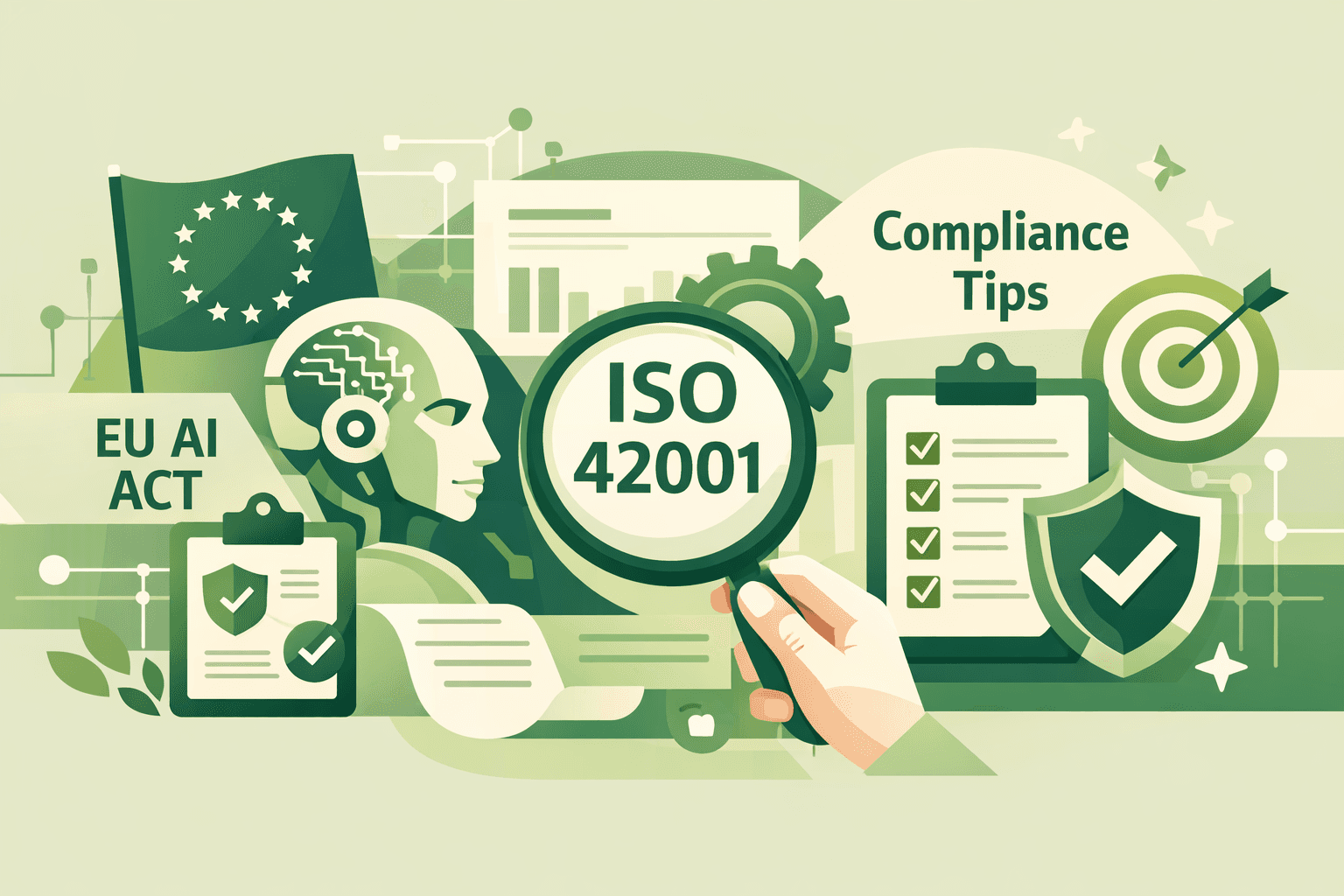
Artificial intelligence is changing everything, and fast. For SaaS companies, especially those building AI into their products, 2026 is a year that demands attention. The European Union’s Artificial Intelligence Act (EU AI Act) is about to shake things up, bringing a whole new level of accountability. And right alongside it, the ISO 42001 standard for AI Management Systems (AIMS) offers a smart way to get ahead of these new rules.
Let’s be clear: ignoring these changes isn't an option. If your AI systems don't play by the EU AI Act's rules, you could be looking at massive fines – up to €35 million or 7% of your global annual turnover. Beyond the financial hit, non-compliance can seriously damage your reputation and even block you from the vital European market.
This guide is here to help you make sense of it all. We'll dive into the core of the EU AI Act and show you how adopting an ISO 42001-compliant AIMS isn't just about ticking boxes. It's about building trust, innovating responsibly, and setting your SaaS company up for long-term success in the AI era.
The EU AI Act: What SaaS Companies Need to Know Now
The EU AI Act is a global first, taking a common-sense, risk-based approach to AI regulation. It sorts AI systems into different risk categories: unacceptable, high, limited, and minimal. The stricter the rules, the higher the risk your AI system poses.
For most SaaS businesses, the big focus will be on high-risk AI systems. These are the ones that could potentially cause significant harm to people's health, safety, or fundamental rights. Think AI used in critical infrastructure, hiring processes, law enforcement, or certain biometric identification systems. If your SaaS product falls into this category, you'll have some serious homework to do.
Here’s a quick rundown of what’s expected for high-risk AI systems:
Risk Management: You'll need a solid system for identifying, assessing, and mitigating risks throughout your AI system's entire life cycle.
Data Governance: Quality in, quality out. This means ensuring the data you use for training, validation, and testing is top-notch, relevant, and unbiased.
Technical Documentation: Keep meticulous records. You'll need detailed documentation to prove your AI system meets all the Act's requirements.
Human Oversight: AI isn't entirely autonomous. Your systems should be designed so humans can effectively oversee and intervene when necessary.
Robustness, Accuracy, and Cybersecurity: Your AI needs to be tough. It should be resilient to errors, resistant to manipulation, and protected against cyberattacks.
Conformity Assessment: Before your high-risk AI system hits the market, it will need to go through a formal assessment to confirm it complies with the Act.
Post-Market Monitoring: Compliance isn't a one-and-done. You'll need systems in place to continuously monitor your AI after deployment and address any new risks that pop up.
For SaaS companies, this isn't just about legal jargon. It means taking a hard look at your AI models, your data pipelines, and how you operate. It's a fundamental shift in how AI is built, used, and managed.
ISO 42001: Your Practical Roadmap for AI Governance
While the EU AI Act lays down the law, ISO 42001 offers a clear, internationally recognized roadmap for actually doing it. It's the standard for building an Artificial Intelligence Management System (AIMS), essentially your practical guide to meeting and proving compliance with AI regulations.
ISO 42001 outlines what you need to do to establish, implement, maintain, and continuously improve an AIMS. It helps you weave AI governance seamlessly into your existing management systems, much like ISO 27001 does for information security.
Here are some key areas ISO 42001 helps you tackle:
Understanding Your Context: What are the internal and external factors affecting your AI? Who are the stakeholders, and what are their concerns?
Leadership Commitment: Your leadership needs to be all-in, setting the vision and policies for responsible AI.
Planning for Success: Identifying risks and opportunities, and setting clear objectives for your AI initiatives.
Support Systems: Ensuring you have the right resources, skilled people, awareness, communication, and documentation in place.
Operational Excellence: This covers everything from day-to-day operations to assessing the impact of your AI systems and how they're designed and developed.
Measuring Performance: Regularly checking how well your AIMS is working through monitoring, internal audits, and management reviews.
Continuous Improvement: AI is always evolving, and so should your AIMS. This means addressing nonconformities and constantly looking for ways to get better.
Adopting ISO 42001 gives you a structured way to meet the EU AI Act's demands, especially for those high-risk systems. It helps you manage AI-related risks systematically, ensure your data is sound, and build transparency into your AI development from the ground up.
Actionable Steps for SaaS Leaders
Inventory Your AI: Start by listing all the AI systems in your SaaS products. Figure out which ones might be classified as "high-risk" under the EU AI Act.
Spot the Gaps: Compare your current AI practices against the requirements of both the EU AI Act and ISO 42001. Where are the discrepancies?
Build Your AIMS: Develop and implement an AIMS based on ISO 42001. This means creating clear policies, procedures, and controls for how you govern AI.
Champion Data Governance: Make data quality and governance a top priority. Put processes in place for tracking data origins, checking for biases, and securing your data. (Don't forget your GDPR Compliance efforts here too!)
Assess AI Risks: Regularly conduct AI system impact assessments (AIA) to pinpoint, analyze, and evaluate the risks tied to your AI systems.
Document Everything & Be Transparent: Keep thorough technical documentation for all your AI systems. Be ready to clearly explain how your AI works, its capabilities, and its limitations to users.
Monitor & Improve Constantly: AI compliance isn't a one-time fix. Continuously monitor your AI systems and regularly review and refine your AIMS.
Beyond Compliance: Building Trust in the AI Era
The EU AI Act and ISO 42001 might seem like daunting challenges, but they're also huge opportunities. By proactively embracing these standards, you're not just avoiding penalties; you're building a foundation of trust that can set your SaaS product apart.
For SaaS companies, this means more than just staying out of trouble. It means winning over customers, opening doors to new markets in the EU, and establishing your brand as a leader in ethical and trustworthy AI. The future of AI isn't just about groundbreaking innovation; it's about earning and keeping trust, and compliance is the bedrock of that trust.
Ready to navigate the complexities of AI compliance with confidence? Book a demo with Dsalta to see how our platform can streamline your journey to EU AI Act and ISO 42001 compliance.
Explore more AI Compliance articles
AI Regulatory Compliance
AI-Powered Compliance Automation
HIPAA & Healthcare AI
GDPR & ISO 27001 with AI
AI in Vendor Risk Management
Stop losing deals to compliance.
Get compliant. Keep building.
Join 100s of startups who got audit-ready in days, not months.