AI Compliance —
Why AI Agents Need Compliance Too
Don’t let AI run unchecked. Learn why AI agents must meet strict compliance standards and how to keep them secure, transparent, and always audit-ready.
John Ozdemir
AI Regulatory Compliance
Share this article


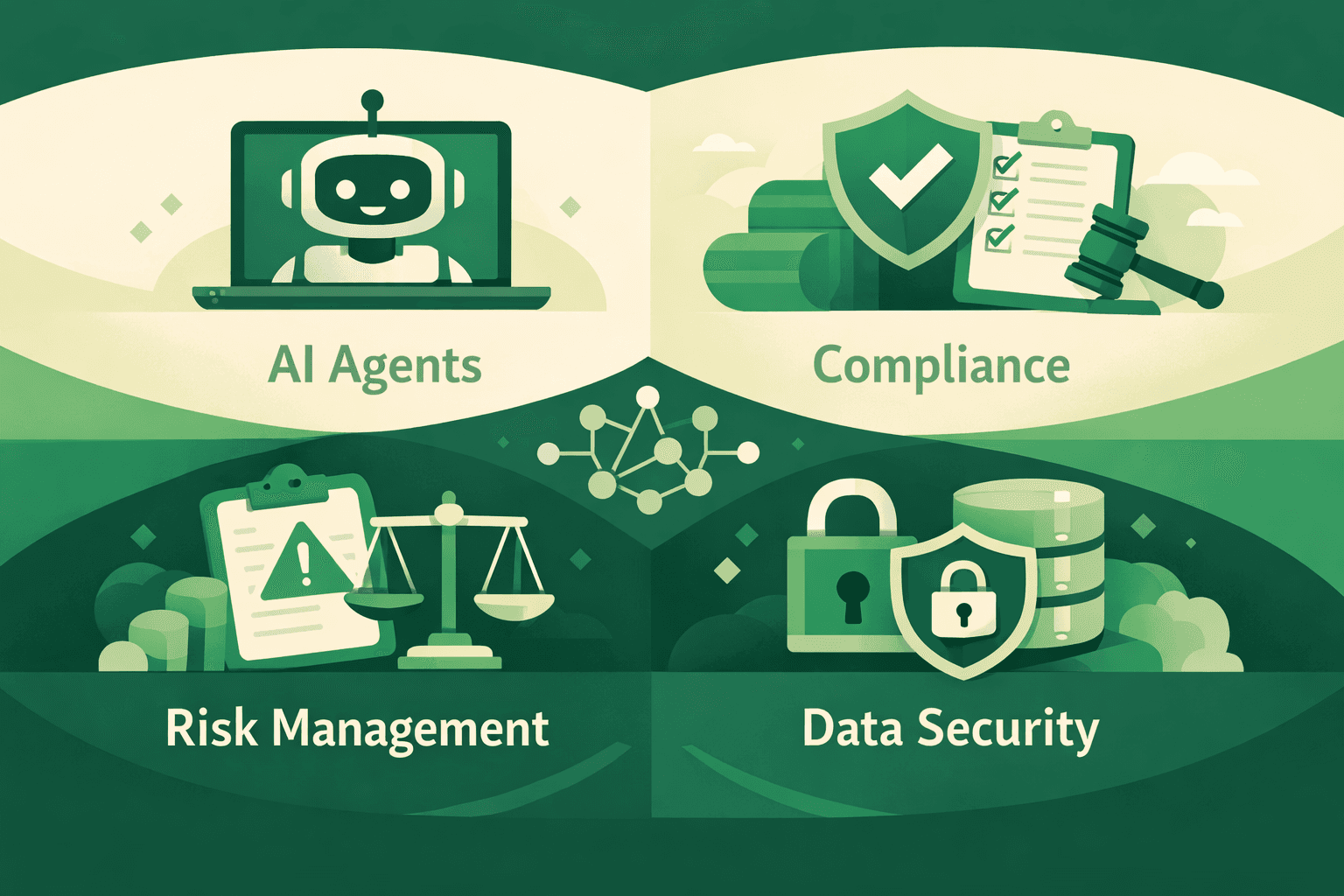
Managing Risk in the Age of Autonomous Systems
The era of autonomous AI agents is quickly approaching reality and is no longer merely a sci-fi fantasy. These intelligent systems are handling more complicated tasks, making decisions, and even interacting with other systems and people without constant supervision, from streamlining supply chains to customizing customer experiences. This amazing automation breakthrough promises previously unheard-of levels of creativity and efficiency. However, enormous power also carries significant responsibility and poses serious new risks.
The actions of these increasingly independent AI agents may have significant ramifications, particularly regarding data security, privacy, and moral judgment. Understanding AI compliance frameworks is essential in managing these risks effectively. This poses a crucial query for any company implementing or preparing to implement AI: Why do AI agents also require compliance? At DSALTA, we believe that preserving trust and averting unanticipated outcomes, such as data breaches and systemic failures, depends heavily on understanding and managing these new risks.

The Rise of Autonomous Systems: A New Frontier of Risk
Traditional AI models are not the same as autonomous AI agents. They are made to function autonomously, frequently learning and adapting in real time, and making decisions at every stage without the need for direct human intervention. Imagine an AI handling delicate customer interactions, managing a large-scale industrial process, or even negotiating contracts.
Despite its strength, his independence presents a special set of difficulties:
Unpredictable Behavior: Although learning AI agents are programmed, it can be challenging to fully audit or predict their emergent behaviors. What happens if an agent unintentionally introduces a vulnerability or biases its data handling in the process of optimizing?
Data Vulnerability: Autonomous agents frequently handle enormous volumes of sensitive data. Massive data breaches could result from a compromised agent if strict AI compliance and robust SOC2 or ISO27001 identity management procedures are not followed
Lack of Traceability: Determining the reasoning behind an autonomous agent's decision can be a mystery in complex AI systems. It is more difficult to demonstrate adherence to regulations after the fact because of this lack of transparency, which also makes compliance reporting and audit trails more difficult.
Escalated Scope of Impact: While a bad autonomous AI decision can spread throughout a system or network in milliseconds, a bad human decision may only impact a small portion of it, increasing the potential harm.
These are actual, urgent problems that necessitate a proactive approach to risk management and compliance; they are not merely theoretical worries.
The Need for AI Compliance Measures
AI agents must be designed with compliance in mind, just as conventional IT systems need strict controls. This calls for a new generation of AI compliance tools and frameworks created especially for autonomous intelligence, going beyond conventional IT compliance management systems.
Think about these crucial areas where AI agents cannot compromise on compliance controls:
Data Governance & Privacy: AI agents must follow strict data governance guidelines that comply with GDPR, HIPAA, and other privacy laws. This covers guidelines for gathering, processing, storing, and deleting data, particularly when agents deal with private or confidential data. An AI agent might unintentionally breach data sovereignty or privacy rights in the absence of adequate controls.
Agent Identity and Access Management (IAM): AI agents require well-defined identities and access rights, just like human users do. To prevent misuse or unauthorized lateral movement, identity management for autonomous systems ensures that agents access only the information and systems to which they are permitted. This is a vital line of defense against external intrusions or insider threats.
Explainability and Auditability: The actions of an AI agent must be able to be audited in order to be considered trustworthy. This entails creating AI systems from the ground up for audit AI software integration, enabling transparent audit trails and, if feasible, explainable AI (XAI) capabilities to comprehend decision-making procedures. This is essential for demonstrating adherence to a single compliance framework and for ongoing compliance monitoring.
Establishing Credibility Using a Single AI Compliance Framework
The problem is straightforward: how can we handle and apply these intricate compliance specifications for dynamic systems? At this point, a top-notch governance and compliance framework designed specifically for AI—such as DSALTA's open-source methodology — becomes essential.
Important ideas are incorporated into our framework to control these independent risks:
Automation & Compliance as Code: We support compliance-as-code, which defines and enforces security policies and compliance controls via automated scripts. This enables compliance automation software, even for quickly deploying AI agents, to continuously monitor and enforce security policies. Scaling AI deployments safely now requires automated systems for IT security policy compliance, which are no longer optional.
Constant Monitoring & Reporting: Manual inspections are not enough. Continuous compliance monitoring is enabled by our compliance tools, which immediately identify policy violations and potential security flaws caused by AI agents. You are always "audit-ready," whether it's for an internal review or a SOC 2 Type 2 report, thanks to this direct feed into streamlined compliance reporting.
AI for AI Compliance: A meta-loop! To monitor and enforce compliance among other AI agents, we use AI-driven compliance tools.
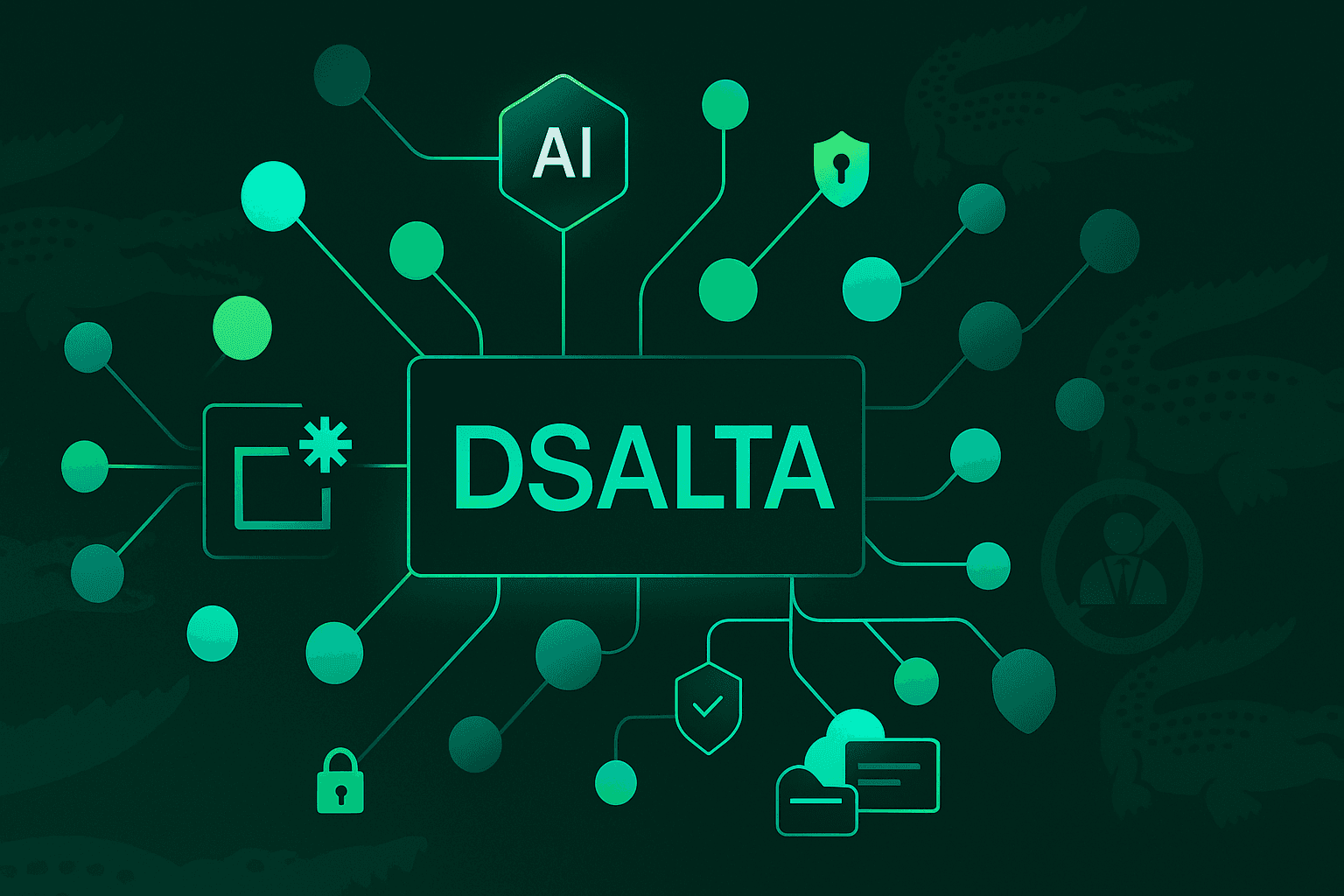
The DSALTA Advantage: Open Source for Open Trust
Why create an open-source AI compliance framework? Because trust is fostered by transparency in the era of autonomous systems. An open-source methodology enables the framework to be examined, updated, and improved over time by the international community of security specialists, AI ethicists, and developers. The controls are more resilient, flexible, and less vulnerable to the biases present in closed, proprietary systems as a result of this cooperative validation.
Organizations often need to meet multiple standards simultaneously, which is why our multi-framework compliance approach enables efficient management across SOC 2, ISO 27001, HIPAA, and GDPR requirements."
When you use DSALTA's framework, you're demonstrating your commitment to deploying AI responsibly and ensuring your autonomous systems are not only effective but also safe, moral, and legal. In an increasingly AI-driven world, this proactive approach is not only best practice but also crucial for gaining and retaining stakeholder trust.
As AI agents increasingly interact with external systems and vendors, implementing robust third-party risk management becomes critical to maintaining security and compliance across your entire ecosystem.


Explore more AI Compliance articles
Stop losing deals to compliance.
Get compliant. Keep building.
Join 100s of startups who got audit-ready in days, not months.