SOC 2 —
SOC 2 Certification 2026: Auditor, Cost & Timeline Guide
Understand SOC 2 certification in 2025 from auditor selection and cost breakdown to timelines. See how DSALTA simplifies readiness.
Jon Ozdoruk
Audit Preparation & Evidence
Share this article


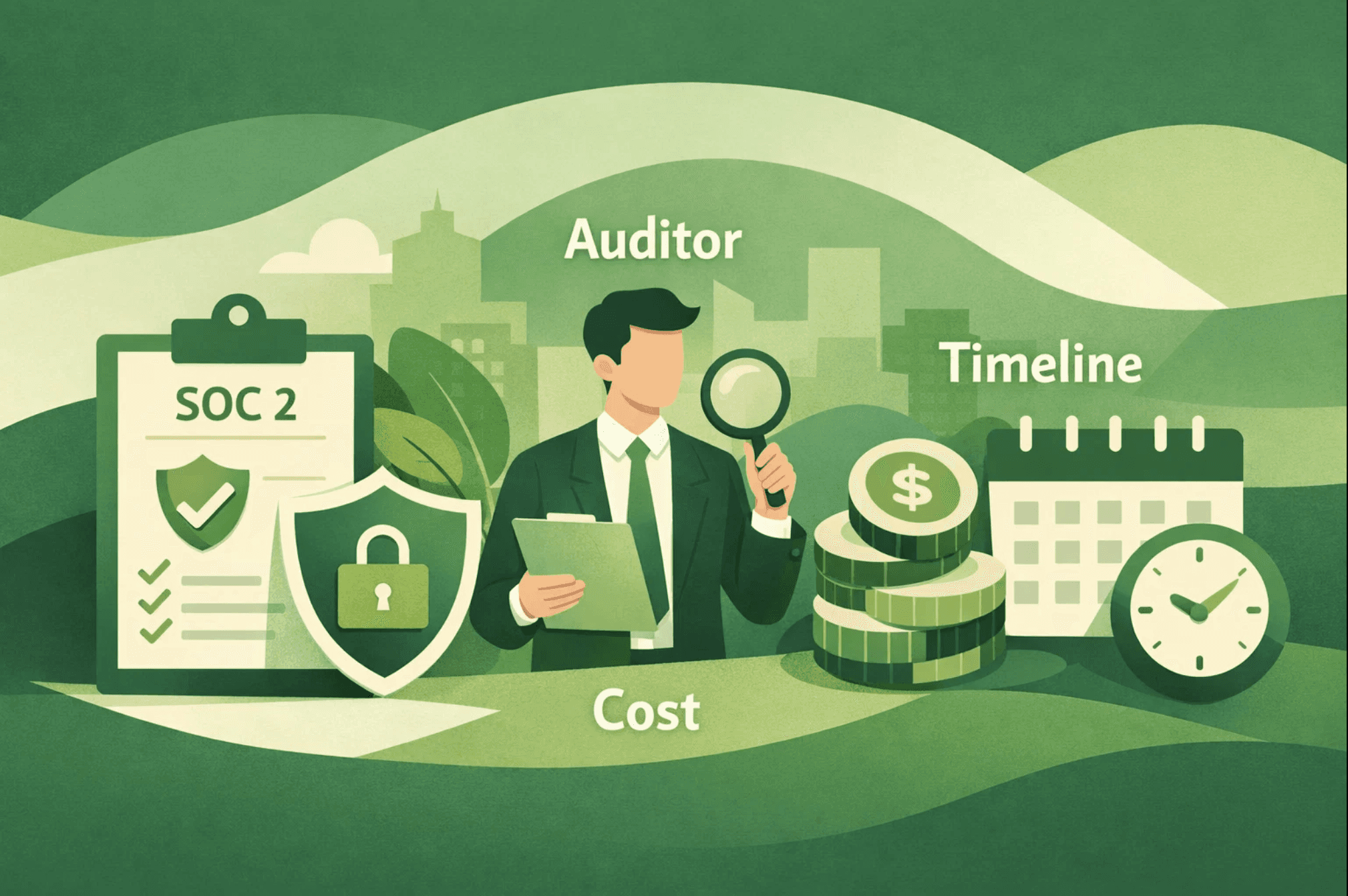
SOC 2 Certification Explained: Auditor Selection, Cost, and Realistic Timelines
How Do I Choose the Right SOC 2 Auditor?
Selecting an auditor is one of the most critical decisions in the SOC 2 journey. The right partner balances technical expertise, independence, and communication clarity. Since SOC 2 audits are governed by the AICPA, auditors must be licensed CPA firms with demonstrated experience in information-security controls and the SOC 2 framework.
Key Criteria for Choosing an Auditor
Industry experience: Look for firms that have audited companies in your vertical—SaaS, fintech, or healthcare.
Audit technology stack: Top firms now use secure portals for document sharing and real-time evidence tracking.
Communication style: Clear, consistent feedback reduces rework later in the process.
Pricing transparency: Some firms charge flat fees; others use hourly models that can escalate quickly.
Organizations that prepare their evidence and policies in advance—using automation or readiness tools like Compliance Management and the SOC 2 audit prep guides— report smoother reviews and fewer last-minute requests.
How Much Does SOC 2 Certification Cost in 2026?
SOC 2 audit costs vary depending on company size, system complexity, and readiness level. Recent data from mid-market audit firms shows clear averages for 2026, which align with SOC 2 cost benchmarks.
Readiness assessment phase (gap analysis, control design, policy creation): typically $5,000–$15,000.
Type 1 audit (design of controls at a point in time): usually $10,000–$30,000.
Type 2 audit (operating effectiveness over 6–12 months): generally $25,000–$70,000+, depending on scope and duration.
Compliance platforms (integrations, dashboards, evidence management): often $6,000–$20,000 per year.
Costs depend heavily on how much of the preparation is automated. Companies that use AI-driven tools to map controls and collect evidence automatically have reduced audit expenditures by up to 35%, primarily by minimizing consulting hours and manual documentation—see Zero to Audit-Ready and pre-integrated frameworks.
What’s the Realistic Timeline for SOC 2 Type 1 vs Type 2?
SOC 2 Type 1 focuses on the design and implementation of controls at a single point in time, while Type 2 evaluates their effectiveness over several months. Timelines depend on readiness, available resources, and automation maturity.
Average 2026 Timelines
Preparation phase: 4–8 weeks (policy creation, control mapping, evidence setup).
Type 1 audit: 2–4 weeks after readiness completion.
Type 2 audit: 3–12 months, depending on the chosen review period.
Remediation and reporting: 2–3 weeks after fieldwork.
Many startups underestimate the preparation phase. When evidence is scattered or incomplete, auditors must pause testing until missing data is supplied. Teams that centralize documentation and automate evidence collection—using tools like DSALTA Platform and the SOC 2 checklist— often achieve Type 1 readiness in six weeks and complete Type 2 audits within four months.
How Does Compliance Automation Accelerate SOC 2 Certification?
Compliance automation replaces manual tracking with intelligent workflows. Instead of spreadsheets, automated platforms connect directly to cloud services, HR tools, and identity providers, continuously pulling evidence and monitoring configurations.
Automation in Practice
Pre-built policy templates eliminate weeks of manual drafting.
Real-time evidence collection ensures proof is current and traceable.
Control mapping links similar requirements across frameworks (SOC 2, ISO 27001, PCI DSS), reducing duplicate work.
AI monitoring detects drift or misconfigurations before auditors do.
Organizations using automation for SOC 2 readiness complete their audits significantly faster, with fewer findings and less strain on internal teams. For a deeper dive, see SOC 2 Compliance in 2026 .
What Common Mistakes Slow Down SOC 2 Audits?
Even well-prepared teams encounter delays when they treat SOC 2 as a one-time event rather than an ongoing process. The most frequent issues include:
Engaging auditors too late, leading to rushed or incomplete reviews.
Undefined ownership, where control responsibilities are unclear.
Siloed documentation spread across multiple systems, causing confusion.
Untracked change management, resulting in missing evidence for updates or incidents.
Establishing structured cadences, assigning clear roles, and maintaining automated evidence collection help teams avoid these pitfalls. For more guidance, explore common SOC 2 audit pitfalls and continuous SOC 2 compliance.
Turning SOC 2 into a Business Enabler
SOC 2 certification in 2026 is more predictable than ever when managed with preparation and automation. By selecting the right auditor, budgeting realistically, and maintaining an organized readiness process, teams can transform compliance from a burden into a business enabler that accelerates enterprise deals and builds customer trust.
Simplify your SOC 2 certification journey — automate readiness, use the SOC 2 checklist, learn from the SOC 2 certification guide , and book a DSALTA demo to stay audit-ready year-round.

Explore more SOC 2 articles
Stop losing deals to compliance.
Get compliant. Keep building.
Join 100s of startups who got audit-ready in days, not months.