SOC 2 —
SOC 2 Best Practices (2026): Modern Compliance Guide
Get the SOC 2 best practices guide for 2026. Master new AICPA criteria, effective control implementation, automation strategies, and achieve sustainable compliance.
John Ozdemir
Getting Started with SOC 2
Share this article


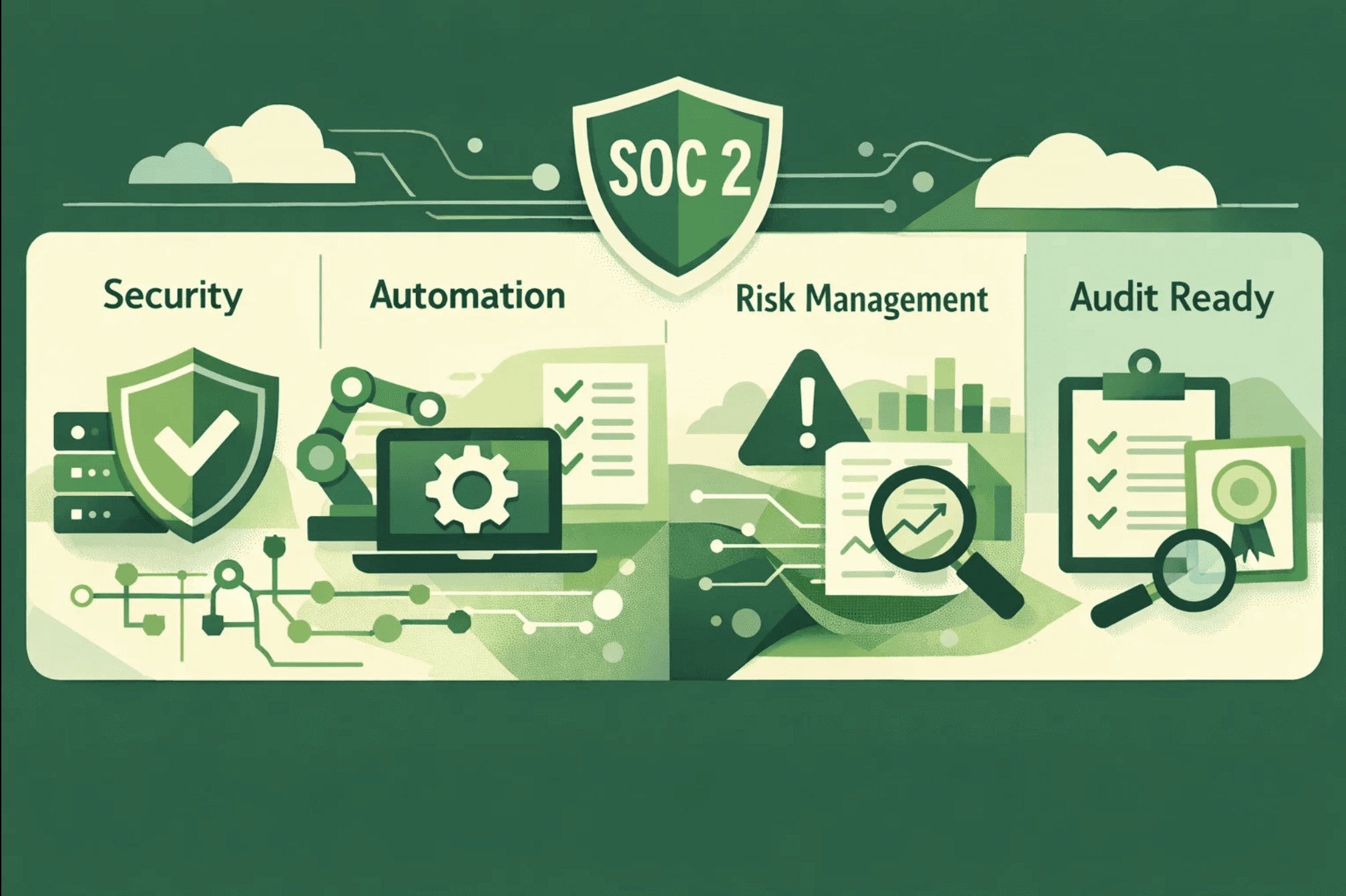
The SOC 2 landscape has undergone dramatic change. What worked for compliance in 2023 is no longer sufficient in 2026. The American Institute of CPAs (AICPA) updated Trust Services Criteria with new emphasis on AI governance, cloud security, and continuous monitoring. Organizations still relying on outdated approaches struggle through audits, face unexpected findings, and lose competitive deals.
Meanwhile, enterprise customers are becoming more discerning in evaluating SOC 2 reports. They're not just checking whether you have a report—they're examining control descriptions, reading about exceptions, and comparing your security posture against competitors. A weak SOC 2 report can cost you deals even if you technically passed the audit.
SOC 2 best practices have evolved beyond basic compliance checkboxes. Modern approaches emphasize automation over manual processes, continuous evidence collection over last-minute scrambles, and strategic security improvement over minimal compliance. Organizations that embrace these practices achieve faster audits, stronger security, and more credible reports that actually win customer trust.
This comprehensive guide covers the proven SOC 2 best practices for 2026, including new AICPA criteria changes, automation strategies, control implementation guidance, and practical advice that works in real-world environments. Whether you're pursuing your first SOC 2 Type 1 or optimizing an existing program, these practices will help you build compliance that's efficient, effective, and sustainable.
Understanding SOC 2: The Foundation of Best Practices
What Makes SOC 2 Different
SOC 2 is fundamentally an outcome-based framework. Unlike prescriptive standards like ISO 27001, which tell you precisely which controls to implement, SOC 2 gives you the flexibility to design controls that fit your specific environment and risks.
This flexibility is both SOC 2's strength and its challenge. You have the freedom to implement controls your way, but you must prove they're designed effectively and operating consistently. Best practices help you navigate this flexibility intelligently by implementing controls that satisfy auditors while improving security.
The Five Trust Services Categories
Security (required for all SOC 2 audits) addresses how you protect system resources against unauthorized access, both physical and logical.
Availability ensures your systems and services are operational and available for use as committed or agreed upon.
Processing Integrity assures that system processing is complete, valid, accurate, timely, and authorized.
Confidentiality addresses the protection of information designated as confidential.
Privacy covers collection, use, retention, disclosure, and disposal of personal information in conformity with commitments.
Most organizations start with Security and selectively add other categories based on customer requirements and business needs.
New AICPA Trust Services Criteria Changes for 2025
Enhanced Focus on AI and Machine Learning Governance
The 2025 criteria updates include new considerations for AI systems used in service delivery, security monitoring, and data processing. Organizations using AI must now demonstrate:
Transparency in AI decision-making shows how AI systems make security or operational decisions that affect customers or data.
AI model governance, including training data quality, bias testing, model validation, and performance monitoring.
Human oversight mechanisms ensure that automated AI decisions have appropriate human review, especially for high-impact actions.
AI security controls protect AI models themselves from tampering, poisoning, or unauthorized access.
This doesn't mean AI is prohibited—it means you must demonstrate responsible AI governance. Organizations leveraging AI for security automation can strengthen their SOC 2 posture by properly documenting governance.
Strengthened Cloud Security Requirements
With most services now cloud-based, auditors are scrutinizing cloud configurations more rigorously. New best practices include:
Configuration management documentation detailing how cloud environments are hardened, monitored, and maintained in accordance with security baselines.
Cloud access controls that demonstrate least privilege, multi-factor authentication, and regular access reviews for cloud administrative accounts.
Shared responsibility clarity explicitly documenting which security controls are your responsibility versus your cloud provider's responsibility.
Cloud vendor risk management, including SOC 2 reports from infrastructure providers and regular review of their security posture.
Expanded Vendor Risk Management Expectations
Auditors now expect more comprehensive third-party risk management, going beyond collecting vendor SOC 2 reports during onboarding.
Ongoing vendor monitoring with documented evidence that you review vendor security regularly, not just during initial assessment.
Vendor incident response showing how you're notified of and respond to security incidents at vendor organizations.
Vendor access management demonstrates how you control and monitor vendor access to your systems and customer data.
Subcontractor oversight for vendors who themselves use subcontractors with access to your data or systems.
Continuous Monitoring and Automation
The 2025 criteria strongly encourage continuous monitoring versus point-in-time manual checks. Best practices now include:
Automated security monitoring using SIEM, cloud security posture management, or similar tools that provide real-time visibility.
Continuous control testing through automated evidence collection, replacing monthly manual screenshots and reviews.
Anomaly detection automatically identifies unusual patterns in access, system changes, or data flows.
Real-time alerting ensures security events are detected and escalated without delay.
Core SOC 2 Best Practices: The Foundation
Start With Strong Governance
Define clear scope early identifying exactly which systems, data, and processes are included in your SOC 2 audit. A vague scope causes confusion, wasted effort, and audit surprises.
Assign dedicated ownership to a compliance manager or security leader with explicit responsibility and authority for SOC 2 success. Compliance by committee rarely works well.
Establish a cross-functional compliance team including representatives from engineering, IT, HR, legal, and operations. SOC 2 affects the entire organization, not just security.
Set realistic timelines recognizing that first-time SOC 2 Type 1 typically takes 3–6 months, while Type 2 requires 6–12 months of operating evidence. Rushing creates gaps and findings.
Allocate sufficient budget for audit fees, control implementation, tools and automation, consultant support if needed, and ongoing compliance operations.
Implement Risk-Based Controls
Conduct thorough risk assessment identifying realistic threats to your systems and data. Your SOC 2 controls should directly address these identified risks.
Document risk-control mapping showing which controls mitigate which risks. This demonstrates that your control selection is intentional and appropriate.
Prioritize critical controls by focusing first on access management, change control, monitoring, incident response, and vendor management—areas where weaknesses pose the greatest risk.
Avoid control overload by implementing controls that address multiple objectives rather than creating separate controls for every possible risk.
Review and update regularly as your environment, threats, and business needs evolve. Static controls become ineffective over time.
Design Controls for Sustainability
Make controls fit existing workflows rather than creating separate compliance processes. Controls that disrupt normal operations face resistance and inconsistent execution.
Automate wherever possible, replacing manual checks, screenshots, and documentation with evidence collected by existing tools.
Use tools you already have, leveraging features in identity providers, cloud platforms, development tools, and monitoring systems before buying specialized compliance software.
Document procedures clearly so anyone can follow them consistently. Good documentation enables delegation, covers absences, and ensures consistency.
Test controls before the audit period to identify and fix issues early, rather than discovering them during the audit.
Access Control Best Practices
Implement Strong Authentication
Enforce multi-factor authentication universally across all systems that access, store, or process customer data.
Use SSO where possible to centralize authentication through identity providers such as Okta, Azure AD, or Google Workspace.
Eliminate shared credentials and ensure every user has unique credentials.
Implement password policies requiring adequate length, complexity, and rotation.
Configure session timeouts to automatically log users out after a specified period of inactivity.
Manage Access Lifecycle Effectively
Automate provisioning by integrating HR systems with identity providers so new employees automatically receive appropriate access based on role.
Implement role-based access control, defining roles aligned with actual job functions and granting access based on these roles rather than individual requests.
Conduct quarterly access reviews verifying that current access remains appropriate.
Automate deprovisioning to trigger immediate access removal when employees terminate.
Manage privileged access separately with additional controls for administrator accounts.
Document Access Decisions
Maintain access request records, including requester, justification, approval, and date granted.
Track access changes by documenting additions, modifications, and removals, including reasons and approvers.
Log access denials show that inappropriate access requests are rejected.
Preserve termination records demonstrating that departing users’ access was removed promptly.
Change Management Best Practices
Establish Clear Change Procedures
Define what constitutes a change, including code deployments, infrastructure modifications, configuration updates, and security control changes.
Document approval requirements specifying who must approve different types of changes.
Require testing before production, validating changes in non-production environments first.
Implement separation of duties so different people handle development, testing, approval, and deployment where possible.
Maintain rollback procedures, documenting how to reverse changes if issues arise.
Leverage Development Tools for Evidence
Use pull request workflows on source control platforms to automatically capture evidence of review and approval.
Integrate with ticketing systems to link changes with requirements and testing documentation.
Automate deployment logs through CI/CD pipelines.
Configure automated testing to run security and functional tests before deployments.
Enable audit logging on development platforms to capture detailed change history.
Handle Emergency Changes Properly
Define emergency criteria clearly specifying when emergency change procedures are appropriate.
Document emergency approvals even when they occur retrospectively.
Require post-implementation review, analyzing emergency changes after the fact.
Minimize emergency changes by improving planning and resilience.
Security Monitoring Best Practices
Implement Comprehensive Logging
Log authentication events, including successful and failed logins and MFA usage.
Log access to sensitive data, capturing who accessed what and when.
Log system changes for infrastructure and configuration.
Log security events such as IDS alerts and malware detections.
Centralize logs using SIEM or log aggregation tools.
Monitor and Alert Effectively
Configure meaningful alerts for high-risk behavior.
Avoid alert fatigue by tuning alert thresholds.
Define escalation procedures for alert triage and response.
Review alerts regularly and refine rules.
Test alerting mechanisms to ensure end-to-end reliability.
Retain Logs Appropriately
Establish retention policies appropriate to your industry and audit period.
Protect log integrity using technical controls.
Secure log access with strict RBAC and monitoring.
Back up logs to ensure availability for investigations and audits.
Vendor Risk Management Best Practices
Assess Vendors Systematically
Classify vendors by risk based on data access and criticality.
Collect appropriate evidence, such as SOC 2 reports and questionnaires.
Review vendor SOC 2 reports meaningfully, focusing on scope, exceptions, and CUECs.
Document assessment decisions with clear rationales.
Establish vendor onboarding processes gating access on security review completion.
Monitor Vendors Continuously
Schedule regular reviews aligned to vendor risk level.
Track vendor incidents and your responses.
Monitor vendor compliance status and report expirations.
Review vendor access regularly to enforce least privilege.
Maintain a vendor inventory with risk and review metadata.
Use Vendor Risk Management Software
Modern vendor risk management software helps organizations move beyond spreadsheets. Capabilities often include automated evidence collection, risk scoring, continuous monitoring, workflow automation, and centralized documentation.
Incident Response Best Practices
Document Clear Procedures
Define incident categories by severity and type.
Establish response teams with clear roles.
Create communication plans for internal and external stakeholders.
Document escalation paths up to executive leadership.
Maintain incident runbooks for common scenarios.
Test Response Capabilities
Conduct tabletop exercises at least annually.
Use realistic scenarios based on actual threats.
Document exercise results and follow-through actions.
Test communication mechanisms during drills.
Update procedures based on lessons learned from exercises and real incidents.
Maintain Evidence for Audits
Document all security incidents with timelines and actions.
Write postmortems capturing root cause and remediation.
Track incident metrics like time to detection and resolution.
Preserve investigation evidence in an organized repository.
Demonstrate continuous improvement in your incident management program.
Automation and Continuous Monitoring Best Practices
Automate Evidence Collection
Integrate compliance tools with existing systems to automatically pull evidence.
Schedule automated evidence gathering for periodic controls.
Eliminate manual screenshots wherever possible.
Automate report generation for access reviews, changes, and training.
Version control evidence to maintain historical records.
Implement Continuous Control Testing
Monitor control operation continuously, not just at audit time.
Alert on control failures and deviations.
Automate compliance dashboards with real-time status.
Identify issues early to remediate before audits.
Demonstrate continuous operation with logs and system evidence.
Choose the Right Automation Tools
Evaluate based on integrations with your stack.
Prioritize native integrations and low-maintenance connectors.
Consider evidence quality and auditor acceptance.
Assess scalability for future growth.
Calculate ROI by comparing the tool cost to time savings and risk reduction.
Standard SOC 2 Mistakes to Avoid
Starting Too Late
Organizations often underestimate SOC 2 timelines and begin too close to customer deadlines, leading to rushed implementations and incomplete evidence.
Best practice: Start SOC 2 preparation 12–18 months before you absolutely need the report.
Treating SOC 2 as a One-Time Project
Treating SOC 2 as a single, isolated project leads to gaps and painful re-certification.
Best practice: Embed SOC 2 into ongoing operations and maintain continuous readiness.
Implementing Too Many Controls
Over-engineering controls creates overhead and confusion.
Best practice: Focus on a targeted set of well-designed, risk-based controls.
Ignoring Complementary User Entity Controls
Failing to implement CUECs called out in vendor SOC 2 reports leads to hidden gaps.
Best practice: Carefully review CUECs in vendor reports and document how you meet them.
Poor Documentation
Weak or missing documentation leads to findings, even when controls operate correctly.
Best practice: Follow structured documentation guidance to keep procedures and evidence clear and consistent.
Preparing for Your SOC 2 Audit
Choose the Right Auditor
Evaluate auditor experience in your industry and tech stack.
Check responsiveness during the scoping phase.
Understand pricing models and what's in scope.
Clarify timelines aligned with your commitments.
Request references from similar clients.
Conduct Readiness Assessments
Perform gap analysis well before formal fieldwork.
Remediate identified gaps in controls and documentation.
Test controls internally to validate operation.
Proactively organize evidence in a structured repository.
Brief stakeholders on expectations and roles.
Manage the Audit Process
Respond promptly to auditor requests.
Designate a point person for all communications.
Ask clarifying questions instead of guessing.
Document all interactions and agreements.
Review draft reports carefully and provide context.
Frequently Asked Questions
What are the most important SOC 2 best practices for startups?
The most important SOC 2 best practices are to define scope early, assign clear ownership, automate repetitive controls, and keep evidence collection continuous. Startups should focus first on access control, change management, monitoring, vendor risk, and incident response because those areas create the most audit and security impact.
How does automation improve SOC 2 compliance?
Automation improves SOC 2 compliance by reducing manual evidence collection, lowering the chance of missed controls, and making compliance easier to sustain over time. It also helps teams maintain continuous monitoring instead of scrambling before the audit.
What SOC 2 controls should be implemented first?
Start with MFA, role-based access control, onboarding and offboarding, logging, alerting, change approvals, and vendor inventory tracking. These controls cover the highest-risk areas and are usually the easiest to standardize across teams.
Why do SOC 2 audits fail or get delayed?
SOC 2 audits are delayed when teams start too late, lack ownership, or cannot produce consistent evidence. Another common problem is overbuilding controls that are hard to maintain instead of implementing simple workflows people actually follow.
How often should SOC 2 controls be reviewed?
SOC 2 controls should be reviewed on a recurring schedule, with access reviews typically done quarterly and vendor and incident processes monitored continuously. Regular review keeps controls aligned with real operational risk.
Conclusion: Building Sustainable SOC 2 Excellence
SOC 2 best practices have evolved significantly as the framework and threat landscape have matured. The days of manual screenshot collection, last-minute scrambles, and minimal compliance are over. Modern SOC 2 programs emphasize automation, continuous monitoring, strategic security improvement, and sustainable operations.
Organizations succeeding with SOC 2 in 2026 tend to start early, maintain continuous readiness, integrate compliance into daily operations, and leverage modern automation. The new AICPA criteria around AI governance, cloud security, and continuous monitoring are opportunities to demonstrate mature practices—not just additional hurdles.
Ultimately, SOC 2 is about proving you protect customer data responsibly. The best practices in this guide help you do that efficiently while building a security program that supports growth and multi-framework compliance.

Explore more SOC 2 articles
Stop losing deals to compliance.
Get compliant. Keep building.
Join 100s of startups who got audit-ready in days, not months.