Pre-Audit Survival Guide: CISO Checklist for Compliance
Written by
Deepika
Published on
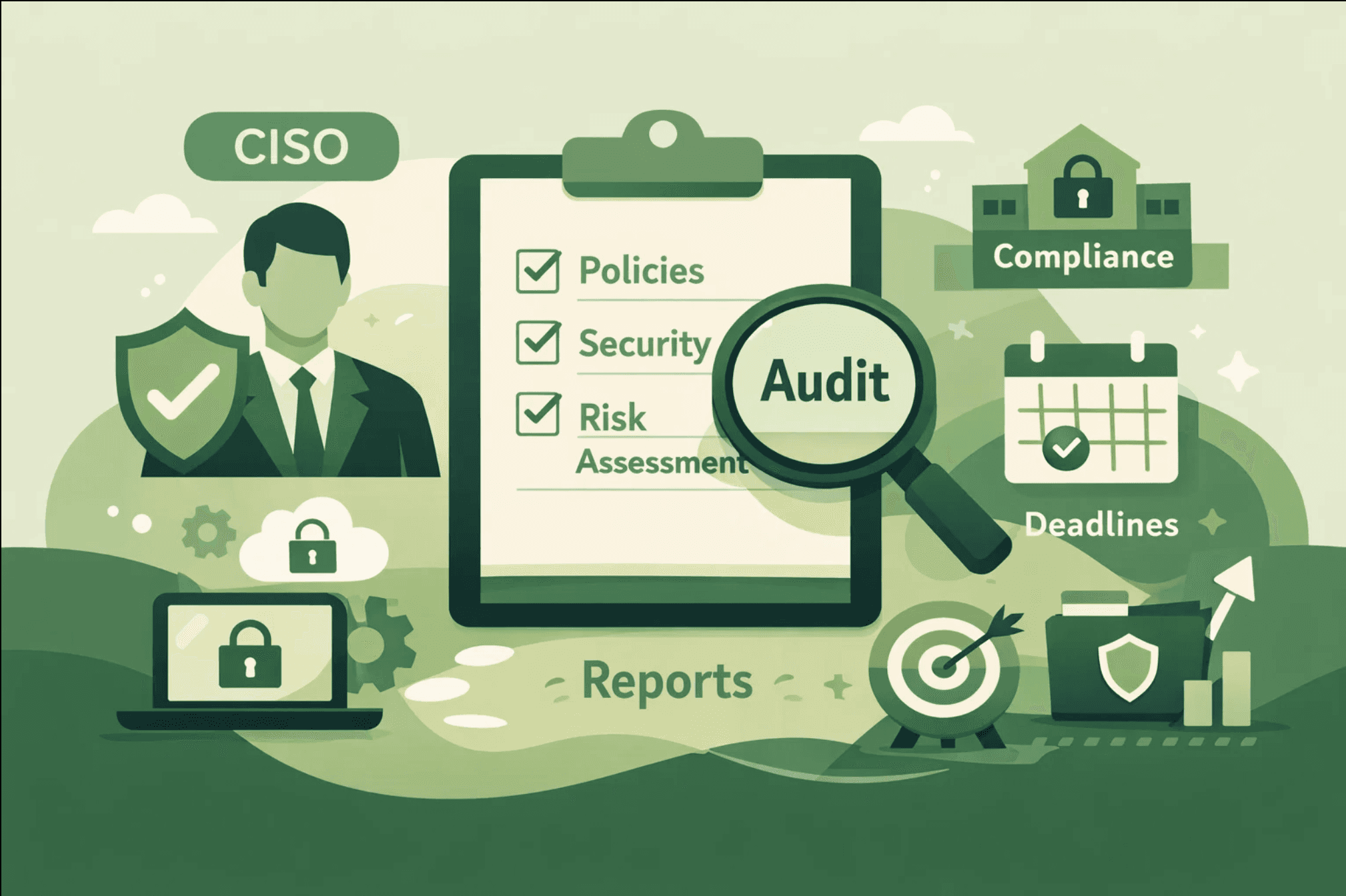
Pre-Audit Survival Guide: What CISOs Wish They Knew Before Compliance Review
Compliance audits trigger stress across security teams. CISOs face weeks of evidence gathering while worrying about control gaps that auditors might discover. The pressure builds as audit dates approach, and documentation remains incomplete. This survival guide shares practical lessons that experienced security leaders wish they had known before their first compliance review.
This article provides actionable steps for audit preparation across common frameworks. Security teams will learn how to organize evidence efficiently and avoid typical pitfalls that delay certifications. The approach focuses on practical preparation rather than perfect compliance, so organizations can achieve audit success without excessive stress.
Understanding What Auditors Actually Check
Auditors evaluate whether organizations implement and maintain security controls effectively rather than seeking perfection. The audit process examines three core areas: documented policies that define security requirements, evidence showing controls operate as designed, and proof that organizations detect and fix control failures promptly.
Most audit findings stem from gaps between documented policies and actual practices. Organizations document strong access control policies but fail to enforce them consistently across systems. Auditors discover these disconnects by sampling evidence and interviewing team members about actual procedures.
The audit preparation timeline matters significantly for success. Organizations typically need 8-12 weeks for first-time SOC 2 audit preparation or ISO 27001 certification. This timeline allows teams to identify control gaps, implement fixes, and collect evidence before auditors begin fieldwork. Rushing preparation within 4 weeks creates preventable findings that delay certification.
The 90-Day Pre-Audit Preparation Timeline
Successful audit preparation follows structured timelines that prevent last-minute scrambles. This 90-day framework provides realistic milestones for first-time certifications, while experienced teams can compress timelines for follow-up audits.
Days 90-60: Foundation and Gap Assessment
Begin by confirming which framework applies to your audit requirements. Organizations pursuing HIPAA compliance face different control requirements than those seeking SOC 2 certification. Review the complete control set for your target framework and identify which controls your organization must implement.
Conduct an internal gap assessment by comparing current security practices against required controls. Document which controls exist and operate effectively versus controls requiring implementation or improvement. This assessment reveals the actual work scope before auditors arrive.
Select your audit firm during this period if you haven't already. Experienced auditors provide valuable guidance on evidence requirements and control implementation approaches. Schedule kickoff meetings to clarify scope and discuss any unique aspects of your infrastructure or business model.
Days 60-30: Control Implementation and Documentation
Focus this middle period on fixing identified gaps and creating control documentation. Implement missing security controls starting with high-priority requirements like access management and change control and incident response procedures.
Document all security policies clearly defining how controls operate and who holds responsibility for each control. Policy documentation should match actual practices rather than describing ideal processes that don't exist. Auditors value honest documentation showing real procedures over perfect policies that nobody follows.
Begin evidence collection for implemented controls. Create organized folders matching your framework control structure so evidence maps clearly to specific requirements. This organization dramatically simplifies the actual audit process when auditors request control evidence.
DSALTA's compliance automation platform helps organizations automate evidence collection during this phase. The system continuously gathers screenshots, logs, and configuration data from cloud infrastructure, which eliminates manual evidence gathering work during final audit preparation.
Days 30-0: Evidence Organization and Internal Review
The final month focuses on completing evidence collection and conducting internal readiness reviews. Assign team members to verify evidence exists for every required control. This systematic review identifies any gaps requiring attention before auditors begin.
Conduct mock audit sessions where internal team members ask questions simulating actual auditor interviews. These practice sessions help staff articulate how controls work and where evidence lives without sounding uncertain or unprepared.
Create audit response procedures defining how team members should handle auditor requests during fieldwork. Establish single points of contact for different control areas so auditors receive consistent responses rather than conflicting information from multiple sources.
Common Audit Pitfalls to Avoid
Incomplete access control documentation: Organizations implement authentication but lack documented access review procedures. Solution: Establish quarterly access reviews before audits. Maintain evidence showing review completion and resulting access changes.
Missing evidence from observation period: Controls work properly, but evidence gaps exist. Solution: Start evidence collection immediately when beginning preparation. Automated tools like DSALTA capture evidence continuously from implementation.
Undocumented vendor assessments: Using cloud services without formal security reviews. Solution: Create vendor inventory. Obtain SOC 2 reports or questionnaires from critical vendors accessing customer data.
Inconsistent change management: Documented procedures exist, but teams use informal processes. Solution: Enforce procedures strictly during the observation period. Use ticketing systems requiring approval evidence before production deployments.
Framework-Specific Preparation Priorities
SOC 2: Focus on access controls, system monitoring, and change management. Prepare access provisioning tickets, access review reports, SIEM logs, vulnerability scanning evidence, and remediation tracking.
ISO 27001: Document risk assessment processes and asset management. Provide asset inventories, risk registers, and management review minutes proving leadership engagement.
HIPAA: Demonstrate technical safeguards for PHI protection. Show encryption configurations, role-based access controls, audit logs, and business associate agreements.
Technology for Audit Efficiency
Automated compliance platforms reduce preparation time by 60% while improving evidence quality. Systems like DSALTA connect to infrastructure via APIs and continuously capture evidence, eliminating manual collection work. Continuous monitoring alerts teams immediately when controls drift, enabling prompt fixes before audits. Centralized documentation provides auditors with organized access to all policies and evidence mapped to framework controls.
Building Sustainable Audit Readiness
Shift from project-based compliance to embedding audit readiness in daily operations. Assign control owners with clear documentation responsibilities. Update policies immediately when processes change rather than batch updates before audits. Conduct quarterly internal reviews to identify issues early with time for fixes.
Post-Audit Actions
Address findings promptly with detailed remediation plans, tracking completion status. Review audit process to identify preparation inefficiencies and document lessons learned. Maintain continuous compliance between cycles rather than restarting preparation annually. This distributes effort evenly, reducing stress.
Measuring Audit Preparation Success
Track metrics showing preparation effectiveness and efficiency improvements over multiple audit cycles.
Preparation efficiency metrics:
Evidence collection time: Target 3-4 hours monthly vs 15-20 hours manually
Audit findings count: Reduce findings by 50% between the first and second audits
Fieldwork duration: Complete audits in 3-5 days vs 10-15 days with poor preparation
Time to certification: Achieve certification within 90 days of audit start
Long-term program metrics:
Internal review findings: Decrease in findings in quarterly internal audits
Control automation rate: Automate 70%+ of evidence collection processes
Staff confidence levels: Measure team confidence through pre-audit surveys
Audit costs: Reduce external audit fees through efficient preparation
Organizations using DSALTA's automated compliance monitoring report a 60% reduction in audit preparation time while achieving fewer findings compared to manual preparation approaches. The platform provides pre-built frameworks mapping evidence requirements to common compliance standards, which eliminates uncertainty about what auditors need.
Prepare for audit success: Schedule a demo to see how DSALTA automates evidence collection and control monitoring for faster audit completion, or explore our framework guides to understand specific requirements for your compliance standards.
Explore more SOC 2 articles
Getting Started with SOC 2
Audit Preparation & Evidence
Controls & Technical Implementation
Multi-Framework Strategy
Business & Trust
Stop losing deals to compliance.
Get compliant. Keep building.
Join 100s of startups who got audit-ready in days, not months.