SOC 2
SOC 2 Audit Evidence: Artifacts & Collection Checklist
Written by
DSALTA Team
|
Published on
Dec 23, 2025
Introduction: Why Evidence Collection Is Every Team's Biggest SOC 2 Pain Point
Your security is solid. You've implemented single sign-on, enforced multi-factor authentication, run regular backups, maintained strict access controls, and promptly patched vulnerabilities. Your engineering and security teams take their responsibilities seriously.
Then the SOC 2 auditor asks a simple question: "Can you show me evidence that this control operated consistently for the last six months?"
Everything falls apart.
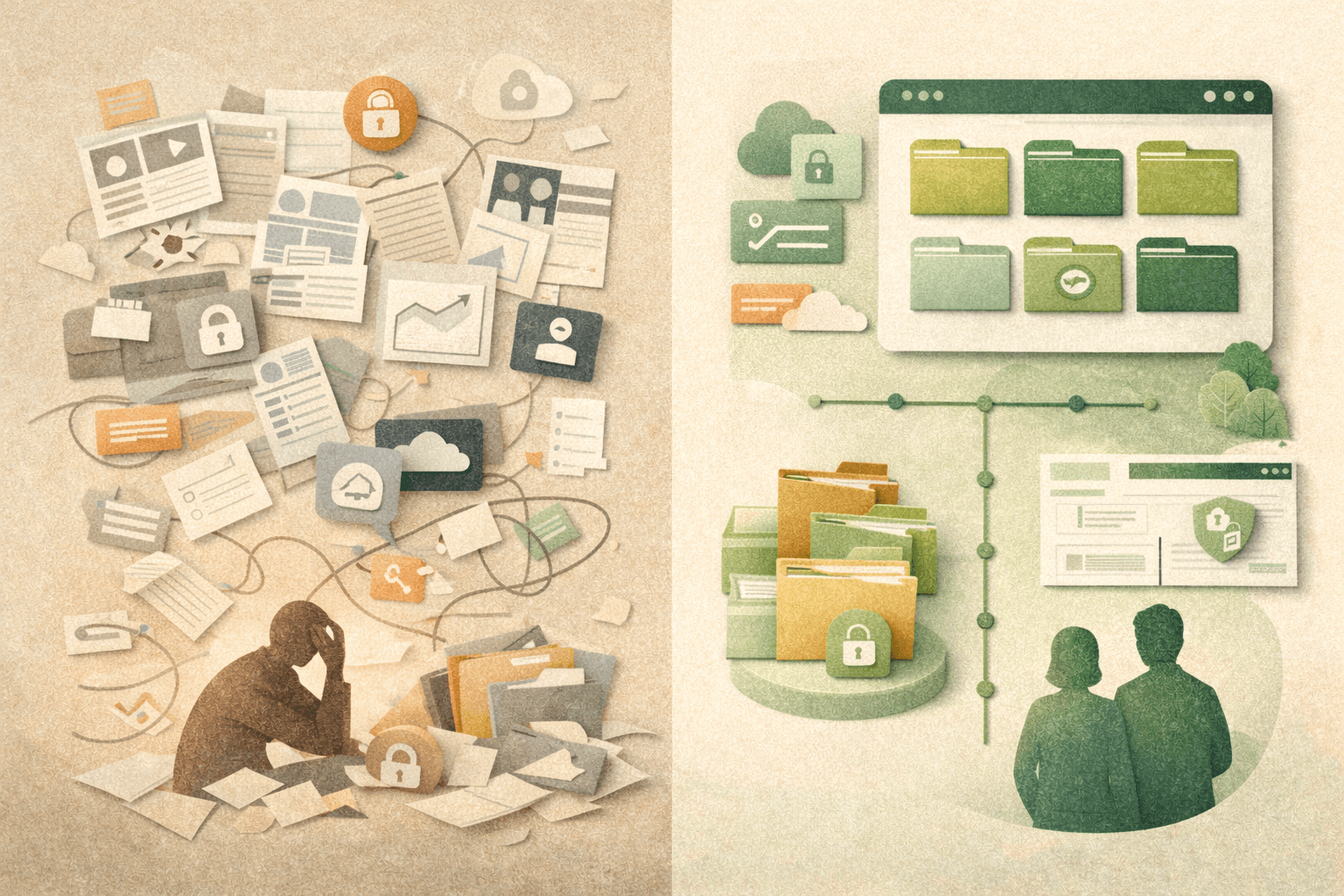
Suddenly, you're digging through old Slack threads searching for incident discussions, pulling manual screenshots from Okta showing current configurations, exporting CSV files from Jira hoping they contain what auditors need, hunting through email for vendor security assessments, and building messy spreadsheets named evidence-final-final-v3.xlsx that nobody can find two weeks later.
This is the real pain of SOC 2 compliance: evidence chaos.
Most startups don't fail SOC 2 audits because they lack the security capabilities needed. They fail because they can't prove they have security through organized, consistent, verifiable evidence collected throughout the observation period.
The challenge isn't what evidence is required for a SOC 2 audit—it's establishing systematic steps for collecting SOC 2 audit evidence that don't require your entire team to drop everything during audit week.
This guide provides security teams and IT managers with a comprehensive understanding of the SOC 2 audit artifacts I need to gather, practical collection strategies, and how automation eliminates "screenshot fatigue" and manual tracking chaos.
(If you want the bigger picture first, this is a good baseline: SOC 2 framework overview and Understanding SOC 2 compliance requirements.)
What Auditors Actually Mean by "Evidence"
Beyond Documentation: The Verification Trail
SOC 2 evidence isn't just documentation showing you have policies. It's a verifiable trail proving controls operated consistently throughout the observation period.
For each control you implement, auditors expect three connected elements:
Policy is your documented rule establishing what should happen. For example, your Access Control Policy states that all employees must use SSO with MFA for production access.
The procedure explains how your team executes the policy. Your Access Control Procedure documents the specific steps for provisioning access, configuring MFA, conducting reviews, and removing access during offboarding.
Artifact provides proof that procedures were actually followed. Logs showing MFA enforcement, access-review exports with approvals, and timestamps of terminated-employee access removal serve as artifacts.
No artifact equals no control from an auditor's perspective. You can have perfect policies and well-designed procedures, but without artifacts proving consistent execution, auditors cannot verify control effectiveness.
(If you need a practical “what a SOC report contains / what auditors look for” companion: What is included in a SOC 2 report and Explaining the SOC 2 report.)
Complete SOC 2 Evidence Categories
Understanding what evidence is required for a SOC 2 audit means knowing what artifacts auditors will request across all control areas.
Access Management Evidence
User provisioning records show when employees were granted access, what permissions they received, who approved the access, and which systems they can access.
Multi-factor authentication logs demonstrate MFA enforcement across all required systems with no exceptions unless properly documented and approved.
Quarterly access reviews require complete user lists from identity providers, manager review and approval records, documentation of access changes made based on reviews, and confirmation that reviews occurred on schedule.
Terminated employee access removal needs offboarding checklists showing which access was removed, system logs confirming removal timestamps, verification that removal occurred within your policy timeframe (typically same day), and sign-off from IT or security confirming completion.
(Helpful supporting read: Key SOC 2 controls to know.)
Change Management Evidence
Code review records from GitHub, GitLab, or similar platforms showing pull request approvals before merge, multiple reviewers for critical changes, and approval from appropriate personnel.
Change tickets in Jira, Linear, ServiceNow, or other systems that link every production change to a documented request, show approval workflows, and include rollback procedures.
Deployment logs demonstrating when changes were deployed to production, who performed deployments, whether deployments followed approval workflows, and any issues encountered during deployment.
Testing documentation proving changes were tested before production deployment, including test plans, test results, and a sign-off that testing passed.
(If you want a “how to plan this as a program” internal link near this section: Building your SOC 2 project plan.)
Security Monitoring Evidence
SIEM or log aggregation showing centralized logging from all in-scope systems, log retention meeting policy requirements (typically 90+ days), and configuration details for what's being logged.
Security alert reports demonstrating alerts triggered during the observation period, how alerts were investigated, what actions were taken in response, and the resolution of identified issues.
Incident response records, including incident tickets from when issues were detected, investigation documentation, containment and remediation steps, post-incident review and lessons learned, and improvements implemented.
Vulnerability scan results showed that regular scanning occurred on schedule, identified vulnerabilities were tracked, remediation timelines were met, and critical vulnerabilities were addressed promptly.
(For a broader “continuous monitoring mindset” companion: Continuous compliance monitoring.)
Vendor Risk Management Evidence
Vendor inventory listing all third-party vendors with access to customer data or systems, risk classification for each vendor, data types each vendor processes, and contractual terms governing vendor relationships.
Vendor security assessments, including completed security questionnaires, SOC 2 reports or ISO 27001 certificates, evidence of review and approval, and scheduled reassessment dates.
Vendor review records showing periodic reviews occurred on schedule, any issues identified during reviews, remediation of vendor security concerns, and decisions to continue or terminate vendor relationships.
(Internal product link that matches this section: Vendor Risk Management.)
Backup and Recovery Evidence
Backup success logs demonstrating daily backups completed successfully, what data was backed up, where backups are stored, and that retention periods are met.
Backup restoration testing to prove backups are recoverable, including test plans and schedules, test results showing successful restoration, the time required for restoration (RTO measurement), and documentation of any issues encountered.
Disaster recovery plans with documented procedures, assigned responsibilities, defined recovery time objectives, and evidence of annual testing.
Training and Awareness Evidence
Security awareness training requires training materials or module descriptions, completion records for all employees, dates of training, and evidence of annual refresher training.
Role-specific training for employees with privileged access or handling sensitive data, including specialized training content and completion documentation.
Training acknowledgments confirm employees' understanding of security policies and responsibilities.
Policy and Governance Evidence
Information security policies with leadership approval and dates, version history showing updates over time, evidence of annual reviews, and communication to employees.
Risk assessments documenting formal risk identification, likelihood and impact analysis, risk ratings and prioritization, and treatment plans for identified risks.
Management review minutes showing leadership evaluated ISMS effectiveness, reviewed security metrics and incidents, made resource allocation decisions, and approved changes or improvements.
Internal audit reports demonstrating periodic audits occurred, findings were documented, corrective actions were assigned, and remediation was verified.
The Three Most Common Evidence Failures
Failure 1: Point-in-Time Screenshots Instead of Historical Proof
Many teams think that taking a screenshot during audit week satisfies evidence requirements. It doesn't.
The problem: A screenshot showing MFA is currently enabled doesn't prove it was enabled throughout the six-month observation period. The configuration could have changed yesterday.
What auditors want: Historical logs showing MFA remained enforced continuously, audit trails of any configuration changes, and evidence that monitoring would detect if MFA were disabled.
Auditors need evidence spanning the entire observation period, not just proof that something is configured correctly today.
(If you want a supporting “how audits actually work / what testing looks like” link near here: SOC 2 auditing.)
Failure 2: Missing Ownership and Accountability
Evidence exists somewhere, but nobody knows who owns it or where it lives.
The problem: Access to review evidence might be in IT's shared drive, engineering's Google Drive, individual email inboxes, or lost altogether. When auditors request it, multiple days are wasted just locating the evidence.
What teams need: Clear ownership mapping showing who's responsible for each evidence type, centralized storage with consistent organization, and documented procedures for evidence collection and storage.
Without clear ownership, evidence collection becomes an organization-wide scavenger hunt during the most stressful phase of the audit.
Failure 3: Manual Backfilling After the Fact
Teams realize three days before the audit that they don't have the required six months of evidence and try to recreate history.
The problem: Auditors can tell when evidence was created retroactively. Timestamps don't match. The documentation references events that haven't occurred yet. The story doesn't add up.
What this causes: Audit findings, delays requiring observation period extension, potential audit failure, and damaged credibility with auditors who question whether other evidence is legitimate.
You cannot manufacture evidence after the fact. It must be collected continuously as controls are executed throughout the observation period.
The SOC 2 Evidence Lifecycle
Moving From Panic to Process
SOC 2 evidence should flow continuously throughout normal operations, not be frantically collected during "audit panic week."
The healthy evidence lifecycle includes five stages:
Generate: Systems create logs and records naturally during normal operations. Okta logs authentication events. GitHub records pull request approvals. AWS CloudTrail captures infrastructure changes. Your ticketing system documents incidents.
Capture: Evidence is systematically pulled from source systems on defined schedules. Access reviews get exported monthly. Vulnerability scan results get collected after each scan. Backup logs get captured daily.
Store: Artifacts are organized consistently and mapped to specific controls. Evidence for CC6.3 (access reviews) is located in a defined place. Evidence for CC8.1 (change management) is stored in its own organized manner.
Review: Control owners validate the completeness of evidence monthly or quarterly. They verify that collections occurred on schedule, that the evidence is sufficient for audit needs, that no gaps exist in the evidence trail, and that quality meets auditor expectations.
Present: When auditors arrive, they're granted organized access to complete evidence packages mapped to each control. They can quickly find what they need, verify the authenticity of evidence, and test control effectiveness efficiently.
Teams that master this lifecycle experience calm, efficient audits. Teams that don't experience chaos and stress.
(If you want a “staying ready all year” supporting link: Staying continuously SOC 2 compliant.)
SOC 2 Audit Evidence Collection Steps: Building Your System
Step 1: Map Evidence Sources to Every Control
Create explicit connections between each control and its evidence sources. Don't leave this implicit or assumed.
Example mapping:
Control
Evidence Source
Collection Frequency
Storage Location
MFA required for all users
Okta policy config + audit log
Monthly snapshot
Evidence/CC6.1/MFA
Production changes reviewed
GitHub PR approvals
Per release
Evidence/CC8.1/Changes
Access reviewed quarterly
Okta user export + approval
Quarterly
Evidence/CC6.3/Reviews
Incidents documented
Jira incident tickets
Per incident
Evidence/CC7.3/Incidents
Vendors assessed annually
Vendor risk files
Annually
Evidence/CC9.2/Vendors
This mapping serves as your operational guide for the SOC 2 audit artifacts I need to gather throughout the year.
(Internal “control documentation” support: Mastering SOC 2 compliance documentation.)
Step 2: Replace Manual Collection With Automated Feeds
Instead of manually exporting evidence every month or quarter, establish automated collection from your technology stack.
Identity provider integration automatically pulls user lists showing current access, MFA enforcement status, group memberships and permissions, and authentication logs.
Version control integration automatically captures pull request approvals, enforces branch protection, and provides commit history for audit trails and deployment records.
Cloud infrastructure integration collects configuration snapshots showing security settings, encryption status, logging configurations, and infrastructure changes over time.
Ticketing system integration gathers incident tickets with proper categorization, change request tickets with approvals, and problem tickets with resolution documentation.
SIEM or monitoring integration aggregates security alerts and investigations, log retention evidence, monitoring coverage documentation, and incident detection records.
This transformation—from manual exports to automated collection—eliminates the majority of evidence collection burden.
(If you want to reference “manual vs automated” explicitly, this fits perfectly: SOC 2 automation vs manual and SOC 2 automation.)
Step 3: Enforce Evidence Deadlines Before Auditors Ask
Build evidence collection into operational workflows with precise deadlines and ownership.
Quarterly access reviews should trigger automatically 90 days after the previous review, with assigned owners who must complete reviews before the quarter closes, automatic reminders escalating to management if overdue, and evidence automatically captured upon completion.
Monthly vulnerability scans run on schedule with results automatically collected, tracked for remediation, and documented when vulnerabilities are addressed.
Annual disaster recovery tests get scheduled a year in advance with responsible parties assigned, test procedures documented, results captured immediately after completion, and lessons learned documented.
Vendor security reviews trigger based on each vendor's review schedule, with assessments assigned to procurement or security teams, evidence requirements clearly defined, and completion tracked in a central repository.
When evidence deadlines integrate into everyday workflows, you avoid the scramble that happens when auditors request evidence nobody collected.
Step 4: Create an Always-Ready Evidence Dashboard
Your evidence repository should answer these questions instantly:
Which controls have complete evidence? Visual indicators showing green for complete, yellow for at-risk, and red for missing evidence.
What changed since the last audit? Clear documentation of new systems added to the scope, controls modified or added, personnel changes affecting ownership, and remediation of previous audit findings.
Which teams are blocked or behind? Real-time visibility into overdue access reviews, missing vendor assessments, incomplete training, and other gaps requiring attention.
Is our evidence audit-ready? Overall readiness score or status showing whether you could start an audit today with confidence.
This dashboard transforms evidence management from reactive scrambling to proactive monitoring.
(Internal DSALTA positioning link that matches “single dashboard/readiness”: Compliance Management and Platform overview.)
How DSALTA Eliminates Evidence Collection Pain
The Manual Evidence Problem
Traditional SOC 2 audit evidence collection steps consume enormous time and create constant stress:
Engineers spend hours manually exporting logs and configurations. IT teams chase down access review approvals via email. Security teams build spreadsheets tracking evidence collection status. Compliance teams create Jira tickets to request evidence from other teams. Everyone works nights and weekends before audits, trying to backfill missing proof.
This manual burden is why security and IT teams dread SOC 2 audits.
The DSALTA Solution: Continuous Automated Collection
DSALTA transforms evidence collection from a manual burden to an automated background process.
Automatic integration with your existing technology stack… Continuous evidence capture… Intelligent organization… Real-time completeness tracking… Audit-ready evidence packages…
Your team stops chasing screenshots and starts focusing on actual security work. Learn more:
(İstersen burada, “trust proof” açısı da çok iyi oturuyor: SOC 2 evidence + buyer enablement. Bu internal linki eklemek mantıklı: Trust Center.)
The Result: Audits That Don't Disrupt Operations
When evidence collection runs automatically:
Engineering teams stay focused on shipping features instead of gathering compliance screenshots and exports.
Security teams spend time on actual security improvements rather than evidence organization and tracking.
IT managers maintain infrastructure rather than becoming compliance project managers during audit season.
Auditors move faster because evidence is organized, complete, and readily available rather than requiring multiple follow-up requests.
Sales teams close enterprise deals sooner because audits complete efficiently without delays.
SOC 2 transforms from a disruptive event into a smooth process that runs in the background.
Building Your Evidence Collection Checklist
Use this comprehensive checklist to ensure you're capturing the SOC 2 audit artifacts I need to gather throughout your observation period:
Access Management Checklist
Current user list from identity provider
MFA enforcement policies and configurations
Quarterly access review exports with approvals
Terminated employee offboarding records
Privileged access change approvals
Emergency access usage logs
Change Management Checklist
Pull request approvals for all production changes
Change request tickets with approvals
Deployment logs with timestamps
Testing documentation for changes
Emergency change procedures and usage
Rollback documentation where applicable
Monitoring and Logging Checklist
SIEM configuration showing log sources
Log retention evidence meeting policy
Security alert reports by month
Incident investigation documentation
Monthly monitoring coverage reviews
Vendor Risk Checklist
Complete vendor inventory
Vendor risk classifications
SOC 2 reports or security questionnaires
Annual vendor review records
New vendor assessment documentation
Backup and Recovery Checklist
Daily backup success logs
Quarterly backup restoration tests
Disaster recovery plan documentation
Annual DR test results
Training and Policies Checklist
Security awareness training records
Policy approval and distribution records
Annual policy review documentation
Training acknowledgment forms
Governance Checklist
Risk assessment and treatment plans
Internal audit reports
Management review minutes
Remediation tracking for findings
(İstersen checklist bölümünün hemen sonuna “downloadable checklist” iç linki de koyabiliriz: SOC 2 compliance checklist.)
Conclusion: From Evidence Chaos to Evidence System
The difference between teams that struggle with SOC 2 audits and teams that sail through them isn't security capability—it's evidence management.
Understanding what evidence is required for a SOC 2 audit is just the starting point. The real challenge is establishing systematic SOC 2 audit evidence collection steps that capture proof continuously without consuming your team's time and energy.
Manual evidence collection doesn't scale. Screenshot fatigue is real. Spreadsheet tracking breaks down. Teams that rely on manual processes experience stress, delays, and audit findings that could have been avoided.
The solution is treating evidence collection as a system rather than a periodic scramble. Map evidence sources to controls explicitly. Automate collection wherever possible. Store evidence consistently with clear organization. Review completeness regularly before auditors ask. Maintain continuous audit readiness rather than crisis-driven preparation.
When you build this system—or implement platforms like DSALTA that automate it—SOC 2 audits transform from dreaded disruptions into straightforward verifications of what you already do.
Your team stays focused on building products and serving customers. Evidence flows continuously in the background. Audits are completed efficiently. Enterprise customers get the assurance they need. Your business grows without compliance becoming a bottleneck.
That's the power of systematically solving the evidence problem.
Ready to remove evidence chaos permanently?
Book a demo
Continue Reading

SOC 2 in 3 Months: Proven Hacks and Mock Audit Templates to Fast-Track Compliance
Compliance
HR Audit Prep: DEI, Harassment & Compliance Playbook Guide
Compliance
Cyber Compliance for SaaS: Ransomware Defense, Continuous Monitoring & DORA/ISO 27001 Evidence Gathering
How to Master Third-Party Risk Management: A Complete Guide to Vendor Compliance