Governance, Risk, and Compliance (GRC) —
Hidden Costs of Manual Compliance: Real Numbers for CISOs
Manual compliance costs 6x more than expected. Learn the hidden expenses eating your budget and why CISOs are switching to continuous automation in 2025.
Jon Ozdoruk
Audit Preparation & Management
Share this article


Hidden Costs of Manual Compliance: Why CISOs Are Switching to Continuous Automation
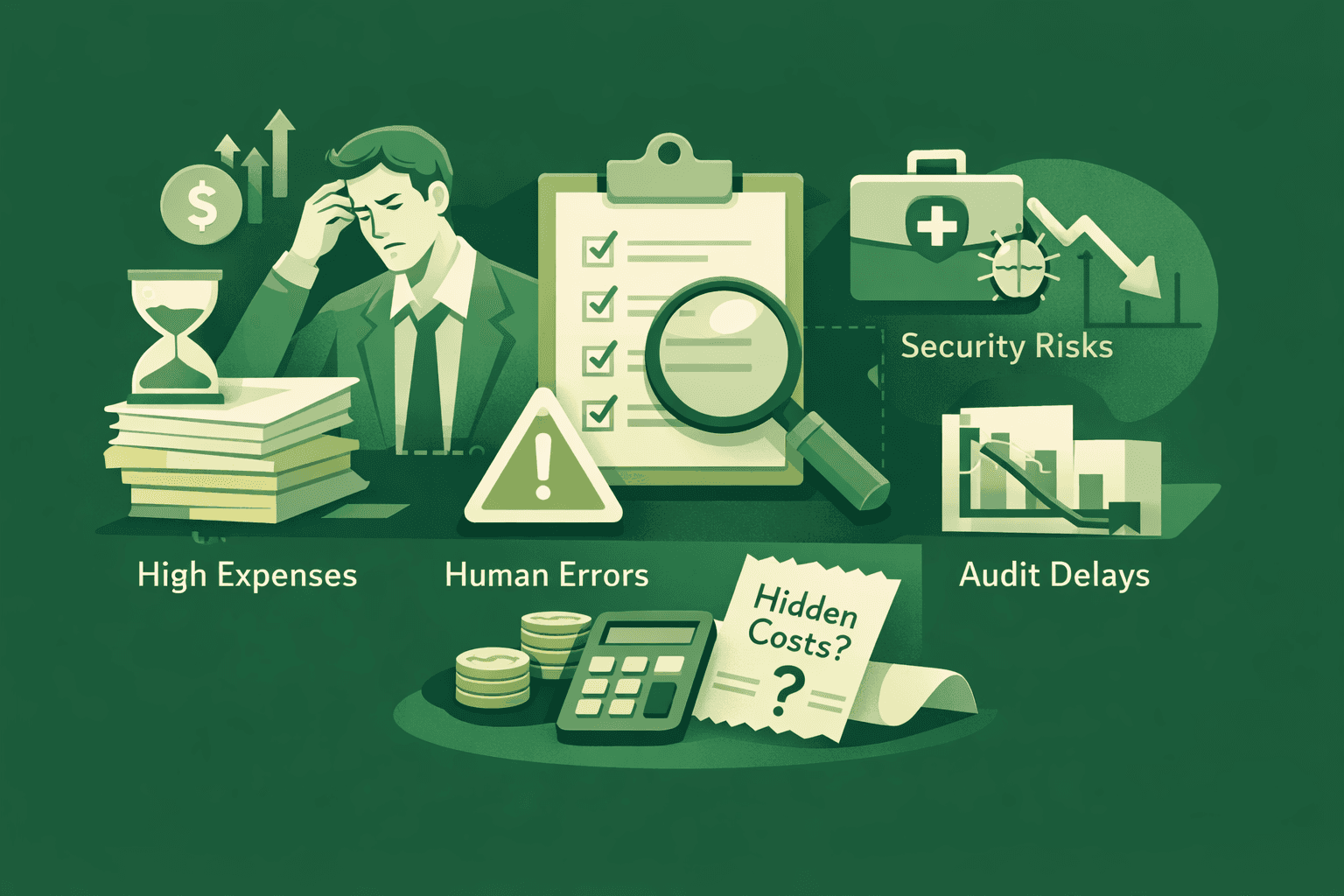
Most CISOs see the direct costs of compliance: salaries for compliance staff, consultant fees, and audit expenses. What they miss is the hidden cost structure that manual compliance creates throughout the organization.
Recent financial analysis of over 200 organizations reveals a startling reality: for every $1 spent on visible compliance costs, companies incur an additional $6.20 in hidden expenses. That's a 620% cost multiplier that most finance teams never see coming.
If your compliance team is still managing controls in spreadsheets, chasing down evidence via email, and manually tracking vendor questionnaires, you're likely spending far more than your budget suggests. This article breaks down the real cost of manual compliance and shows why continuous automation isn't just an efficiency play—it's a financial imperative.
The Three Categories of Hidden Compliance Costs
1. Direct Hidden Costs: The Time Tax
Manual compliance operations create immediate, measurable expenses that rarely appear on compliance budget reports:
Endless context switching. Compliance teams spend 10-20 hours per month per person just on administrative tasks: updating spreadsheets, sending follow-up emails, tracking down documentation, and reconciling conflicting information across multiple systems. That's roughly 25% of each team member's time spent on coordination rather than actual risk management.
Audit preparation chaos. When audit season arrives, manual processes force teams into emergency mode. Security teams report spending 4-6 weeks of intensive work gathering evidence, verifying controls, and preparing documentation. One study found that companies with manual compliance processes spend an average of 308 hours annually just managing compliance surveillance—nearly two full months of work.
False positives and alert fatigue. Manual monitoring systems generate excessive false positives that waste analyst time. Financial services firms report spending an average of $232,457 per year reviewing alerts that never represented real risks. That's $636 burned every single day on phantom threats.
The opportunity cost. Every hour your security team spends copying screenshots into spreadsheets or tracking down evidence is an hour not spent on actual security improvements. Manual compliance doesn't just cost money—it prevents your best people from doing their most valuable work.
2. Indirect Hidden Costs: The Organizational Drag
Beyond direct labor costs, manual compliance creates friction throughout the entire organization:
Delayed product launches. When compliance reviews take weeks instead of days, product teams wait. New features sit in queues. Revenue opportunities slip by. Companies report delaying product launches by 2-3 months due to compliance backlogs created by manual review processes.
Vendor onboarding bottlenecks. Manual vendor risk assessments can take 4-8 weeks to complete. During that time, critical vendors can't be engaged, procurement is stalled, and business units resort to workarounds that create shadow IT risks. The cost isn't just the delayed contract—it's the workarounds that follow.
Employee turnover and burnout. Compliance roles that involve heavy manual work experience 12% higher turnover rates than roles with modern automation tools. Each replacement costs approximately $40,000 in recruitment, training, and lost productivity. When your compliance team is constantly training new people, institutional knowledge disappears.
Cross-functional friction. Manual compliance processes require constant coordination: security teams emailing engineering teams for evidence, compliance managers Slacking IT for access logs, risk teams waiting on procurement for vendor documentation. This creates dozens of micro-delays that compound across the organization.
3. Risk-Based Hidden Costs: What You Can't See
The most dangerous hidden costs are the ones that don't show up until something goes wrong:
Compliance drift. Manual tracking can't keep pace with daily changes in your environment. New services get deployed, configurations change, employees join and leave—but your compliance documentation lags behind reality. By the time your next audit arrives, you're documenting a system that no longer exists.
Missed deadlines and penalties. Manual systems make it easy to miss renewal dates, policy review schedules, and regulatory filing deadlines. A single missed filing can trigger penalties ranging from $5,000 to $60,000+ per violation, depending on the framework and severity.
Audit findings and remediation. Organizations with manual compliance processes experience 3-4x more audit findings than those with continuous automation. Each finding requires a formal remediation plan, follow-up evidence, and management attention. The average cost to remediate a single audit finding ranges from $15,000 to $50,000 when you factor in staff time and potential follow-up audits.
Reputational damage. If a compliance failure becomes public—whether through an enforcement action, a security incident, or a failed audit—the reputational cost can dwarf every other expense. Clients question your security posture. Prospects choose competitors. Sales cycles lengthen. The impact can persist for years.
The Real Numbers: What Manual Compliance Actually Costs
Let's break down a realistic scenario for a mid-market company (200-500 employees) managing SOC 2 compliance manually:
Visible Costs (What CFOs See):
Compliance manager salary: $120,000
Security analyst (50% allocated): $60,000
External audit: $35,000
Tools and subscriptions: $25,000
Total visible costs: $240,000
Hidden Costs (What CFOs Miss):
Administrative overhead (10-20 hrs/month across team): $78,000
Cross-functional coordination tax (engineering, IT, procurement): $95,000
Audit preparation time (4-6 weeks intensive work): $42,000
Product delays due to compliance bottlenecks: $120,000
Vendor onboarding delays: $35,000
Turnover and recruitment: $40,000
Audit findings remediation (avg 3-4 findings): $75,000
Total hidden costs: $485,000
Total actual compliance cost: $725,000 (3x the visible budget)
And this assumes no major compliance failures, missed deadlines, or regulatory penalties. If something goes wrong, add another $100,000-$500,000 in emergency remediation and potential fines.
Why Continuous Automation Changes the Economics
Continuous compliance automation fundamentally restructures the cost model:
Eliminate the coordination tax. Automated evidence collection means no more screenshot gathering, email chains, or Slack threads hunting down logs. Controls are monitored continuously, and evidence is collected automatically in real-time.
Compress audit preparation. Companies using continuous automation report reducing audit prep from 4-6 weeks down to 1-2 weeks. The evidence is already collected, organized, and time-stamped. Auditors can review it in the platform rather than waiting for spreadsheet deliveries.
Stop compliance drift before it starts. Real-time monitoring catches configuration changes, failed controls, and policy violations as they happen—not months later during an audit. This prevents findings rather than remediating them after the fact.
Reclaim your security team's time. Automation returns 10-20 hours per month per person back to your team. Those hours can be redirected to proactive security improvements, threat hunting, or strategic initiatives that actually reduce risk.
Scale without linear cost growth. Manual compliance costs scale linearly with company size. Continuous automation scales logarithmically. Adding a second compliance framework with automation might increase costs by 20-30% rather than doubling your compliance budget.
The Migration Path: From Manual to Continuous
Making the switch doesn't require a complete operational overhaul. Most organizations follow a phased approach:
Phase 1: Evidence collection automation (Months 1-2) Start by automating the most time-intensive manual tasks: collecting logs, capturing screenshots, gathering infrastructure evidence. This immediately frees up 30-40% of manual compliance time.
Phase 2: Control monitoring (Months 2-4). Implement continuous monitoring for your most critical controls. Focus on high-impact areas like access management, encryption verification, and change management. This catches compliance drift early.
Phase 3: Workflow automation (Months 4-6) Automate approval workflows, vendor questionnaire distribution, policy review reminders, and training assignment. This eliminates the coordination tax across the organization.
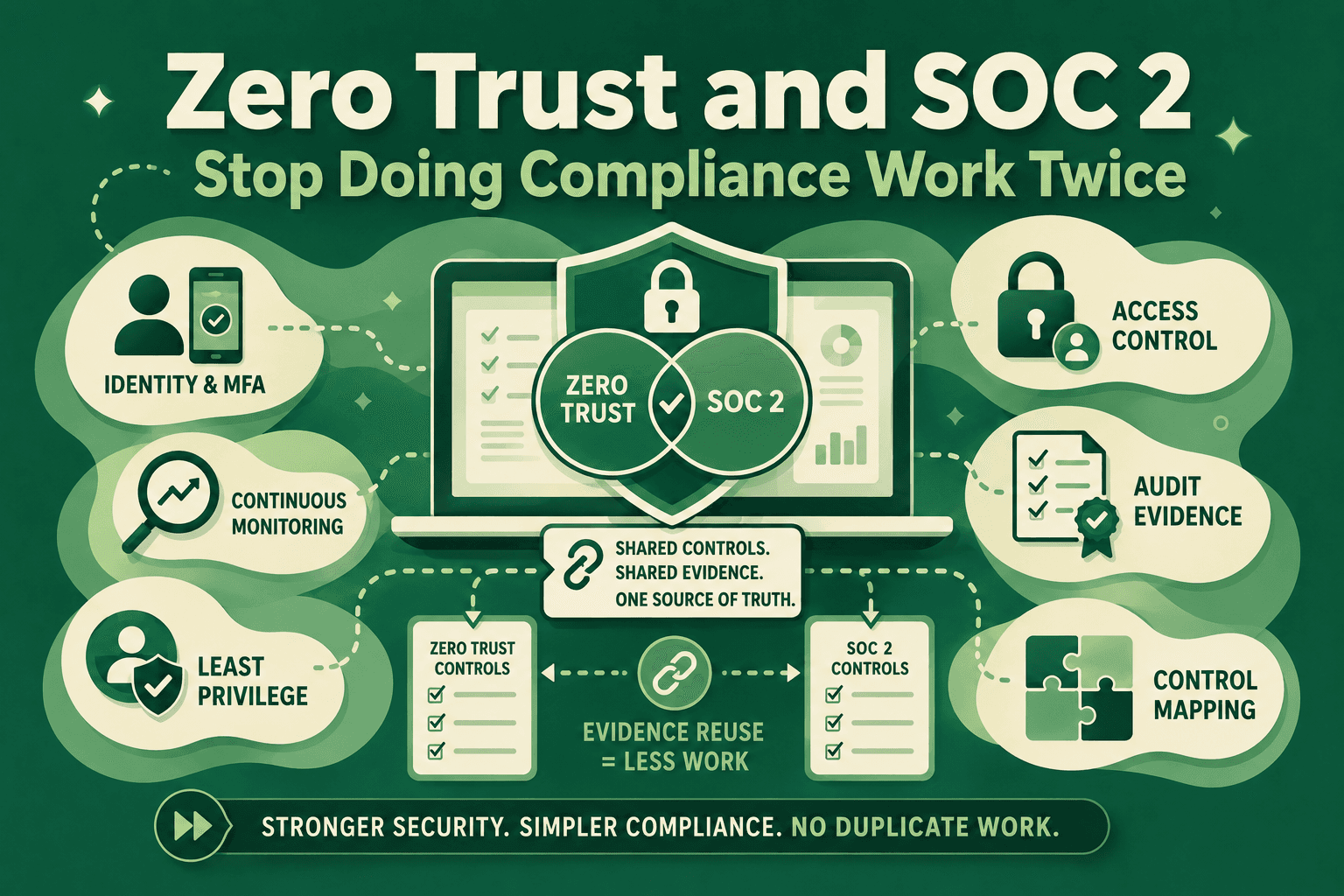
Phase 4: Multi-framework optimization (Months 6+) Once your first framework is automated, mapping additional frameworks (ISO 27001, HIPAA, GDPR) becomes significantly easier. Many controls overlap, and evidence can be reused across frameworks.
The ROI typically breaks even within 6-9 months, and the cumulative savings compound over time as you avoid the hidden costs that manual processes create.
What to Look for in a Continuous Automation Platform
Not all compliance automation is created equal. When evaluating platforms, prioritize:
AI-powered evidence collection that understands context and maps artifacts to specific control requirements without manual tagging.
Real-time monitoring that catches configuration drift and control failures as they happen, not weeks later during a manual review.
Multi-framework support that allows you to reuse evidence across SOC 2, ISO 27001, HIPAA, GDPR, and other frameworks without duplicating effort.
Automated workflows for policy reviews, training assignments, vendor assessments, and approval processes that reduce the coordination tax.
Audit-ready documentation that auditors can access directly, eliminating the weeks of preparation work that manual processes require.
Integration capabilities that connect with your existing security stack (SSO, SIEM, cloud infrastructure, ticketing systems) to collect evidence automatically.
Conclusion: The Cost of Waiting
The hidden costs of manual compliance aren't one-time expenses—they compound every month you wait. Every audit cycle, every missed deadline, every hour spent updating spreadsheets adds to the total.
CISOs who recognize continuous automation as a strategic investment rather than an expense line unlock millions in hidden value while positioning their organizations for faster growth in an increasingly regulated environment.
The question isn't whether to automate compliance. It's how quickly you can capture the financial benefits of transformation before your competitors do.
Ready to uncover your organization's hidden compliance costs? Explore DSALTA's continuous compliance automation platform and see how AI-powered monitoring can eliminate the coordination tax, compress audit timelines, and give your security team back 40+ hours per month.
Frequently Asked Questions
What are the highest hidden costs of manual compliance?
The three highest hidden costs are: (1) the time tax from administrative work and coordination across teams (typically 10-20 hours per month per person), (2) organizational drag from delayed product launches and vendor onboarding bottlenecks, and (3) risk-based costs from compliance drift, audit findings, and potential penalties. Research shows these hidden costs can be 6x larger than visible compliance budgets.
How much can compliance automation actually save?
For a typical mid-market company (200-500 employees), continuous automation can reduce total compliance costs by 40-60% while improving audit outcomes. This translates to savings of $200,000-$400,000 annually when you account for eliminated administrative overhead, compressed audit timelines, faster vendor onboarding, and reduced audit findings. The ROI typically breaks even within 6-9 months.
Won't automation tools just add to my compliance budget?
Modern continuous automation platforms typically cost $50,000-$100,000 annually for mid-market companies—far less than the $485,000+ in hidden costs that manual processes create. The key is that automation eliminates costs rather than adding them: less staff time on administrative work, fewer audit findings to remediate, faster vendor onboarding, and reduced turnover from compliance burnout.
How long does it take to implement continuous compliance automation?
Most organizations can automate evidence collection and monitoring within 2-3 months. A phased approach works best: start with high-impact areas like evidence collection (Month 1-2), add continuous control monitoring (Month 2-4), implement workflow automation (Month 4-6), then expand to additional frameworks. You'll start seeing ROI within the first 60-90 days as administrative time decreases.
Can continuous automation work for multiple compliance frameworks?
Yes—this is where automation delivers the biggest ROI. Many controls overlap across frameworks (SOC 2, ISO 27001, HIPAA, GDPR), so evidence collected for one framework can be reused for others. Organizations report that adding a second or third framework with automation increases costs by only 20-30% rather than doubling or tripling the compliance budget as manual processes would.
What happens to my compliance team when we automate?
Automation doesn't replace compliance teams—it elevates them. Instead of spending 10-20 hours per month on administrative tasks, your team can focus on strategic risk management, proactive security improvements, and cross-functional collaboration. Organizations that automate report higher job satisfaction, lower turnover, and better audit outcomes because their compliance professionals can do the work they were actually hired to do.

Explore more GRC articles
Stop losing deals to compliance.
Get compliant. Keep building.
Join 100s of startups who got audit-ready in days, not months.