Governance, Risk, and Compliance (GRC) —
Lower Your 2026 Cyber Insurance Premiums with Compliance
Lower your 2026 cyber insurance premiums. Learn what controls insurers require for SOC 2 & ISO 27001 and how compliance automation gets you better coverage.
Jon Ozdoruk
Risk Management & Insurance
Share this article


Lower Your 2026 Cyber Insurance Premiums with Compliance
It’s a tough conversation happening in boardrooms everywhere: cyber insurance premiums are going up, and getting coverage is harder than ever. Just a few years ago, a simple application was often enough. Today, insurers are digging deep into security controls, demanding hard evidence that you’re not an easy target for an attack. If you can’t provide it, you’re looking at sky-high premiums, limited coverage, or even an outright denial.
So, what’s changed? The game has. Ransomware attacks are more frequent, data breaches are more expensive, and insurers are tired of paying the price for weak security. They’ve shifted from a simple checkbox approach to a rigorous, evidence-based underwriting process. They don’t want to just hear that you have security controls; they want you to prove it.
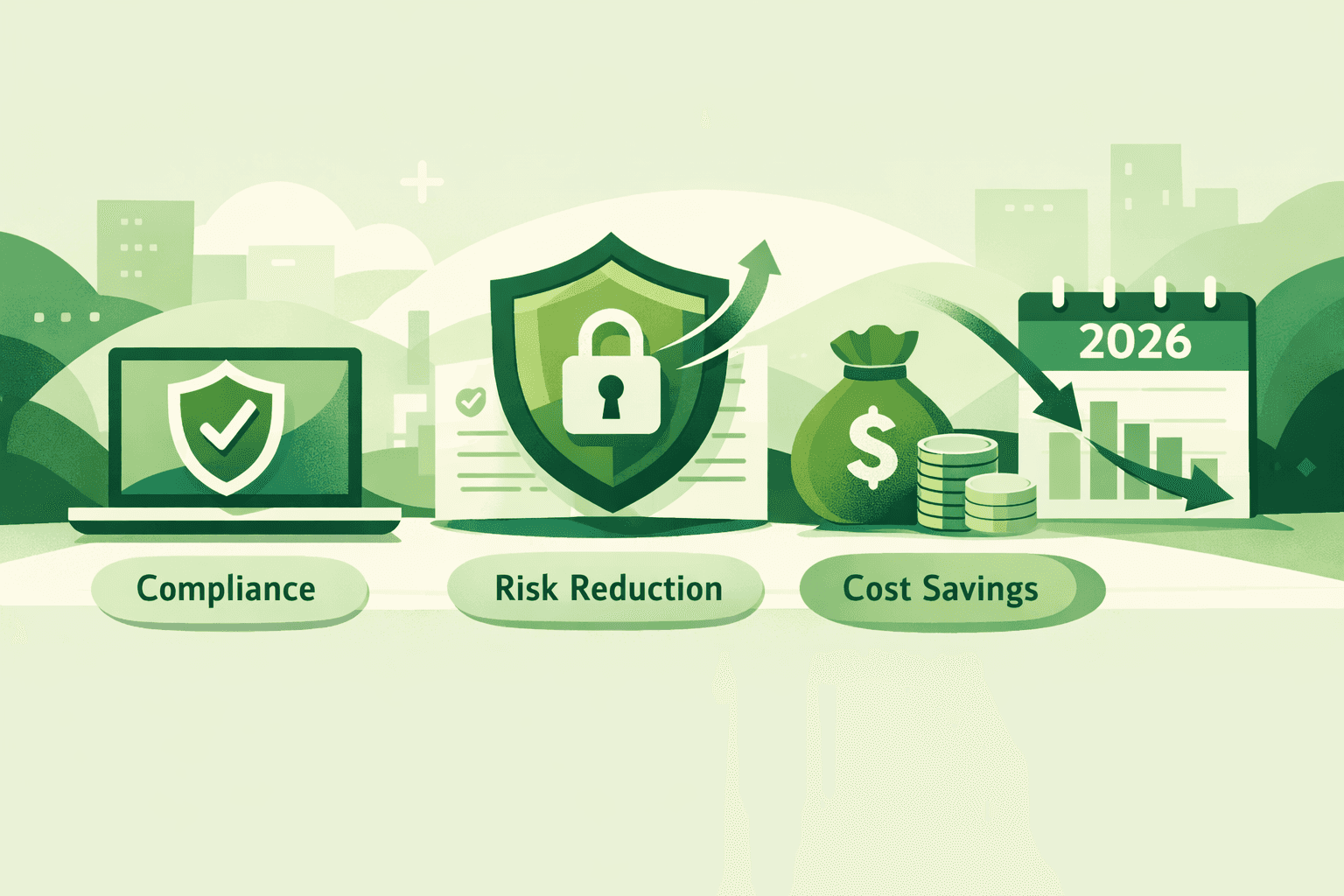
This is where your compliance program becomes your greatest financial lever. A strong compliance posture, demonstrated through frameworks like SOC 2 or ISO 27001, is no longer just about passing an audit. It’s about proving to insurers that you are a lower-risk client, which can directly lead to better coverage and lower premiums.
What Insurers Really Want to See in 2026
When an underwriter reviews your application, they are trying to answer one fundamental question: how likely are you to suffer a costly breach? To do this, they are looking for specific, non-negotiable security controls. Think of this as the new minimum for insurability.
Here are the key controls insurers are demanding in 2026:
Multi-Factor Authentication (MFA): Not just for some systems, but for everything. This includes email, VPNs, remote access, and all privileged user accounts.
Endpoint Detection and Response (EDR): Legacy antivirus software is no longer enough. Insurers want to see that you have modern EDR solutions that can detect and respond to sophisticated threats on laptops, servers, and other endpoints.
Secure, Tested Backups: You need to have a robust backup system, ideally with an offline or immutable copy that ransomware can’t touch. More importantly, you need to prove that you are regularly testing these backups to ensure they can be restored.
A Formal Incident Response (IR) Plan: What happens when an attack occurs? Insurers want to see a documented IR plan that outlines roles, responsibilities, and procedures for containing and recovering from a breach.
Employee Security Training: Your team is your first line of defense. Underwriters look for evidence of a continuous security awareness training program that educates employees on phishing, social engineering, and other common threats.
Robust Vendor Risk Management: An attack on one of your vendors can quickly become an attack on you. Insurers need to know that you have a process for assessing the security posture of your critical third-party vendors.
From Compliance Frameworks to Lower Premiums
If that list of controls looks familiar, it should. These are the very same controls that form the foundation of established security frameworks like SOC 2 and ISO 27001. This is the critical connection that many businesses miss.
Achieving compliance isn’t just about earning a certificate; it’s about building and documenting a mature security program. When you go through a SOC 2 audit, for example, a third-party auditor validates that your controls are designed and operating effectively. That final SOC 2 report is a powerful piece of evidence to hand to an insurer. It’s an independent attestation that you’ve done the hard work to secure your environment.
In fact, some studies have shown that a strong compliance posture can lead to significant savings. A recent article from Drata noted that businesses with SOC 2 compliance are perceived as lower risk by insurers, potentially reducing cyber insurance premiums by 15-20%.
Think of it from the insurer’s perspective. Which company would you rather cover? The one that provides a 200-page SOC 2 Type 2 report detailing months of successful control monitoring, or the one that simply checks a box on a form? The answer is obvious.
The Role of Compliance Automation in Proving Your Security
Knowing you have the right controls is one thing. Proving it to an insurer is another challenge entirely. Manually gathering evidence from dozens of systems is slow, prone to human error, and results in a mountain of spreadsheets and screenshots that are difficult for an underwriter to parse.
This is where compliance automation changes the game. A modern compliance platform provides a centralized, real-time dashboard of all your security controls. Instead of spending weeks collecting evidence, you can generate a comprehensive report with a few clicks.
Furthermore, solutions like a Trust Center allow you to share your compliance documentation—including your SOC 2 report, penetration test results, and key policies—in a secure, professional portal. This not only streamlines the underwriting process but also builds confidence with your insurance broker and carrier.
In 2026, continuous monitoring is key. Insurers no longer trust a point-in-time audit from a year ago. They want to see that your controls are working today. Compliance automation provides continuous assurance, making you a much more attractive and insurable client.
Compliance and Insurance: Two Sides of the Same Coin
In today’s digital landscape, your compliance program and your cyber insurance policy are deeply intertwined. A proactive investment in building and automating your compliance program is a direct investment in your financial resilience. It not only reduces the risk of a breach but also makes your organization more insurable.
By leveraging frameworks like SOC 2 and using automation to continuously prove your security posture, you can move from being at the mercy of the hard insurance market to a position of strength. You can secure the coverage you need at a price that makes sense, all while building a more secure and resilient business.
Ready to turn your compliance program into a financial asset? Book a demo to see how Dsalta’s compliance automation platform can help you get audit-ready and lower your insurance premiums.

Explore more GRC articles
Stop losing deals to compliance.
Get compliant. Keep building.
Join 100s of startups who got audit-ready in days, not months.