Overview —
GDPR for Beginners
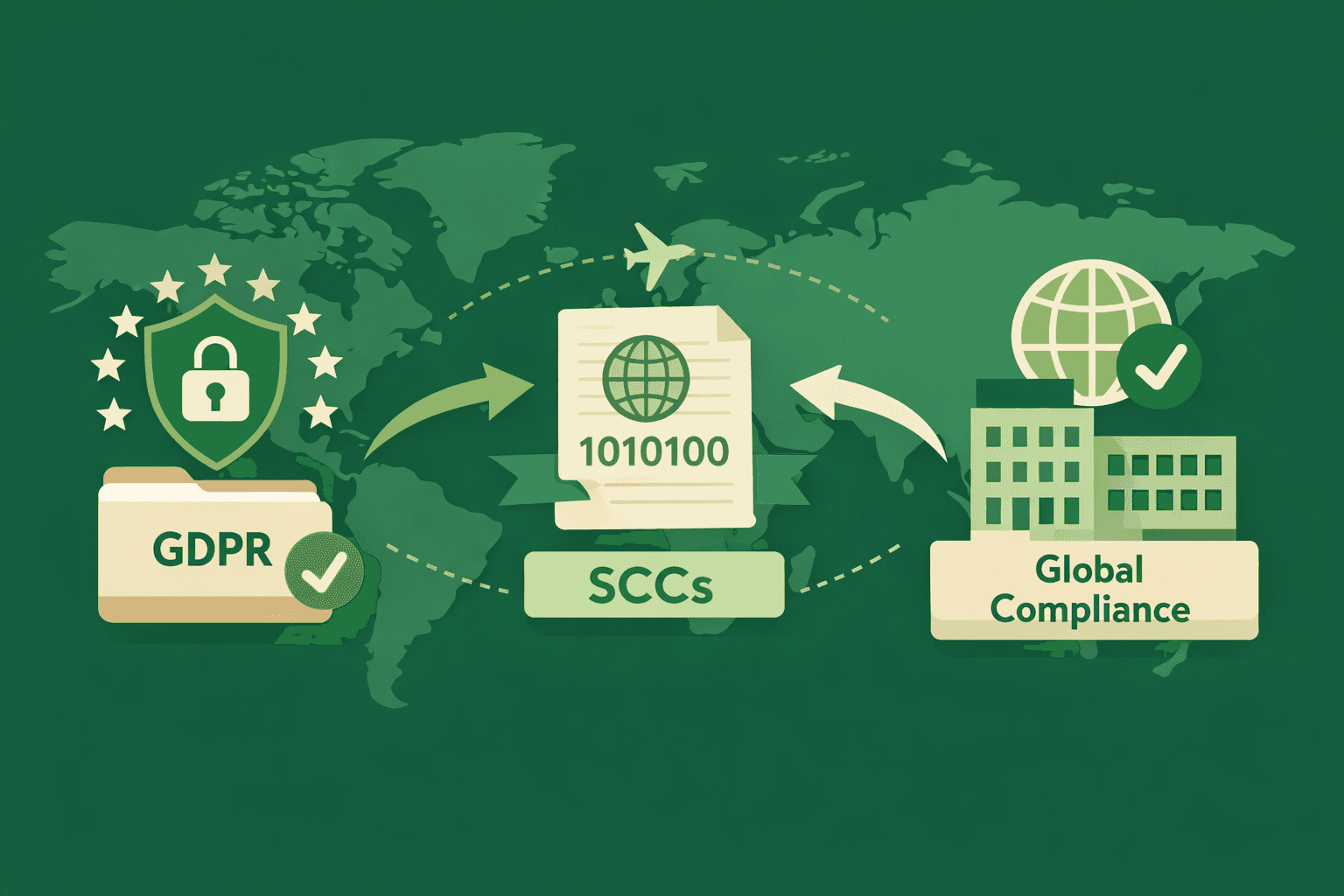
GDPR governs how EU personal data is handled, promoting transparency, security, and global privacy alignment.
Share this article


GDPR for Beginners
If you're hearing "GDPR" a lot and need the plain-English version, here it is: it's a European law about how companies are allowed to collect, use, and store information about people. If your business touches any personal information belonging to someone in the EU — a customer, an employee, even just a website visitor — there's a real chance this law applies to you, no matter where your company is actually located.
What "Personal Data" Actually Means
Before anything else clicks, it helps to know what counts. It's broader than people expect — not just someone's name, but anything that could identify them: email address, IP address, location data, even a combination of smaller details that together point to one specific person. What Counts as Personal Data Under GDPR goes deeper on this if you want the full picture, including a stricter category (health data, biometric data, and a few others) that gets extra protection.
The Core Idea Behind the Whole Law
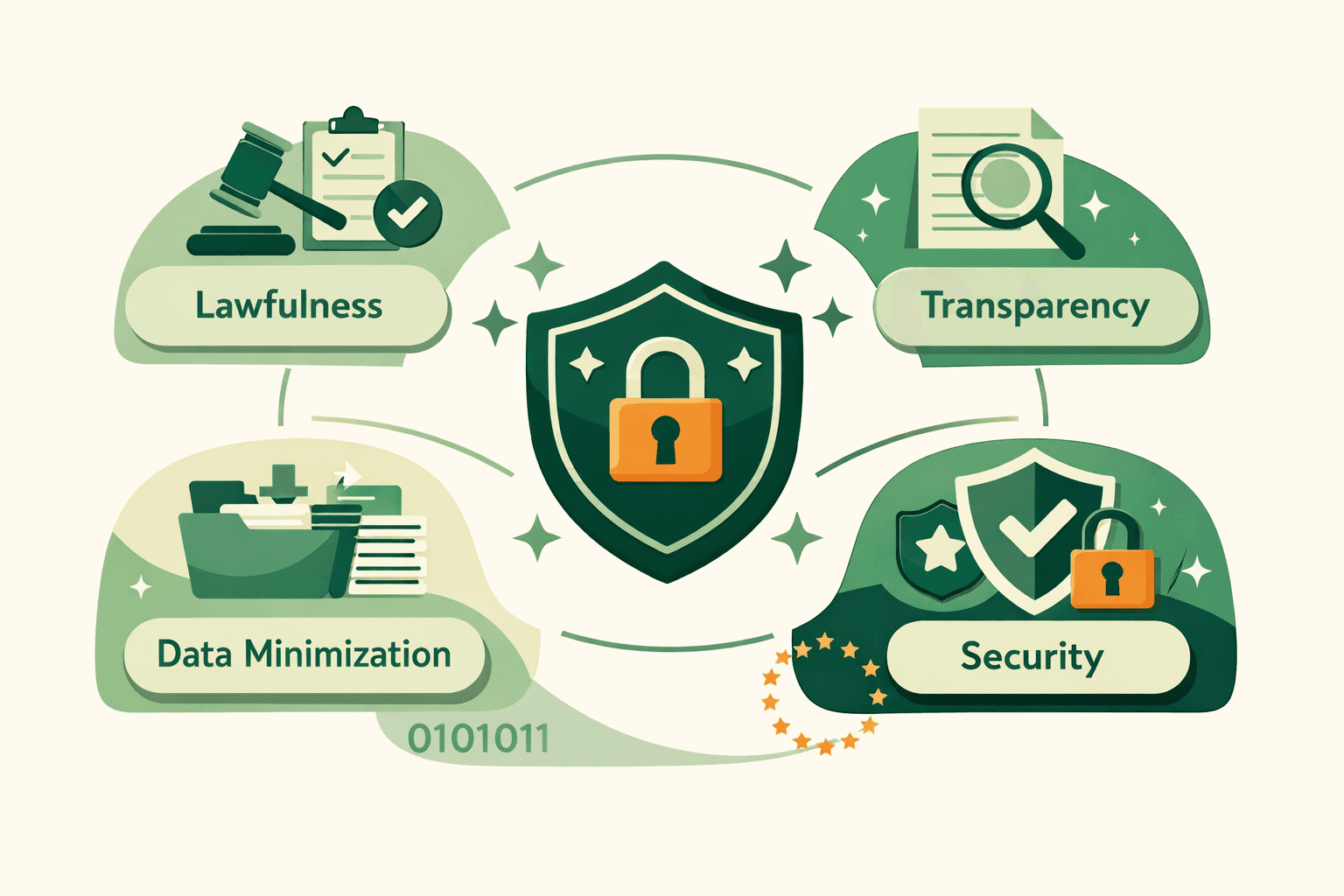
GDPR boils down to a handful of common-sense ideas, even though the legal language can sound dense:
Be upfront about what you're collecting and why
Only collect what you actually need
Keep it accurate
Don't hold onto it forever
Keep it secure
Be able to prove you're doing all of the above
That's really it. Everything else in the regulation is detail layered on top of those basic ideas. The 7 GDPR Principles, Explained Simply walks through the official seven principles in more depth, if you want the precise version.
Why This Applies to More Companies Than You'd Think
A common assumption is "we're not based in Europe, so this doesn't apply to us." That's often wrong. What actually matters is whether you're processing data belonging to people physically in the EU — not where your company's office is. Who Is Subject to GDPR? explains exactly what triggers this, since it's more specific than just "having EU visitors on your website."
What You're Actually Expected to Do
In practical terms, being GDPR-compliant means a few concrete things: having a real reason for collecting any given piece of data, letting people see and delete their own information if they ask, keeping track of what data you have and where it lives, and having a plan for what happens if something goes wrong. None of this has to be intimidating — it's more about building good habits into how your business already operates than bolting on something entirely new.
What Happens If You Don't
GDPR isn't just a guideline — it's enforced, with real financial penalties. Some of the fines you've probably heard about (Meta, TikTok) are in the hundreds of millions or more, but those are the extreme outliers. Most fines are far smaller, often in the low millions, for far more ordinary mistakes — things like not having a real legal reason to collect certain data, or not responding to someone's request to see their own information in time.
Where to Go From Here
Once the basics make sense, the natural next step is figuring out where your own organization actually stands — what data you collect, where it lives, and whether your current practices already cover the basics or have real gaps. Preparing for GDPR Compliance walks through that process in a sensible order, starting with figuring out what data you actually have before worrying about anything else.
A Note on Other Frameworks
If you've also come across ISO 27001, SOC 2, HIPAA, or PCI DSS, know that these aren't competing or redundant — they cover different but overlapping ground. The good news is that the groundwork you do for GDPR (knowing your data, securing it properly, documenting your decisions) tends to carry over directly if you ever need to tackle one of those other frameworks too.
FAQs
What is GDPR in simple terms?
GDPR (General Data Protection Regulation) is a European Union law that governs how organizations collect, use, and store personal data belonging to people in the EU. It applies based on whose data you're processing, not where your company is headquartered — so many non-EU businesses are still subject to it.
Does GDPR apply to US companies?
Yes, if a US company processes personal data belonging to people located in the EU — for example, through website visitors, customers, or employees — GDPR can apply regardless of where the business is based. See Who Is Subject to GDPR? for the specific triggers.
What counts as personal data under GDPR?
Personal data is any information that could identify a specific person — names, email addresses, IP addresses, location data, or combinations of smaller details. Certain categories, like health or biometric data, are classified as "special category" data and receive stricter protection. Full breakdown: What Counts as Personal Data Under GDPR.
What are the 7 principles of GDPR?
GDPR is built on seven core principles: lawfulness/fairness/transparency, purpose limitation, data minimization, accuracy, storage limitation, integrity and confidentiality, and accountability. In practice, this means only collecting what you need, being transparent about it, and being able to prove compliance. Details here: The 7 GDPR Principles, Explained Simply.
What happens if a company violates GDPR?
Non-compliant companies can face fines up to €20 million or 4% of global annual revenue, whichever is higher. High-profile cases (Meta, TikTok) reach hundreds of millions, but most enforcement actions are far smaller — typically low-millions penalties for issues like missing legal basis for data collection or slow response to data access requests.
How do I know if my business needs to comply with GDPR?
If you collect, store, or process any personal data from someone physically located in the EU — through a website form, analytics, payroll, or a customer relationship — GDPR likely applies. Company location and size don't exempt you; what matters is whose data you're handling.
What's the difference between GDPR and other frameworks like SOC 2 or ISO 27001?
GDPR is a legal privacy regulation specific to EU personal data, while SOC 2 and ISO 27001 are security frameworks/certifications with broader scope. They overlap significantly — data mapping, security controls, and documentation done for GDPR typically carries over to these other frameworks.
How long does GDPR compliance take to implement?
Timelines vary by company size and data complexity, but the process generally starts with a data audit (what you collect, where it lives), then moves to closing gaps in consent, security, and documentation. Preparing for GDPR Compliance outlines the recommended order of operations.
Do small businesses need to worry about GDPR?
Yes — GDPR doesn't exempt small businesses based on size. If a small business processes EU residents' personal data (even just through a website or email list), the same core obligations apply, though enforcement priorities often focus on scale and severity of violations.



In the Spotlight

Start your GDPR compliance journey with DSALTA's complete checklist.
The General Data Protection Regulation (GDPR) is Europe’s core privacy law, shaping how organizations collect, process, and protect the personal data of EU residents. Non-compliance can result in heavy fines, reputational damage, and loss of customer trust.
GDPR can feel complicated with its broad scope and strict requirements, but DSALTA® makes it manageable. With automated evidence collection, continuous monitoring, and AI- driven risk insights, you can maintain compliance without drowning in manual work. Use this checklist to guide your GDPR journey.
Read more about GDPR compliance with DSALTA.
Stop losing deals to compliance.
Get compliant. Keep building.
Join 100s of startups who got audit-ready in days, not months.