Automation —
Advanced GDPR Automation: Workflows for 2026
Advanced GDPR compliance means embedding privacy into daily ops with automation, reviews, and training alignment.
Share this article


Maintaining GDPR Compliance at Scale
Getting GDPR-compliant once is the easy part, relatively speaking. Staying that way while your business keeps changing — new vendors, new products, new countries you're operating in — is the actual hard part. This is what that ongoing maintenance looks like once the foundational work is already done.
Why a Checklist Stops Working
A checklist is great for getting compliant the first time. It's bad at catching what changes after that. Cross-border transfers shift, vendors come and go, you launch a new product that touches data in a way nobody planned for. None of that shows up on a static list — it shows up in how your business actually operates day to day, which means compliance has to live there too.
Keep Your RoPA Actually Current
Your Record of Processing Activities isn't a document you finish once. Every time a system changes, a new vendor gets added, or a data flow shifts, it needs an update. The organizations that struggle here usually aren't missing the RoPA — they built one, then let it quietly go stale the moment the business moved past what it described.
Automate Data Subject Rights Responses
Manually handling access, correction, and deletion requests works fine until volume picks up — and then it becomes the place where deadlines get missed. Automating the fulfillment side cuts down on the manual bottlenecks that cause those misses, and it makes your responses more consistent, which matters if a regulator ever asks you to show your process.
Keep Training Alive, Not Just Completed
A training session people sat through eighteen months ago doesn't help when a new kind of phishing attempt shows up or your compliance obligations shift. Ongoing, recurring training — tied to what's actually changing in your threat landscape — keeps privacy awareness something people actually act on, not something they remember vaguely from onboarding.
Privacy Reviews Before Every Launch
Every new product, integration, or partnership should get a privacy review before it ships, not after. Building a DPIA into your actual product development lifecycle — not as a separate compliance step bolted on at the end — catches problems while they're still cheap to fix.
Vendor Oversight Doesn't End at Signing
A DPA signed once and never revisited is exactly the kind of thing that looks fine until it isn't. Vendors should get re-evaluated periodically, including checking whether they still hold the certifications (ISO 27001, SOC 2) you relied on when you first signed them.
Cross-Border Transfers Need Ongoing Review, Not a One-Time Check
This is the part that surprises people most: a transfer mechanism that was valid when you set it up can become invalid later, through no fault of your own. The Schrems II ruling is the clearest example — it invalidated the EU-US Privacy Shield overnight, and organizations relying on it had to scramble to find a new legal basis for transfers that had been perfectly fine the week before.
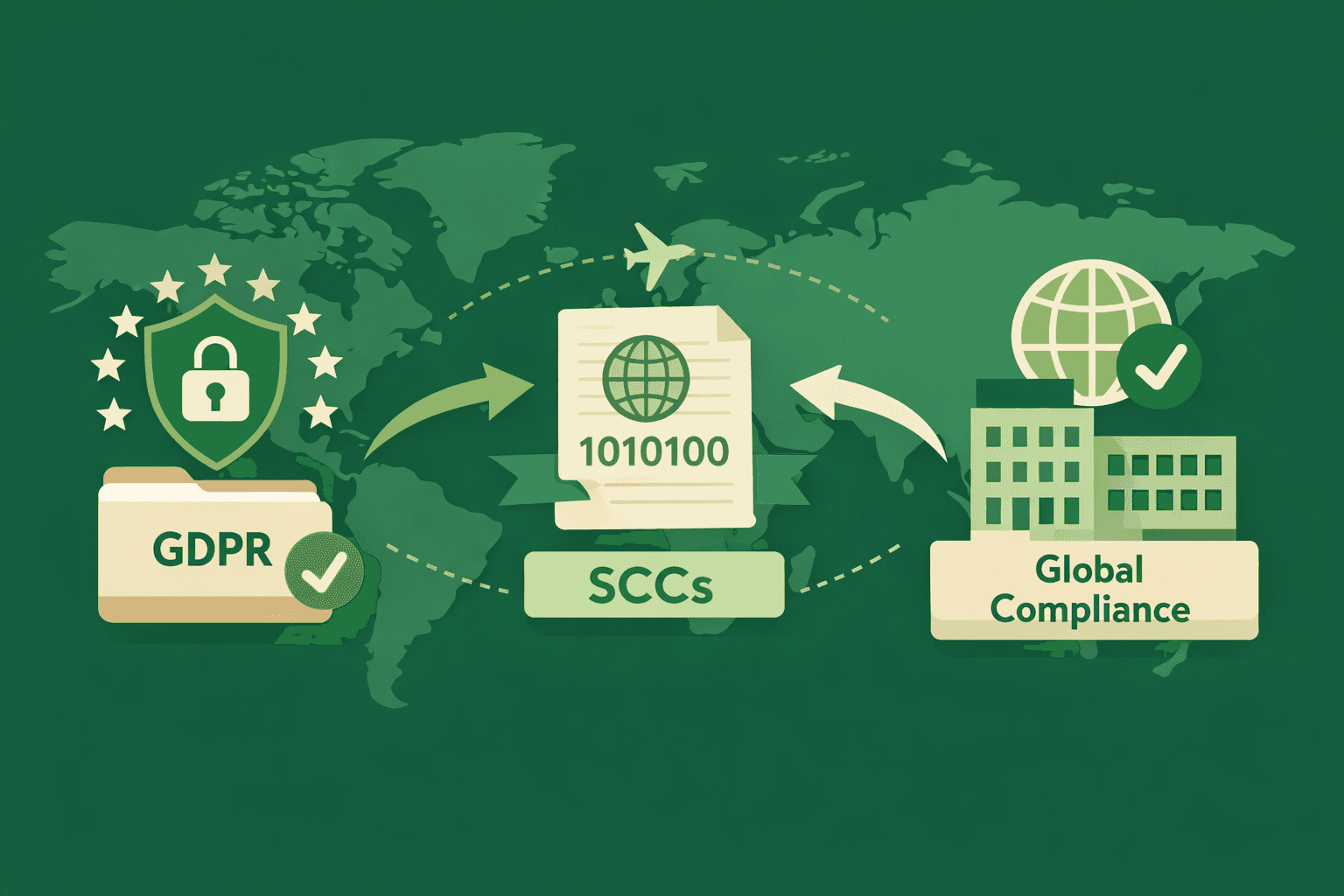
Since that ruling, using Standard Contractual Clauses isn't enough on its own. You also need a Transfer Impact Assessment — checking whether the laws of the destination country could actually undermine the protections your SCCs promise. If a TIA was done once, years ago, and never revisited, that's not a completed task — it's an assumption that the legal landscape in that country hasn't changed since. Given how often it actually does change, building TIA review into a recurring cadence, not a one-time box to check, is the only way this stays accurate.
Be Ready to Detect Breaches Before You're Told About Them
Real-time monitoring and incident simulations matter here for a specific reason: the 72-hour notification clock starts the moment you become aware of a breach, not when it happened. The faster your detection, the more of that 72 hours you actually have to work with, instead of losing days just figuring out something went wrong in the first place.
Why This Works Better as One System, Not Five Separate Ones
RoPA accuracy, DSR automation, vendor oversight, transfer reviews, and breach detection all feed into each other. An accurate RoPA tells you exactly which vendors and countries are involved when a breach happens. Good vendor oversight catches a problem before it becomes a breach in the first place. Treating these as five disconnected tasks, each maintained separately, is how gaps quietly form between them.
Unifying This With Other Frameworks
A lot of organizations build unified governance across GDPR, ISO 27001, SOC 2, and PCI DSS rather than maintaining four separate compliance programs. The underlying discipline — continuous monitoring, documented evidence, vendor due diligence — overlaps enough that one well-run governance structure tends to satisfy all four with far less duplicated effort than running them in parallel.
FAQs
Why does a compliance checklist stop working as a company grows? A checklist is effective for reaching initial compliance, but it doesn't catch what changes afterward — new vendors, shifting cross-border transfers, or new products that touch data in unplanned ways. These changes show up in day-to-day business operations, not on a static list, which is why ongoing maintenance requires an actual system rather than a one-time project.
What happened to the EU-US Privacy Shield, and why does it matter for GDPR compliance? The Schrems II ruling invalidated the EU-US Privacy Shield overnight, forcing organizations relying on it to find a new legal basis for data transfers that had been valid the week before. It's the clearest example of why cross-border transfer mechanisms need ongoing review rather than a one-time setup.
What is a Transfer Impact Assessment (TIA), and when is it required? A TIA evaluates whether the laws of a data recipient's country could undermine the protections promised by Standard Contractual Clauses (SCCs). Since the Schrems II ruling, SCCs alone aren't sufficient — a TIA is also needed, and it should be revisited periodically rather than treated as a one-time check, since destination-country laws can change.
How can automation help with Data Subject Rights (DSR) request fulfillment? Automating DSR responses reduces the manual bottlenecks that cause missed deadlines as request volume grows, and produces more consistent responses — which matters if a regulator later asks an organization to demonstrate its process for handling access, correction, or deletion requests.
Should privacy training be a one-time event or ongoing? Ongoing. Training completed months or years ago doesn't address new threats like emerging phishing tactics or shifts in compliance obligations. Recurring training tied to an organization's actual, current threat landscape keeps privacy awareness something employees act on rather than vaguely recall from onboarding.
When should a privacy review or DPIA happen in product development? Before launch, not after. Building a Data Protection Impact Assessment (DPIA) into the product development lifecycle — rather than as a separate step added at the end — catches privacy problems while they're still inexpensive to fix.
Does signing a Data Processing Agreement (DPA) with a vendor mean compliance is handled permanently? No. Vendors should be re-evaluated periodically, including confirming they still hold certifications like ISO 27001 or SOC 2 that were relied on at signing. A DPA signed once and never revisited can quietly become outdated as vendor practices or certifications change.
Why does breach detection speed matter for GDPR compliance specifically? GDPR's 72-hour breach notification clock starts when an organization becomes aware of a breach, not when the breach actually occurred. Faster detection through real-time monitoring preserves more of that window for actual investigation and response, rather than losing time determining that a breach happened at all.
How do RoPA accuracy, vendor oversight, and breach detection relate to each other? They're interconnected rather than separate tasks. An accurate RoPA identifies exactly which vendors and countries are involved when a breach occurs, while strong vendor oversight can catch a problem before it escalates into a breach in the first place. Treating these as disconnected tasks tends to create gaps between them.
Can GDPR maintenance be unified with ISO 27001, SOC 2, and PCI DSS compliance? Yes. Many organizations build unified governance across all four frameworks rather than running separate programs, since continuous monitoring, documented evidence, and vendor due diligence overlap substantially — reducing duplicated effort compared to maintaining four parallel compliance systems.



In the Spotlight

Start your GDPR compliance journey with DSALTA's complete checklist.
The General Data Protection Regulation (GDPR) is Europe’s core privacy law, shaping how organizations collect, process, and protect the personal data of EU residents. Non-compliance can result in heavy fines, reputational damage, and loss of customer trust.
GDPR can feel complicated with its broad scope and strict requirements, but DSALTA® makes it manageable. With automated evidence collection, continuous monitoring, and AI- driven risk insights, you can maintain compliance without drowning in manual work. Use this checklist to guide your GDPR journey.
Read more about GDPR compliance with DSALTA.
Stop losing deals to compliance.
Get compliant. Keep building.
Join 100s of startups who got audit-ready in days, not months.