HIPAA —
HIPAA Compliance Checklist 2026: Cloud Apps & Telehealth Integration
Ensure HIPAA compliance in 2025 with our comprehensive checklist for secure integration of cloud apps and telehealth vendors. Simplify your certification process today!
Jon Ozdoruk
Data Security & Protection
Share this article


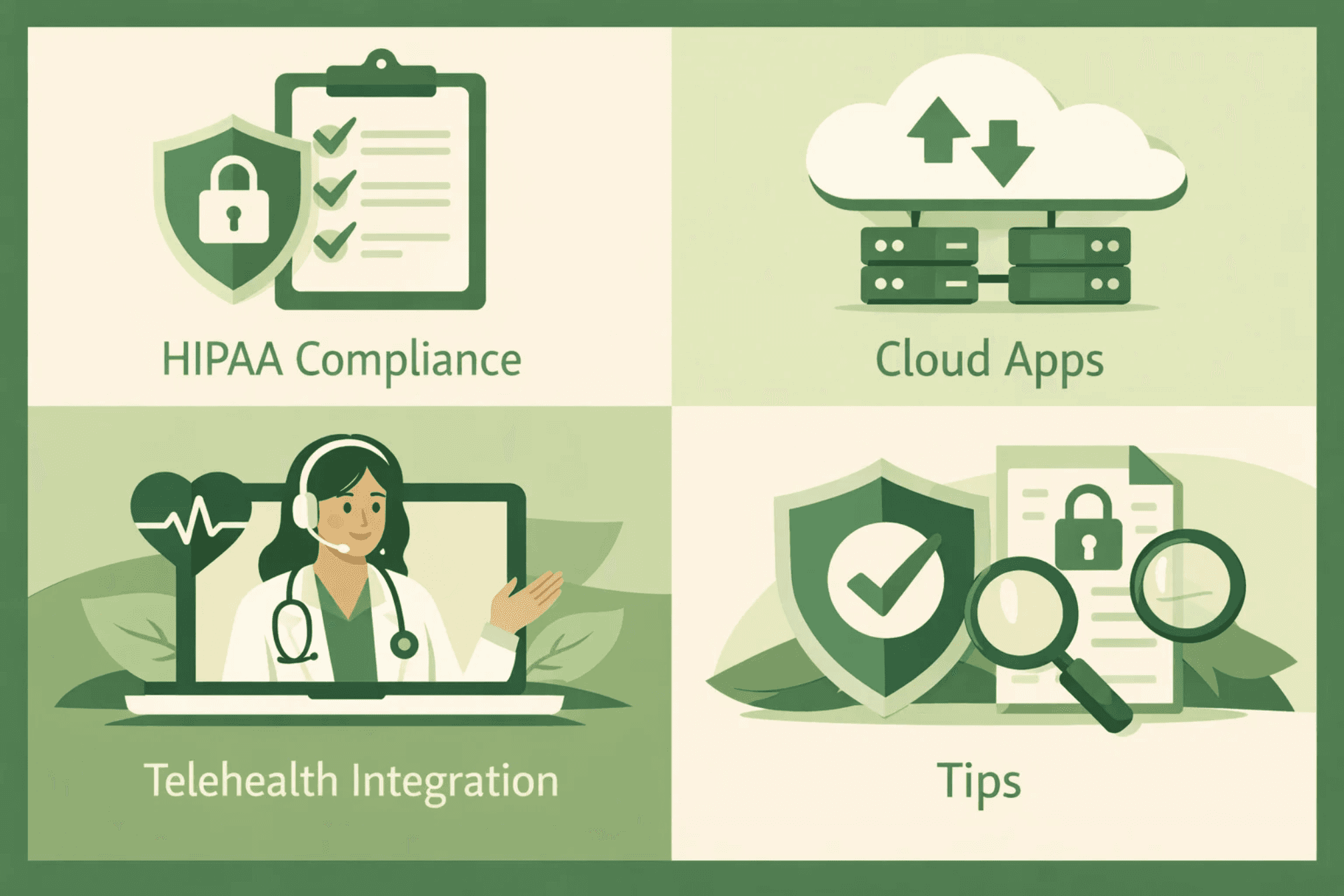
Introduction: The New HIPAA Compliance Challenge
Healthcare has gone digital. Telehealth visits surged 38 times above pre-pandemic levels and continue to grow. Cloud-based electronic health records, AI diagnostic tools, remote patient monitoring, and digital health apps are now standard practice. Patients expect convenient, technology-enabled care delivered wherever they are.
This digital transformation creates a critical challenge: every cloud application and telehealth vendor you integrate becomes a potential risk point for Protected Health Information. A 2024 study found that 82% of healthcare data breaches involved third-party vendors or cloud misconfigurations. The average cost of a healthcare data breach reached $10.93 million—the highest of any industry.
For healthcare organizations in 2025, HIPAA compliance is no longer just about securing your own systems. It's about safely integrating dozens of cloud applications and telehealth platforms while maintaining complete protection of patient data across this extended ecosystem.
This comprehensive guide provides an updated HIPAA compliance checklist specifically focused on the cloud and telehealth integration challenges facing healthcare organizations today. You'll learn how to vet vendors properly, implement secure integrations, maintain compliance across platforms, and prepare for audits in this complex environment.
Understanding HIPAA Requirements for Cloud and Telehealth
What HIPAA Requires for Third-Party Technology
HIPAA doesn't prohibit the use of cloud services or telehealth platforms. It requires that you implement appropriate safeguards regardless of where or how PHI is stored, processed, or transmitted.
Business Associate Agreements remain mandatory. Every cloud provider, telehealth platform, or digital health tool that creates, receives, maintains, or transmits PHI on your behalf must sign a comprehensive BAA before you can use their service.
Security safeguards apply universally. The administrative, physical, and technical safeguards required by the HIPAA Security Rule apply whether PHI lives on your local servers or in cloud applications. Encryption, access controls, audit logging, and incident response must work across all platforms.
You remain accountable for compliance. Even when vendors provide services, you remain the ultimate responsible party for HIPAA compliance. You cannot outsource this accountability—only certain operational activities.
New Compliance Risks in 2026
Multi-cloud environments create complexity. Organizations now use an average of 11 different cloud services touching patient data. Managing consistent security controls across platforms is challenging.
API integrations between systems create new data flow pathways that must be secured, monitored, and documented. PHI moving between your EHR, telehealth platform, billing system, and analytics tools must be protected at every step.
Mobile health applications on patient and provider devices extend your security perimeter beyond traditional boundaries. BYOD policies, mobile device management, and app security become critical.
AI and machine learning tools that process PHI for diagnostics, treatment recommendations, or operational analytics introduce new vendors and technologies that require thorough vetting and oversight.
The 2025 HIPAA Compliance Checklist for Cloud Integration
Phase 1: Vendor Assessment and Selection
Conduct comprehensive vendor security assessments before selecting any cloud service or telehealth platform. Don't rely solely on vendor marketing materials—verify their actual security practices.
Request and review SOC 2 Type II reports examining the vendor's security, availability, and confidentiality controls over a period of time. Look for clean reports with no significant exceptions.
Verify the vendor's experience with HIPAA compliance. Ask for reference customers in healthcare. Please review their privacy policies and security documentation for HIPAA-specific language.
Evaluate the vendor's security certifications, including HITRUST, ISO 27001, or other recognized information security standards. Multiple certifications indicate mature security programs.
Assess the vendor's data breach history. Search public breach databases and news sources. A history of breaches or security incidents raises serious red flags.
Review the vendor's financial stability. A vendor going out of business creates serious challenges for PHI custody and continuity. Verify they have the resources to maintain security in the long term.
Evaluate technical security capabilities specific to HIPAA requirements. Don't assume all cloud vendors provide necessary safeguards by default.
Confirm encryption capabilities for data at rest using AES-256 or an equivalent strong encryption algorithm. Verify you can enable encryption and manage encryption keys appropriately.
Verify encryption in transit using TLS 1.2 or higher for all data transmission. Check whether encryption is mandatory or optional—it must be required for PHI.
Assess access control capabilities, including multi-factor authentication, role-based access controls, and integration with your identity management systems.
Review audit logging capabilities. The platform must capture all PHI access, modifications, and deletions with user, timestamp, and action details.
Evaluate backup and disaster recovery capabilities, including backup frequency, retention periods, restoration procedures, and geographic redundancy.
Verify data residency and sovereignty controls. Ensure you can specify where PHI is stored and prevent it from moving to unauthorized geographic regions.
Assess the vendor's incident response and breach notification processes. You need confidence that they'll detect issues quickly and notify you appropriately.
Review the vendor's incident-detection capabilities and the average time to detect security incidents—faster detection limits the impact of breaches.
Understand their breach notification timeline. How quickly will they notify you of potential PHI exposure? HIPAA requires notification within specific timeframes.
Evaluate their forensic investigation capabilities. After an incident, you need detailed information about what happened, what data was affected, and which individuals were impacted.
Phase 2: Contract Negotiation and Business Associate Agreements
Negotiate comprehensive Business Associate Agreements covering all HIPAA requirements and your specific use case. Generic BAA templates are insufficient.
Ensure BAAs explicitly define permitted uses and disclosures of PHI. Limit uses to only what's necessary for the services provided.
Require the vendor to implement appropriate administrative, physical, and technical safeguards protecting PHI. Reference specific safeguards from your vendor assessment.
Include detailed subcontractor requirements. The vendor must obtain your approval before engaging subcontractors and ensure all subcontractors sign appropriate BAAs.
Establish clear breach notification obligations. Define what constitutes a reportable incident, notification timeframes, and required information in notifications.
Include data ownership and return provisions. Upon contract termination, the vendor must return or destroy all PHI in accordance with your instructions within the defined timeframes.
Add audit rights allowing you to verify the vendor's HIPAA compliance through documentation review, questionnaires, or on-site audits.
Define the liability and indemnification terms that protect your organization if vendor negligence causes a breach or compliance violation.
Address cloud-specific contractual provisions beyond standard BAA requirements.
Define data residency requirements specifying geographic regions where PHI can be stored and processed. Prohibit unauthorized data transfers.
Establish data-deletion procedures that ensure PHI is completely and irreversibly destroyed when requested. Require certification of destruction.
Include service level agreements covering availability, performance, and support responsiveness. Downtime affects patient care and creates compliance risks.
Define security incident response procedures, including notification protocols, investigation support, and remediation responsibilities.
Establish change management notification requirements. Vendors must inform you before making significant changes to infrastructure, security controls, or subcontractors.
Phase 3: Secure Implementation and Integration
Plan integrations carefully before connecting systems containing PHI. Rushed implementations create security gaps.
Create detailed data flow diagrams that show how PHI flows between your systems and the cloud application or telehealth platform. Identify every integration point.
Classify data types transmitted through each integration. Some integrations may handle only scheduling data while others transmit complete medical records.
Define access requirements for each integration. Use service accounts with minimum necessary permissions rather than overly broad access.
Implement API security controls, including authentication, authorization, rate limiting, and input validation. APIs are common attack vectors.
Enable TLS 1.2 or higher for all API communications. Never transmit PHI through unencrypted APIs regardless of vendor assurances.
Properly configure security controls within cloud applications and telehealth platforms. Default configurations rarely meet HIPAA requirements.
Enable and enforce multi-factor authentication for all user accounts accessing PHI. Make MFA mandatory, not optional.
Implement role-based access controls, limiting users to only the PHI necessary for their specific job functions. Review and refine roles regularly.
Configure session timeout settings to automatically log users out after periods of inactivity. Fifteen to thirty minutes is appropriate for most applications.
Enable comprehensive audit logging to capture all PHI access and modifications. Verify logs include user identity, timestamp, action, and affected data.
Configure log retention to meet HIPAA's minimum 6-year retention requirement. Ensure logs are backed up and protected from tampering.
Enable available encryption features, including at-rest and in-transit encryption. Never leave encryption as optional.
Implement monitoring and alerting for integrated cloud applications and telehealth platforms. You need visibility into how these systems are being used.
Deploy security monitoring tools tracking access patterns, data movements, and potential security incidents across cloud platforms.
Configure alerts for suspicious activities, including after-hours access, mass data downloads, access from unusual locations, or failed authentication attempts.
Establish baseline behavior patterns for normal system usage. Deviations from baselines may indicate compromised accounts or insider threats.
Implement data loss prevention tools to monitor PHI leaving your environment via unauthorized channels, such as personal email or cloud storage.
Phase 4: Ongoing Vendor Management and Oversight
Establish regular vendor review processes, ensuring continued HIPAA compliance over time. Initial assessments aren't sufficient.
Schedule annual vendor security reassessments, reviewing updated security documentation, recent audit reports, and any security incidents.
Track vendor security certifications and ensure renewals occur on schedule. Expired certifications indicate potential degradation of the security program.
Monitor vendor security incident notifications and breach reports. Frequent incidents suggest inadequate security practices.
Review vendor financial health annually. Financial distress may lead to reduced investment in security or sudden service terminations.
Conduct periodic vendor compliance audits through questionnaires, documentation reviews, or on-site assessments, depending on vendor criticality.
Maintain centralized BAA management, track all vendor agreements, and ensure compliance with contractual obligations.
Create a comprehensive vendor inventory that lists all third parties with access to any PHI. Include cloud providers, telehealth platforms, analytics tools, and all integrated applications.
Track BAA signing dates, renewal requirements, and amendment history for each vendor relationship. Set calendar reminders for upcoming renewals.
Monitor vendor subcontractor changes. Vendors must notify you when engaging new subcontractors who will handle PHI.
Document vendor security incidents and your response actions. This documentation proves your oversight during audits.
Maintain records of all vendor security assessments, audit reports, and compliance documentation received.
Conduct regular access reviews across all cloud applications and telehealth platforms, not just internal systems.
Review user accounts quarterly, identifying accounts that should be disabled, access rights that should be reduced, or permissions that no longer align with job functions.
Verify that terminated employees have had access removed from all cloud platforms. Orphaned accounts in third-party systems are common security gaps.
Audit service accounts and API keys used for system integrations. These often have overly broad permissions and are rarely reviewed.
Review administrator and privileged access across cloud platforms. Excessive admin rights create unnecessary risk.
Telehealth-Specific HIPAA Compliance Requirements
Securing Telehealth Platforms
Select HIPAA-compliant telehealth platforms designed specifically for healthcare rather than consumer video conferencing tools.
Verify the platform offers end-to-end encryption for video, audio, and chat communications. Some platforms encrypt only data in transit to their servers.
Confirm the platform provides BAAs and explicitly markets itself as HIPAA-compliant. Consumer video tools like FaceTime or Skype are not appropriate for telehealth.
Evaluate recording capabilities and controls. If sessions can be recorded, ensure recordings are encrypted, access-controlled, and retained appropriately.
Assess the waiting room features that prevent unauthorized access to telehealth sessions. Patients should not be able to join before providers.
Review platform authentication requirements for both providers and patients. Multi-factor authentication strengthens security significantly.
Configure telehealth platforms properly following HIPAA security requirements even when platforms support compliance.
Disable public meeting links or guest access features. Every telehealth session should require authentication.
Enable waiting rooms requiring provider admission for all sessions. Automatic admission creates privacy risks.
Configure session recording restrictions limiting who can record, where recordings are stored, and how they're protected.
Enable audit logging to track all session participants, join times, recordings created, and file-sharing activities.
Set retention policies for chat histories, shared files, and recordings that align with your record retention requirements.
Train providers on telehealth security, as they directly handle patient PHI during virtual visits.
Educate providers on conducting telehealth from private, secure locations where no unauthorized individuals are present or able to overhear.
Train on verifying patient identity before discussing PHI during telehealth sessions using at least two identifiers.
Instruct providers to use only approved, configured telehealth platforms—never personal video conferencing accounts.
Teach proper handling of telehealth recordings, including secure storage, access controls, and retention requirements.
Cover patient privacy during telehealth, including ensuring patients are also in private locations when discussing sensitive health information.
Patient-Facing Application Security
Implement security controls for patient portals and mobile health apps, extending HIPAA protections to patient devices.
Require strong authentication for patient accounts, including minimum password requirements and optional multi-factor authentication.
Implement session management with automatic timeouts protecting PHI when devices are left unattended.
Enable encryption for data stored on patient mobile devices. App-level encryption protects data even if devices are lost or stolen.
Implement secure messaging features within patient portals rather than allowing PHI to be transmitted via regular email or text.
Provide patient education on protecting their accounts, including password best practices, recognizing phishing attempts, and securing devices.
Address bring-your-own-device challenges when providers access PHI from personal smartphones or tablets.
Implement mobile device management solutions that enforce security policies on devices accessing organizational PHI.
Require device encryption, screen locks, and remote wipe capabilities on all mobile devices with PHI access.
Restrict PHI downloads to approved applications to prevent storage in personal cloud services or unencrypted locations.
Deploy mobile threat defense solutions that detect compromised devices, malicious apps, or suspicious network connections.
Establish clear BYOD policies defining acceptable use, security requirements, and employee responsibilities.
Cloud Application Categories Requiring Special Attention
Electronic Health Record Systems
Cloud-based EHR platforms are mission-critical and contain comprehensive patient PHI requiring the highest security standards.
Verify that the EHR vendor has extensive healthcare experience and a mature HIPAA compliance program. This is not an area for startups without a proven track record.
Thoroughly assess disaster recovery and business continuity capabilities. EHR downtime directly impacts patient care and safety.
Review access control granularity to ensure you can implement role-based access aligned with clinical workflows and minimum requirements.
Evaluate audit logging comprehensiveness, capturing all patient record access, modifications, and disclosures at the field level.
Verify backup and restore capabilities, including point-in-time recovery and geographic redundancy, to protect against regional outages.
Medical Billing and Revenue Cycle Management
Cloud billing platforms handle both PHI and payment information, requiring compliance with HIPAA and PCI DSS.
Confirm the vendor maintains both HIPAA compliance for PHI and PCI DSS compliance for payment data. Some vendors only address one.
Review data segregation controls to ensure patient PHI and payment information are properly separated and protected.
Assess integration security with payers, clearinghouses, and banking systems. These integrations transmit sensitive data requiring strong encryption.
Verify that the platform can generate HIPAA-compliant invoices and statements that protect PHI in patient communications.
Analytics and Business Intelligence Tools
Healthcare analytics platforms processing large volumes of PHI for population health, quality reporting, or operational insights require careful vetting.
Evaluate de-identification capabilities if you plan to use de-identified data for analytics. Proper de-identification reduces HIPAA applicability but requires technical expertise.
Assess data aggregation and access controls to prevent users from re-identifying de-identified data or accessing individual patient details unnecessarily.
Review data retention and deletion capabilities to ensure compliance with retention requirements and data subject requests.
Verify that the platform can maintain audit trails, even for aggregated or de-identified data, to demonstrate proper data handling.
Preparing for HIPAA Audits in Multi-Cloud Environments
Documentation Requirements
Maintain comprehensive documentation of all cloud services and telehealth platforms touching PHI.
Create and update your vendor inventory listing for every third party that has access to PHI. Include vendor name, services provided, PHI types accessed, and BAA status.
Organize all Business Associate Agreements in a centralized repository with easy retrieval. Auditors will request complete BAA files.
Document all vendor security assessments, including questionnaires completed, audit reports reviewed, and assessment conclusions.
Maintain data flow diagrams that show how PHI flows between your systems and cloud platforms—update diagrams when adding or removing integrations.
Preserve all vendor security incident notifications and your response documentation. This proves your vendor oversight processes work.
Evidence Collection
Gather evidence demonstrating proper security controls across all cloud platforms and telehealth systems.
Collect access review documentation for each cloud platform showing quarterly reviews, identified issues, and remediation actions.
Compile audit log samples from each platform demonstrating comprehensive logging of PHI access and modifications.
Document security configurations, including enabled encryption, enforced MFA, configured session timeouts, and audit logging settings.
Gather training records proving workforce members received education on the secure use of cloud platforms and telehealth systems.
Collect incident response records, including any security incidents involving cloud platforms, investigations conducted, and corrective actions implemented.
Common Audit Findings to Avoid
Missing or inadequate Business Associate Agreements remain the most common audit finding. Ensure every vendor has a comprehensive, current BAA.
Insufficient vendor oversight manifests as missing vendor security assessments, no regular reviews, or an inability to demonstrate ongoing monitoring.
Poor access controls in cloud platforms including shared accounts, missing MFA, excessive permissions, or infrequent access reviews create severe findings.
Inadequate encryption, such as disabled encryption features, unencrypted data transmission, or improper encryption key management.
Insufficient audit logging, including disabled logs, inadequate retention, or failure to review logs for security events.
Conclusion: Building Secure Cloud and Telehealth Integration
Healthcare's digital transformation requires embracing cloud applications and telehealth platforms while maintaining rigorous HIPAA compliance. The key is systematic vendor vetting, comprehensive contractual protections, secure implementation, and ongoing oversight.
This HIPAA compliance checklist for 2026 provides the framework you need to safely integrate cloud services and telehealth vendors. Use it to assess current integrations, identify gaps, establish vendor management processes, and prepare for audits.
The organizations succeeding with cloud and telehealth integration treat vendor risk management as a core business process. They vet vendors thoroughly before selection, negotiate strong contractual protections, properly implement security controls, and maintain active oversight throughout the relationships.
The stakes are high. Healthcare data breaches cost an average of $10.93 million and destroy patient trust. But with systematic processes, comprehensive documentation, and the right tools, you can leverage cloud technology and telehealth platforms while maintaining complete HIPAA compliance and protecting patient information.
Ready to Secure Your Cloud Integrations and Achieve HIPAA Compliance?
Don't risk patient data or millions in fines by using unvetted cloud vendors. Book a free DSALTA demo today to see how our integrated platform automates BAA tracking, vendor assessment, and evidence collection across all your cloud and telehealth applications to ensure continuous HIPAA compliance..
Explore more HIPAA articles
Stop losing deals to compliance.
Get compliant. Keep building.
Join 100s of startups who got audit-ready in days, not months.