HIPAA —
HIPAA Breach Notification: Your 60-Day Healthcare Guide 2026
Learn HIPAA breach notification rules, the 60-day deadline, and PHI reporting requirements in a practical compliance guide for covered entities and business associates.
Dogan Akbulut
HIPAA Compliance Essentials
Share this article


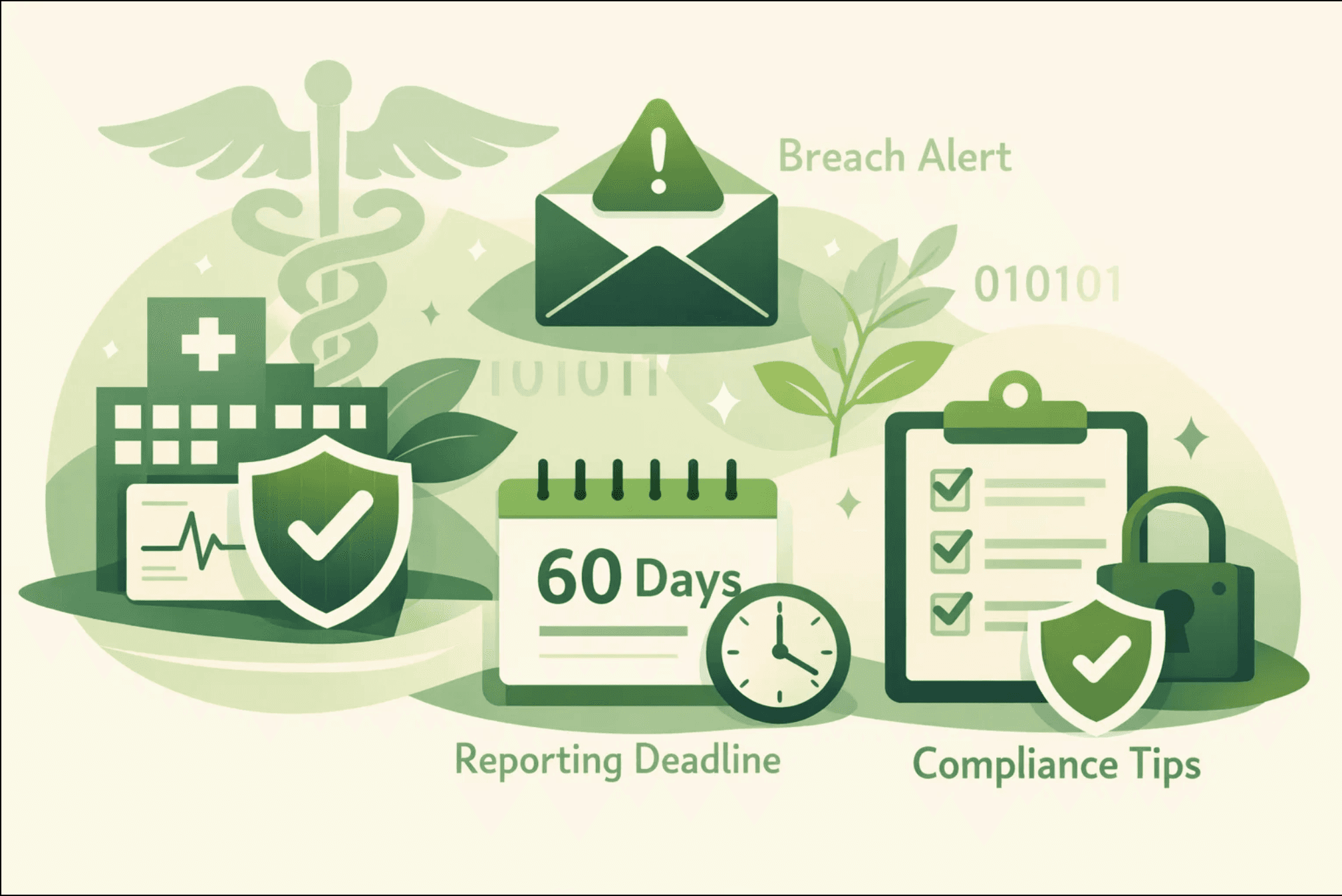
What Triggers HIPAA Breach Notification Requirements?
Under HIPAA compliance rules, a breach notification obligation begins when a covered entity experiences unauthorized access to or disclosure of unsecured protected health information. But what does "unsecured" actually mean?
Understanding Unsecured PHI
Unsecured PHI refers to health information that hasn't been rendered unusable, unreadable, or indecipherable by approved methods such as encryption or destruction. If patient data exists in readable form—whether in databases, email systems, paper records, or portable devices—and that data is improperly accessed or disclosed, the HIPAA Breach Notification Rule applies.
Who Must Comply?
The breach notification requirements apply to:
Covered entities: Healthcare providers, health plans, and healthcare clearinghouses that transmit health information electronically
Business associates: Vendors, contractors, and third-party service providers who handle PHI on behalf of covered entities under a business associate agreement (BAA)
This framework means that vendor risk management and third-party risk management are critical components of HIPAA compliance. When you share PHI with vendors, you're not transferring liability—you're extending your compliance obligations through your supply chain.
The Four Required Notifications Under HIPAA
When a breach occurs, HIPAA doesn't allow organizations to fix the problem and move on quietly. The regulation mandates transparency through a multi-layered notification system:
1. Individual Notification: Informing Affected Patients
Every individual whose unsecured PHI was compromised must receive direct notification. This isn't a generic announcement, it's a personalized communication that must include:
A clear description of what happened, including when the breach occurred
The specific types of protected health information involved (medical records, Social Security numbers, billing information, etc.)
Steps the organization is taking to investigate and respond
Actions individuals can take to protect themselves from potential harm
Contact information for questions or concerns
The notice must be written in plain language that patients can understand, not buried in legal terminology. Organizations can deliver this notification via first-class mail or email (if the individual previously agreed to electronic communications).
2. HHS Notification: Reporting to Federal Regulators
The Department of Health and Human Services (HHS) must be notified, but the timeline depends on the breach's scope:
Significant breaches (500+ individuals): Report to the HHS Secretary without unreasonable delay and no later than 60 days after discovering the breach. These breaches appear on the publicly accessible HHS breach portal—sometimes called the "wall of shame"—where anyone can search for reported incidents.
More minor breaches (fewer than 500 individuals): Can be reported annually, within 60 days after the calendar year ends. However, organizations must still maintain documentation of these incidents for regulatory audit purposes.
This reporting requirement makes breach notification an element of continuous compliance, not just crisis management.
3. Media Notification: Public Disclosure for Large Breaches
When a breach affects 500 or more individuals within a single state or jurisdiction, covered entities must notify prominent local media outlets. This requirement ensures broad public awareness, especially when the organization may not have complete contact information for all affected individuals.
A media notification serves as a substitute for direct notice, recognizing that not all patients can be reached directly by mail or email.
4. Business Associate Obligations: Upstream Notification
If a breach originates with a business associate—a cloud storage provider, billing service, or any vendor handling PHI—that associate must notify the covered entity without unreasonable delay and within 60 days of discovering the breach.
This provision makes vendor due diligence and third-party risk assessment essential before onboarding any service provider. Your VRM program should include:
Thorough due diligence questionnaires covering security practices
Regular vendor risk assessments to evaluate ongoing security posture
Contract risk provisions that clearly define breach notification responsibilities
Continuous monitoring to detect vendor security incidents early
The covered entity then assumes responsibility for notifying affected individuals and HHS. This creates a compliance chain in which delays at the vendor level directly affect the covered entity's ability to meet regulatory timelines.
Understanding the Critical 60-Day Timeline
The 60-day notification requirement is perhaps the most misunderstood—and most consequential—aspect of the HIPAA Breach Notification Rule.
When Does the Clock Start?
The 60-day countdown begins on the day of discovery. Under HIPAA, discovery occurs when the breach is first known to the covered entity or, with reasonable diligence, should have been known.
This definition has important implications:
Discovery isn't when the breach occurred—it's when you became aware of it
"Reasonable diligence" means you can't avoid notification obligations by failing to investigate suspicious activity
If a business associate discovers the breach first while acting as your agent, that may count as discovery for your organization.
This is where vendor risk management intersects directly with compliance timelines. A vendor that delays reporting a breach to you is consuming your 60-day window. Your business associate agreement should specify immediate notification protocols, and your vendor risk dashboard should track incident response times.
What "Without Unreasonable Delay" Actually Means
HIPAA requires notification "without unreasonable delay" with a hard deadline of 60 calendar days from discovery. There's no grace period, no extension for complexity, and no accommodation for organizational bureaucracy except in rare cases where law enforcement requests a delay for investigative purposes.
In practice, this means:
Don't wait for a complete investigation before beginning notifications
Don't delay to consult with public relations or legal teams beyond what's necessary
Don't postpone notification while implementing technical safeguards or administrative safeguards to prevent future breaches.
The time to prepare is before a breach occurs, not after.
Required Elements of the Notification
Within that 60-day window, your notification to individuals must contain specific information:
What happened: A brief but precise description of the breach, including approximate dates
What was compromised: The types of unsecured PHI involved (treatment records, lab results, financial information, etc.)
What you're doing: Steps taken to investigate, mitigate harm, and prevent recurrence
What they should do: Practical actions individuals can take to protect themselves
How to reach you: Contact information for questions and assistance
If you lack current contact information for 10 or more individuals, you must provide substitute notice through prominent media outlets or website postings with instructions for affected individuals to contact you.
Building a Breach-Ready Compliance Program
Meeting HIPAA breach notification requirements under time pressure requires preparation, not improvisation. Organizations that consistently meet these obligations have structured their compliance program around these core elements:
Early Detection and Assessment
The faster you detect potential breaches, the more time you have to respond appropriately. This requires:
Continuous monitoring of systems and access logs to identify unauthorized access
Incident response procedures that define what constitutes a potential breach
Clear escalation protocols so security incidents reach decision-makers quickly
Risk assessment methodology to promptly determine whether an incident qualifies as a reportable breach
Your compliance controls should include automated alerts for suspicious access patterns, regular vulnerability scanning, and defined thresholds that trigger incident investigation.
Determining Security Breach Status
Not every security incident rises to the level of a reportable breach. Your team needs a documented framework to assess:
Was the PHI truly unsecured (not encrypted or otherwise protected)?
Was there actual unauthorized access or disclosure?
Does the harm threshold analysis suggest a low probability of compromise?
This assessment should be documented as part of your evidence collection process, since regulators may later audit your breach determinations.
Vendor Risk Management Integration
Since business associates can trigger your notification obligations, your VRM program must include:
Vendor intake processes that screen for security capabilities before engagement
Vendor risk scoring that prioritizes oversight of high-risk vendors handling sensitive PHI
Continuous monitoring of vendor security posture and incident history
Contract provisions requiring immediate breach notification (not just within 60 days)
Access management controls limiting what vendor systems can access
Your vendor risk assessment should specifically evaluate whether vendors have their own breach response capabilities and whether their insurance coverage includes breach notification costs.
Pre-Built Response Workflows
Organizations that respond effectively have prepared these materials in advance:
Notification templates for individuals, HHS, and media that can be quickly customized
Contact databases that are regularly updated and verified
Escalation chains defining who makes notification decisions
Policy management systems that store current response procedures
Evidence repository systems for documenting all response actions
These tools form part of your broader compliance management platform and should integrate with your risk management framework.
Cross-Functional Coordination
Breach response isn't just an IT or compliance function. Effective responses coordinate:
Legal teams for regulatory interpretation and liability assessment
Communications for media and patient outreach
Operations for process changes and remediation
Vendor management for business associate coordination
Leadership for strategic decisions and resource allocation
Your compliance program should define roles and responsibilities across these groups before incidents occur.
Connecting Breach Notification to Broader Compliance
HIPAA breach notification doesn't exist in isolation. It connects to several other regulatory compliance frameworks and compliance fundamentals:
SOC 2 and Trust Services Criteria
If you're pursuing SOC 2 certification (particularly SOC 2 Type II), your breach notification procedures are relevant to multiple Trust Services Criteria, especially:
Confidentiality: Demonstrating that breaches are detected and reported
Security: Showing effective incident response capabilities
Privacy: Documenting how you handle unauthorized disclosure of personal information
Your SOC 2 audit will examine whether you have control activities in place for breach detection and response. Your SOC 2 readiness assessment should include reviewing these procedures, and your SOC 2 compliance checklist should verify that breach notification workflows are documented and tested.
A SOC 2 remediation plan might address gaps in incident detection or notification capabilities, and your SOC 2 control activities should include regular testing of breach response procedures.
ISO 27001 and Information Security Management
Organizations with an ISO 27001 certification, or those pursuing it, should integrate HIPAA breach requirements into their information security management system (ISMS). The ISO 27001 controls related to incident management align closely with breach notification requirements.
Your statement of applicability (SoA) should address how you handle security incidents involving personal data, and your risk treatment plan should include measures to detect and respond to PHI breaches. The PDCA cycle (plan-do-check-act) for continuous improvement should incorporate lessons learned from breach response exercises.
Vendor Risk Management Standards
The business associate breach notification requirements make vendor risk management central to HIPAA compliance. Your third-party risk management (TPRM) framework should include:
Vendor attestations regarding their breach notification capabilities
Due diligence questionnaires covering incident response timelines
Merchant due diligence for payment vendors handling both payment card data and PHI
Supplier risk assessments evaluating breach history and security maturity
Remediation tracking for vendor security gaps
Organizations often handle multiple frameworks simultaneously—for example, maintaining HIPAA compliance while also meeting PCI DSS requirements for payment security or managing GDPR compliance for EU patient data. Your compliance program should identify overlaps and create unified processes where possible.
Data Protection and Privacy Frameworks
HIPAA breach notification shares conceptual similarities with other data breach notification requirements:
GDPR's data breach notification requirements (72 hours to regulators, without undue delay to individuals)
State breach notification laws that may impose additional requirements
Data protection impact assessments (DPIA) that identify breach risks
Privacy by design principles that reduce breach likelihood
If your organization operates across jurisdictions, your compliance controls should address the most stringent applicable requirements and document how you meet each framework's specific mandates.
Practical Implementation: Tools and Processes
Meeting breach notification requirements consistently requires more than good intentions. It requires systems and tools that support rapid, accurate response:
Evidence Management and Audit Readiness
When a breach occurs, you'll need to demonstrate compliance to regulators. This requires:
Control evidence showing you followed documented procedures
Audit methodology for reviewing your response after the fact
Evidence collection systems that timestamp all response actions
Control testing to verify your procedures work before you need them
Your audit readiness tools should include templates for documenting breach assessments, notification efforts, and remediation activities.
Gap Assessment and Control Mapping
Before a breach occurs, conduct a gap assessment of your current capabilities against HIPAA requirements:
Control mapping to link your technical safeguards and administrative safeguards to specific HIPAA provisions
Control objectives that define what your breach response program must achieve
Risk-based compliance evaluation to prioritize the most critical gaps
Readiness checklist templates to verify all required elements are in place
This assessment should be documented as part of your SOC 2 readiness assessment or ISO 27001 internal audit.
Compliance Automation and Continuous Monitoring
Manual breach detection and response don't scale effectively. Consider:
Compliance automation tools that flag potential breaches automatically
Continuous monitoring systems that track access to PHI in real time
Vulnerability management platforms to identify security weaknesses before they're exploited
Patch management processes to close security gaps quickly
Evidence repository systems that automatically collect compliance documentation
These tools integrate with your broader risk and compliance platform to create a unified view of your security and compliance posture.
Policy and Procedure Documentation
Your compliance program lifecycle should include regularly reviewed and updated:
Sample policy templates for incident response and breach notification
Policy management software to track versions and approvals
Control activities documentation showing how policies are implemented
Remediation plan tracking for policy gaps or procedure improvements
The AICPA's SOC 2 assurance framework emphasizes documenting control activities, making this a requirement for multiple compliance objectives.
Common Pitfalls and How to Avoid Them
Organizations frequently encounter these challenges when responding to breaches:
Delayed Discovery
The breach may have occurred months before being discovered. The 60-day clock doesn't start until discovery, but delayed discovery itself can indicate compliance failures in monitoring and detection.
Solution: Implement continuous monitoring, regular log reviews, and automated alerting for suspicious activity. Your risk management framework should include metrics for mean time to detection.
Incomplete Contact Information
Many organizations discover during breach response that patient contact information is outdated or incomplete, complicating direct notification efforts.
Solution: Regularly update and verify contact information. Maintain alternative contact methods. Plan for substitute notice procedures in advance.
Business Associate Delays
Vendors delay reporting breaches to covered entities, consuming much of the 60-day window before the covered entity even becomes aware of the incident.
Solution: Strengthen BAA provisions requiring immediate notification. Include breach notification timelines in vendor risk scoring. Conduct regular compliance certifications from vendors.
Inadequate Investigation Resources
Organizations struggle to quickly assess the scope and impact of breaches to meet notification deadlines.
Solution: Pre-designate investigation teams. Maintain relationships with forensic investigators—document standard investigation protocols so you don't create procedures during a crisis.
Confusion About Regulatory Requirements
Teams struggle to determine which notifications are required when breaches involve multiple jurisdictions or when both HIPAA and state laws apply.
Solution: Maintain a regulatory requirements matrix documenting applicable frameworks. Consult legal counsel before finalizing notification strategies for complex breaches.
The Bigger Picture: Breach Notification as Business Continuity
HIPAA breach notification isn't just about regulatory compliance—it's about maintaining trust with patients and ensuring business continuity after security incidents.
Organizations that handle breaches well:
Maintain patient confidence through transparent, empathetic communication
Limit legal liability by demonstrating reasonable faith compliance efforts
Preserve business relationships with partners who value strong security practices
Avoid regulatory penalties that can reach millions of dollars
Organizations that handle breaches poorly face:
HHS enforcement actions and civil monetary penalties
Private lawsuits from affected individuals
Reputational damage that drives patients to competitors
Loss of business associate relationships as partners seek more reliable vendors
The stakes make preparation essential, not optional.
Building Your Breach Notification Readiness Plan
If you're establishing or improving your breach notification capabilities, follow this roadmap:
Phase 1: Assessment (Weeks 1-2)
Conduct a gap assessment of current breach detection and response capabilities.
Review existing business associate agreements for notification provisions
Map current incident response workflows against HIPAA requirements
Identify technology gaps in monitoring, evidence collection, and notification systems
Phase 2: Documentation (Weeks 3-4)
Draft or update breach notification policies and procedures
Create notification templates for individuals, HHS, and media
Document escalation protocols and decision-making authority
Establish evidence collection and documentation standards
Phase 3: Tool Implementation (Weeks 5-8)
Deploy or configure continuous monitoring systems
Implement evidence management and audit readiness tools
Establish a vendor risk dashboard for tracking business associate compliance
Set up compliance automation for breach detection alerts
Phase 4: Training and Testing (Weeks 9-12)
Train staff on breach identification and reporting
Conduct tabletop exercises simulating breach scenarios
Test notification procedures with sample populations
Document lessons learned and refine procedures
Phase 5: Ongoing Maintenance
Conduct quarterly breach response drills
Review and update procedures annually
Monitor regulatory guidance for requirement changes
Maintain vendor compliance through continuous monitoring
This roadmap should integrate with your broader compliance program, whether you're pursuing SOC 2 compliance, ISO 27001 certification, or meeting other regulatory requirements.
From Compliance to Competitive Advantage
Understanding HIPAA breach notification requirements is table stakes for healthcare organizations. But organizations that go beyond minimum compliance and build robust detection, response, and notification capabilities transform a regulatory burden into a competitive advantage.
Patients increasingly choose providers based on data security practices. Business partners prefer vendors with strong compliance programs. Regulators show leniency toward organizations that demonstrate good-faith efforts and a rapid response.
The 60-day timeline isn't generous, but it's workable for organizations with the proper preparation. That preparation requires investment in technology, processes, and training before breaches occur.
For startups and smaller covered entities, mainly, building these capabilities early establishes a foundation for scaling while maintaining compliance. The alternative is scrambling to develop breach response programs during active incidents, which risks regulatory violations, reputational damage, and business disruption.
The question isn't whether you'll face a breach. In today's threat environment, it's when. The organizations that thrive are those that answer that question with preparation, not panic.
Looking to strengthen your HIPAA compliance program? DSALTA provides purpose-built compliance management tools that help healthcare organizations prepare for, respond to, and document breach notification requirements. From automated evidence collection to vendor risk management, our platform supports audit readiness across HIPAA, SOC 2, ISO 27001, and other frameworks.

Explore more HIPAA articles
Stop losing deals to compliance.
Get compliant. Keep building.
Join 100s of startups who got audit-ready in days, not months.