Overview —
Understanding the HIPAA Minimum Necessary Rule
Essential HIPAA requirements for safeguarding PHI and how access controls reduce risk in healthcare compliance.
Share this article


Understanding the HIPAA Minimum Necessary Rule
The minimum necessary standard sounds absolute — limit PHI to what's needed for the task — but it isn't universal, and treating it as if it applies in every situation is itself a common compliance mistake. The Privacy Rule (45 CFR §164.502(b) and §164.514(d)) carves out specific exceptions, and knowing exactly where they apply matters as much as knowing the general rule.
What the Standard Actually Requires
A covered entity must make reasonable efforts to limit the use, disclosure, and request of PHI to the minimum necessary to accomplish the intended purpose — for internal use, disclosures to external parties, and requests made to other covered entities. This isn't a fixed formula; it's a reasonableness test applied to the specific task, the role of the person involved, and the context. A covered entity has to be able to justify why a given data element was needed and why broader access wasn't.
Where the Standard Does Not Apply
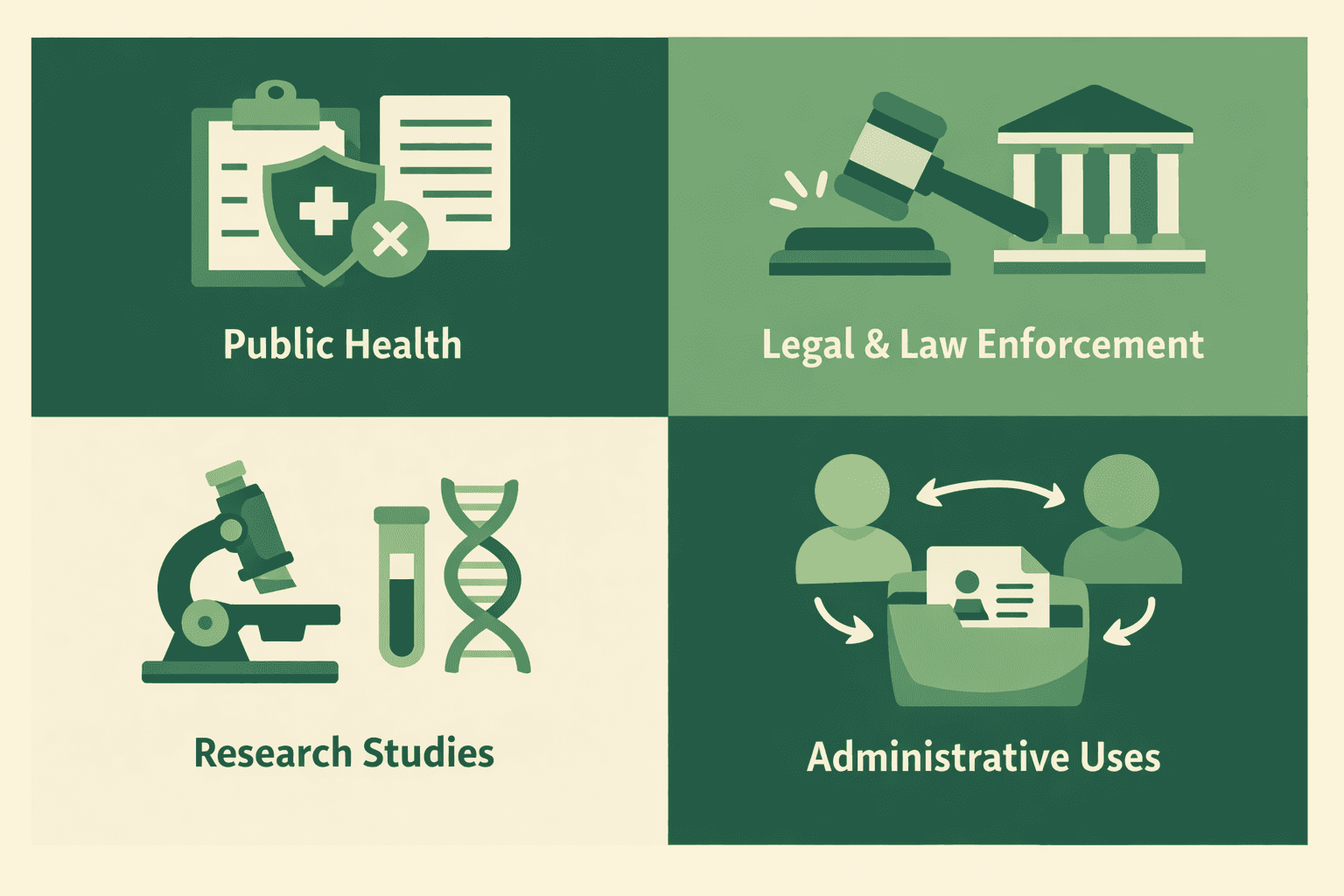
This is the part most generic explanations skip, and it matters because over-restricting access in these situations can itself create problems — delaying care, for instance. The minimum necessary standard explicitly does not apply to:
Disclosures to or requests by a health care provider for treatment purposes. This exists specifically so that clinical care isn't slowed down by minimum-necessary evaluations between providers — a referring physician sending a full relevant record to a specialist doesn't need to first determine the minimum subset needed.
Disclosures made to the individual the PHI is about, or made pursuant to that individual's own authorization.
Uses or disclosures required by law — when a separate statute mandates disclosure, the minimum necessary evaluation doesn't constrain it.
Uses or disclosures required for compliance with HIPAA's own Administrative Simplification provisions.
Disclosures to HHS for enforcement and compliance purposes under the Privacy Rule.
The treatment exception has an important asymmetry worth getting right: it applies to disclosures to or requests by a provider for treatment — not to a provider's own internal use of PHI once received. A hospital's internal use of a patient's record for treatment purposes is still subject to the minimum necessary standard, even though the original disclosure that brought the record into the hospital's hands for treatment purposes was exempt. Conflating these two — assuming "it's for treatment" exempts everything downstream — is a misreading that can lead to over-broad internal access controls.
Reasonable Reliance on Other Parties' Requests
When another covered entity, a public official, or a researcher with appropriate IRB documentation represents that requested information is the minimum necessary for their stated purpose, a covered entity is permitted to reasonably rely on that representation rather than independently re-verifying it. This reliance is optional, not required — the covered entity holding the information always retains discretion to make its own minimum necessary determination if it has reason to question the request.
Implementing the Standard in Practice
Since the standard requires organization-specific policies rather than a fixed government formula, implementation typically centers on:
Role-based access controls that map specific data needed to specific job functions — not blanket access to full records by default, with restriction as an afterthought.
Documented criteria for routine and recurring disclosures, so that common, repeated requests (insurance billing, for instance) aren't re-evaluated from scratch each time, but are still bounded by a defined, justified scope.
A defined process for non-routine requests, where the minimum necessary determination has to be made case by case rather than against a pre-set policy.
Workforce training specific to this standard — not folded entirely into general privacy training, since the exceptions above are exactly the kind of nuance that's easy to get wrong without explicit instruction.
Why Getting This Wrong Cuts Both Ways
Over-restricting access in situations covered by an exception — delaying a treatment-related disclosure because staff weren't trained on the treatment exception — creates real operational and even patient-safety problems. Under-restricting access where the standard does apply creates the more familiar compliance risk: broader PHI exposure than necessary, the kind of gap OCR's investigations specifically look for. A training program that only emphasizes "limit access" without explaining where limits don't apply tends to produce the first failure mode as often as the second.
Where This Connects to Broader Privacy Practice
The minimum necessary standard's underlying logic — access scoped to actual need, not default breadth — is the same principle GDPR's data minimization requirement and ISO 27001's access control standards are built around, even though each has its own specific legal mechanics. Organizations that build role-based access control once, with the underlying principle in mind rather than treating it as a HIPAA-specific checkbox, tend to satisfy multiple frameworks' similar requirements from the same implementation.
Frequently Asked Questions (FAQs)
What is the HIPAA Minimum Necessary Rule?
It requires covered entities to make reasonable efforts to limit the use, disclosure, and request of PHI to only what is needed to accomplish the task.Does the Minimum Necessary Rule apply to every situation?
No. It has specific exceptions, and applying it too broadly can create compliance and operational problems.When does the Minimum Necessary Rule not apply?
It does not apply to disclosures for treatment purposes, disclosures to the individual, uses or disclosures required by law, certain HIPAA administrative simplification activities, or disclosures to HHS for enforcement.Does the treatment exception apply to all uses of PHI?
No. It applies to disclosures to or requests by a provider for treatment, but a provider’s internal use of PHI after receipt can still be subject to the rule.What does “reasonable efforts” mean under the Minimum Necessary Rule?
It means the organization must justify why a certain amount of PHI was needed and why broader access was not necessary.How do organizations implement the Minimum Necessary Rule?
Common approaches include role-based access controls, documented criteria for routine disclosures, a case-by-case process for non-routine requests, and targeted workforce training.Can a covered entity rely on another party’s minimum necessary request?
Yes, in some cases a covered entity may reasonably rely on another covered entity’s, public official’s, or researcher’s statement that the request is the minimum necessary.Why is role-based access important for this rule?
Because it helps ensure staff only see the PHI they need for their job duties instead of receiving broad default access.


In the Spotlight

Start your HIPAA compliance journey with DSALTA's complete checklist.
The Health Insurance Portability and Accountability Act (HIPAA) sets the standard for protecting sensitive health information. Any organization handling protected health information (PHI)— from hospitals to SaaS vendors serving healthcare—must comply.
HIPAA compliance may feel overwhelming, but with DSALTA®’s automation, you can reduce manual work, continuously monitor safeguards, and stay prepared for audits. This checklist outlines the essential steps to meet HIPAA requirements.
Read more about HIPAA compliance with DSALTA.
Stop losing deals to compliance.
Get compliant. Keep building.
Join 100s of startups who got audit-ready in days, not months.